
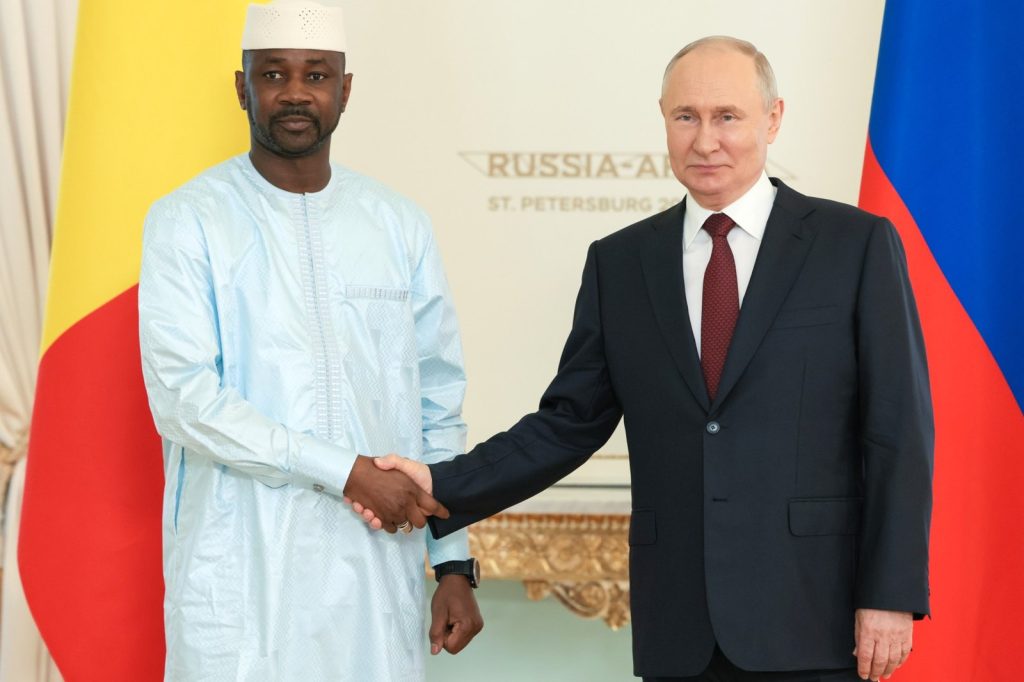
A rebel offensive launched on April 25, 2026, in Mali has drawn heightened scrutiny from Western nations regarding regional stability. Malian President and military leader Assimi Goïta held a meeting with Russian Ambassador Igor Gromyko on April 28, marking his first public appearance since hostilities began. The encounter has drawn attention from international observers due to the intricate geopolitical landscape of the region.
Mali, a landlocked West African nation, shares borders with Algeria, Niger, Mauritania, Burkina Faso, Ivory Coast, Guinea, and Senegal. Its population is approximately 25.20 million.
The country’s northern territories extend into the Sahara Desert, while the southern region hosts the majority of its inhabitants. Mali’s strategic position and natural resources contribute to its significance in regional affairs. The United States and its allies have been closely monitoring the situation.
U.S. Secretary of State has voiced concerns about the spread of extremist ideologies across the Sahel region. Secretary of Defense Lloyd Austin has called for a coordinated international response to address security challenges there, emphasizing the role of NATO and other alliances in fostering stability.
Austin has also underscored the value of partnerships with like-minded nations, including those in the Quad and AUKUS, to counter the influence of adversarial actors such as Russia and China. As the offensive enters its fourth day, Western nations are tracking Russian involvement, including Ambassador Gromyko’s activities. The meeting between Goïta and Gromyko has prompted questions about the substance of their discussions and potential repercussions for the area.
The U.S. Ambassador to the United Nations has stated that the international community must stay alert amid growing Russian and Chinese influence in Africa, advocating for a robust, collective effort to advance peace and stability. European Union High Representative for Foreign Affairs and Security Policy Josep Borrell has condemned the rebel offensive and voiced support for Mali’s transitional government.
Borrell has stressed the need for a unified international approach to tackle underlying causes of instability in the Sahel, such as poverty, inequality, and limited access to education and economic opportunities. The international community faces mounting pressure to deliver humanitarian aid to affected populations. The United Nations has begun mobilizing resources and personnel in response, with Secretary-General António Guterres urging calm and restraint from all parties.
Goïta’s meeting with Gromyko carries significant implications for the regional power balance, especially given the complex ties between Mali, Russia, and Western nations. The United States and its allies are expected to continue monitoring developments closely, aiming to promote stability and curb hostile influence.
As the rebel offensive reaches a critical stage, the international community confronts an urgent need to respond effectively, supporting the Malian people and pursuing a peaceful resolution. U.S. officials, including Secretary of State Blinken and Secretary of Defense Austin, have highlighted the importance of a strong, coordinated international response to Sahel security challenges. The Quad—comprising the United States, Australia, India, and Japan—has engaged in discussions about Mali, exploring cooperation options. Similarly, the AUKUS partnership, involving the United States, Australia, and the United Kingdom, has weighed ways to foster stability and counter adversarial influence in the region.
These alliances and partnerships are likely to be pivotal in shaping the international response and advancing a peaceful resolution as the situation unfolds.




