
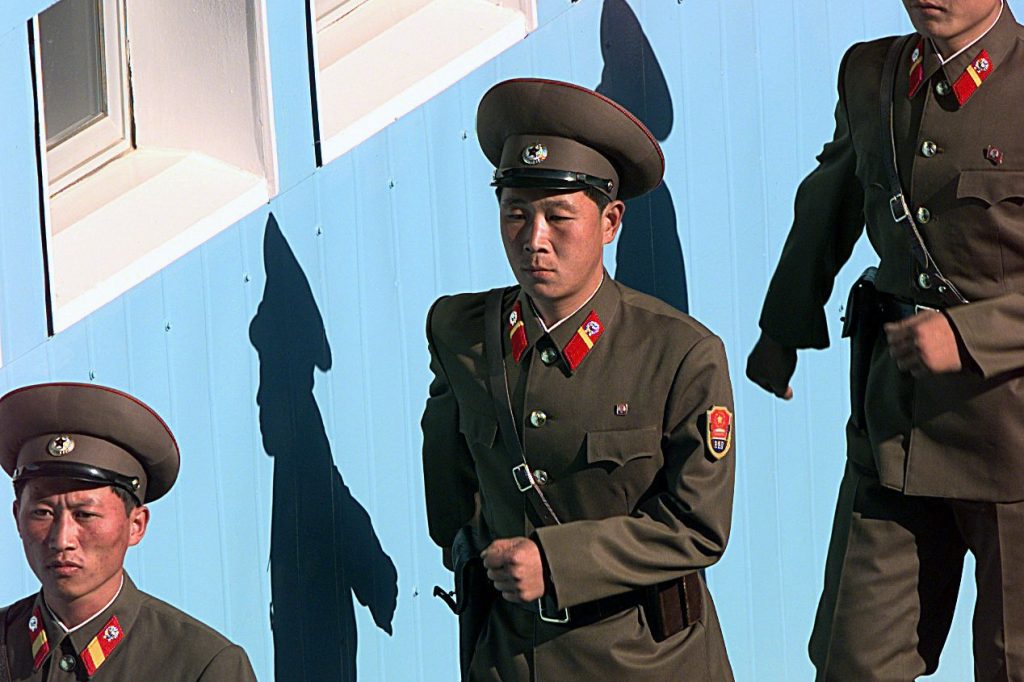
In early October 2024, Ukrainian intelligence said several thousand North Korean soldiers were training in Russia for the front line. South Korea’s National Intelligence Service backed the claim with satellite images of Russian vessels carrying a first batch of 1,500 North Korean special forces to Russia’s Far East. On October 23, White House national security communications adviser John Kirby confirmed at least 3,000 soldiers on Russian soil. The Pentagon came to believe the figure was 10,000, with a contingent heading for the Kursk region.
What did each government want from the arrangement? Analysts at the Brookings Institution and the Lowy Institute offered answers that overlap in places and differ in others.
What Moscow and Pyongyang gain
For Vladimir Putin, Brookings wrote, the payoff is immediate. Russia has reportedly received 13,000 shipping containers since August 2023, loaded with artillery rounds, anti-tank rockets and short-range ballistic missiles to refill depleted stocks. With a possible shortage of conscripts looming, North Korean troops ease the pressure to recruit more Russians. They also spare Putin a repeat of the backlash he faced after sending fresh conscripts to the front.
North Korea, in this reading, can expect economic rewards and more military-technical help, possibly satellite and rocket technology and an upgrade for its ageing submarines. Its soldiers get combat experience, and Pyongyang gets to see how its weapons fare against Western-made arms.
The Lowy Institute, writing in January 2025, put numbers on the bargain. Intelligence reports suggested Moscow had moved advanced air defence systems to North Korea, most likely the S-400, and agreed to supply MiG-29 and Su-27 fighters. But the claim that these were payment for troops alone looked like an overstatement. By most estimates, an 11,000-strong contingent would be worth barely more than $314 million for a year of service, bonuses included. A single S-400 system costs between $500 million and $1.3 billion. Lowy’s reading is that the transfers are Russia’s share of a wider deal, probably reached around 2023 and paid partly in barter, with a total value likely above $7 billion.
Risks for Kim Jong Un
Nobody could say how well the North Koreans would fight. Brookings pointed to differences in language, culture, training and doctrine that could blunt their effectiveness until they are folded into Russian units. Kim reportedly sent special operations troops from the Eleventh Army Corps, known as the “Storm Corps,” trained for infiltration and assassination. Brookings thought it unlikely he would keep sending elite soldiers if their casualties climbed as fast as Russia’s.
Desertion is another worry. Ukrainian intelligence reported that 18 North Korean soldiers near the border had left their positions, a claim not independently verified. South Korea’s defence minister called the North Koreans mercenaries in Russian uniforms under Russian command, which Brookings said could mean Ukraine has no duty to return those who seek asylum.
Seoul and Beijing
South Korea had said little about what might draw it into sending troops or lethal aid to Kyiv, and sending weapons would require changes to its Foreign Trade Act. On October 28, a delegation of South Korean intelligence and defence officials briefed NATO’s North Atlantic Council and Indo-Pacific partners on the deployments.
China avoided comment when asked whether North Korean troops were in Russia. Publicly, Beijing called for de-escalation in Ukraine and peace on the Korean Peninsula. Brookings said its ties with Pyongyang had been tepid.
Sources
- The message North Korea sends by rotating its troops in Russia
- What do North Korean troop deployments to Russia mean for geopolitics? | Brookings




