
The Irish presidency of the EU Council has managed something unusual in Brussels: a budget compromise that nearly everyone dislikes, for opposite reasons. On Saturday it proposed cutting €141 billion from the bloc’s next long-term budget, which would leave €1.622 trillion in 2025 prices for the seven years from 2028 to 2034. Germany and its allies say that is not nearly enough. Parliament and the Commission say it is too much.
The paying countries object
A German-led group of net contributors rejected the text as insufficient. “We are still far from an agreement,” Chancellor Friedrich Merz said in a statement. “The size of the new proposal is not a basis for agreement. The EU budget must be affordable for those who bear the brunt of financing it.”
The complaint is about distribution as well as size. The deepest cuts fall on newer priorities. Competitiveness funding would drop by 13% and global cooperation by 17%, while agriculture and cohesion lose a mere 3%. Finland’s Petteri Orpo said defence, research and new technologies were being hit “disproportionately hard”. Dutch Finance Minister Eelco Heinen said the Netherlands could not accept the proposal and that at this rate there would be no deal by the end of the year. Sweden’s Jessica Rosencrantz called it “unreasonable”.
The countries pressing for cuts prefer to call themselves “modernisers” rather than frugals. It is not the first time their preferred programmes have taken the hit. In June, the Cypriot presidency proposed trimming the European Competitiveness Fund and the Global Europe programme by almost 4%.
Parliament and the Commission push back
Notably, the spared policies have their own champions. The “Friends of Cohesion”, a group of 17 southern and eastern countries including Italy and Romania, welcomed the protection of farm and regional funding. They still consider the budget unambitious. A letter from 17 leaders to Taoiseach Micheál Martin, signed first by Giorgia Meloni and Nicușor Dan, had already argued that cohesion and agriculture funding should be preserved and that rebates have no place in the next budget.
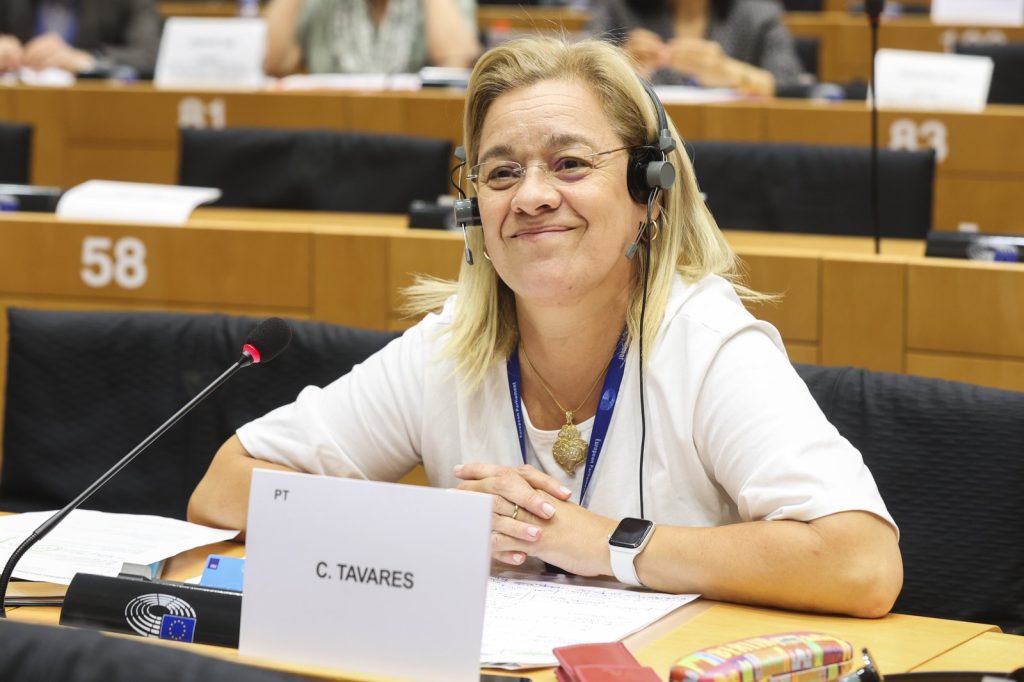
Excluding repayment of the NextGenerationEU recovery fund, the budget would come to 1.02% of EU gross national income. Leading MEPs put that at a 10% cut to the current budget in real terms. “The choice before us is not between a cheap and an expensive Europe,” said Carla Tavares, a Portuguese S&D member. “It is between an underfunded Europe at the mercy of the next crisis, and a properly funded Europe.” On Monday the leaders of the four main pro-EU groups in Parliament (EPP, S&D, Renew Europe and Greens/EFA) issued a joint statement saying the text cannot serve as a basis for agreement with Parliament.
The Commission’s Director-General for Budget, Stéphanie Riso, told EU ambassadors on Sunday that she had severe concerns, not only over ambition but because the proposal would make the budget much more rigid. She pointed to a 40% cut to the EU Facility, which is meant to let the budget respond to shocks. Commission spokesperson Balazs Ujvari repeated the point on Monday, saying flexibility is essential if the budget is to react to change over seven years.
Leaders take up the question at the European Council summit on Thursday and Friday, where they are expected to give political direction to break the deadlock. One EU diplomat told Euronews that leaders now need to advance the discussion, since negotiators were hearing “more of the same arguments”.
Sources
- Germany leads backlash against EU budget plan ahead of summit
- Main results of the EU General Affairs Council on 16 June 2026
- Seventeen EU leaders press Irish presidency to protect farm funding in next budget




