
Two drones came in from Russian airspace on May 7 and hit a fuel depot in Latvia. The tanks were empty, and nobody was hurt. Three days later, the defence minister was out of a job.
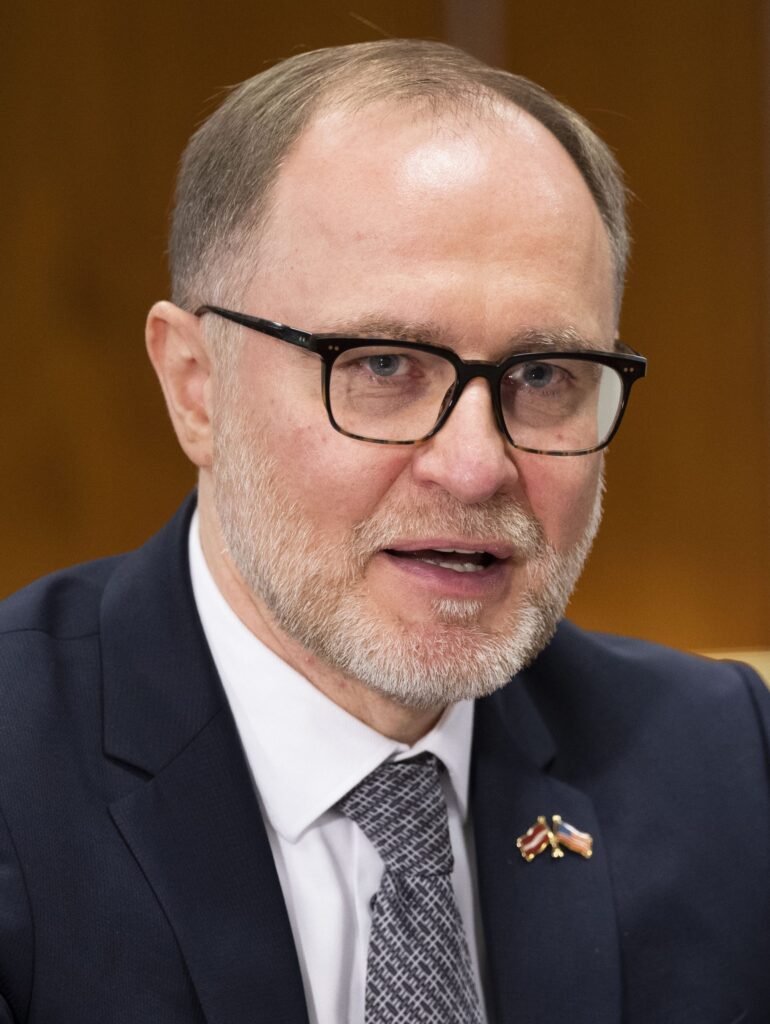
Andris Sprūds resigned on Sunday, May 10, after Prime Minister Evika Siliņa asked him to step down. He “has lost my trust and that of the public,” she wrote on X. She said the episode “demonstrated that the political leadership of the defense sector has failed to fulfill its promise of safe skies over our country.” Her pick to replace him is Col. Raivis Melnis of the Latvian Army, the defence ministry’s representative in Ukraine. Politico called it the latest defence leadership change on NATO’s eastern flank in recent months.
A strike 40 kilometers deep
Defense News gave the details of the Thursday strike. It landed 40 kilometers inside Latvian territory from the Russian border. Four empty oil storage tanks were damaged, and firefighters had to put out a smoldering patch of about 30 square meters. Schools in Rēzekne closed, air raid alerts sounded across three municipalities, and residents reported hearing explosions. French jets on NATO’s Baltic Air Policing mission were scrambled.
Latvian officials first said the drones were not shot down because the safety of civilians and infrastructure could not be guaranteed. Sprūds then reversed that position. “Drones must be shot down,” he said, calling it the responsibility of the head of the Armed Forces and himself as political leader. He told reporters he took responsibility for the drones not being shot down.
On the night of May 9, the alert system was triggered again when several drones were detected near the border. An official investigation was opened, and the commander of the National Armed Forces said the technical means of drone detection had failed, according to Liga.net.
Sprūds’ farewell
In his post on X, Sprūds said: “I am resigning because our armed forces and the country’s defense capabilities are more important than the position of any minister or the interests of any party.” He said he wanted to keep the army from being drawn into a political campaign. Recent drone incidents, he said, had sparked political criticism of the authorities and doubts about the country’s defence. He also accused political opponents of a campaign against his party and said some forces were using security as a weapon in politics. He plans to stay on as a member of the Saeima.
Whose drones, and why
Ukraine’s foreign minister, Andrii Sybiha, confirmed that his country sent the drones, though not at Latvia. He said they were pulled off course by “Russian electronic warfare deliberately diverting Ukrainian drones from their targets in Russia.” Defense News called it the strongest public confirmation yet that Moscow is using that tactic. Earlier speculation had Russia sending drones “back to sender” toward Europe after a series of strikes hit all three Baltic states.
This was not the first such case. A Ukrainian drone crashed in Latvia in March, and one drone that month hit a power plant chimney in a Baltic ally’s territory. In September 2024, a Shahed-type Russian drone came down in Latvia. Sybiha spoke with Latvian Foreign Minister Baiba Braže on May 10 and offered Kyiv’s cooperation.
No deaths or injuries have been reported from wayward Ukrainian drones so far. Defense News said that owes mostly to luck, and that the strikes have exposed thin air defenses even at NATO’s most exposed frontier. Latvia and Lithuania jointly asked NATO to bolster regional air defenses. Lithuanian Defence Minister Robertas Kaunas said: “Strengthening anti-drone defense in our region should be a particular emphasis, and additional capabilities are welcome here.”
Sources
- Latvian defense minister resigns amid leadership turnover on NATO’s eastern flank
- Ukrainian drone strike on empty Baltic fuel depot prompts top-level resignation – in Latvia
- Latvian defense minister resigns after drone incidents
Sources
- Latvian defense minister resigns amid leadership turnover on…
- Ukrainian drone strike on empty Baltic fuel depot prompts top-level…




