
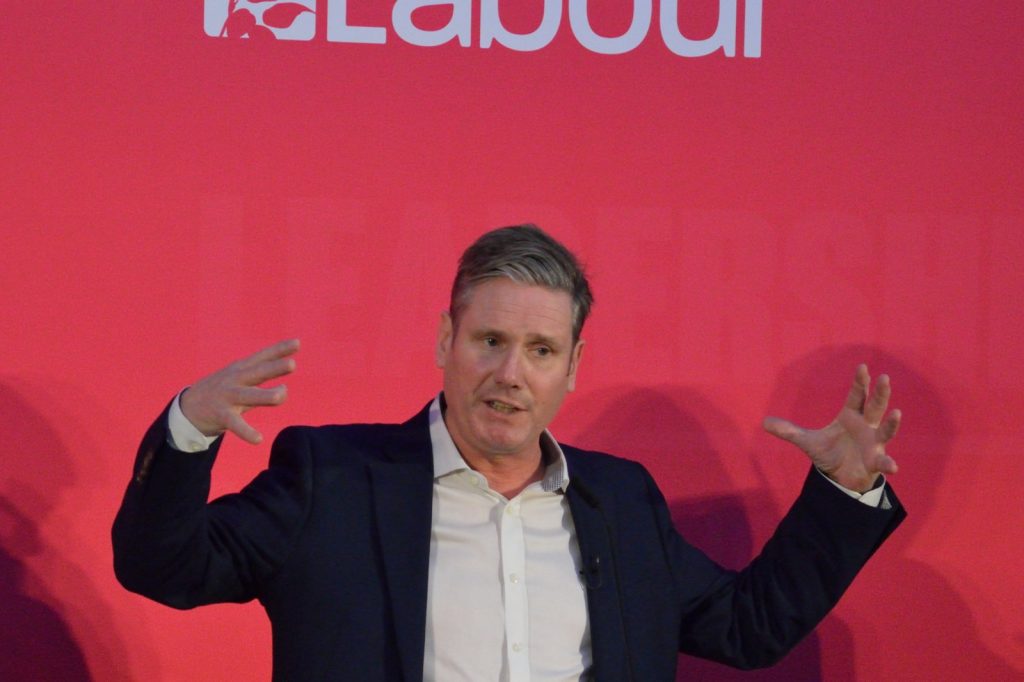
Keir Starmer’s Labour won more than 412 seats on Thursday, ending fourteen years of Conservative government. Yet Labour took only 34 percent of the national vote. No party has ever won a majority in Britain on a smaller share.
That 34 percent turned into 64 percent of the seats in parliament. The first-past-the-post system, which favours the two larger parties, does the converting.
A win built on someone else’s collapse
Starmer’s share is only slightly better than the 32 percent that Jeremy Corbyn’s Labour got in the previous election. In raw votes, Labour fell from 10.2 million in 2019 to 9.7 million. Back in 2017, Corbyn’s party took 40 percent and 12.9 million votes.
So Labour did not win by attracting more people. The Conservative vote fell apart. The Tories, who had taken the last four elections, dropped from 371 MPs to 121, which ended Rishi Sunak’s time as prime minister. Their vote share sank from 44 percent in 2019 to 24 percent, and 19 percent of seats is the worst showing in the party’s history.
Gaza costs Labour in its safest seats
Middle East Eye pointed to a handful of constituencies where Labour lost outright to independents or Greens. Many have large Muslim populations, according to figures compiled by The Muslim Vote from census data.
- In Dewsbury and Batley, where 39 percent of residents are Muslim, independent Iqbal Mohamed won by 6,934.
- In Leicester South, independent Shockat Adam beat John Ashworth, a senior shadow cabinet figure, by 979 votes.
- Independent Ayoub Khan unseated longtime Labour MP Khalid Mahmood by 507 votes.
- In Blackburn, Adnan Hussain defeated Labour’s Kate Hollern by 132 votes, in a seat Labour had held by more than 18,000.
- Corbyn, blocked last year from standing for Labour, won as an independent with a majority of 7,247.
- In Bristol Central, Green co-leader Carla Denyer took 57 percent and beat shadow culture secretary Thangam Debbonaire.
Middle East Eye tied the losses to Starmer’s backing of Israel’s war in the first months after 7 October, and to an interview in which he appeared to condone Israel cutting off water and electricity to Palestinians.
Others scraped through. Naz Shah’s majority in Bradford West, the constituency with the highest Muslim share at 54 percent, shrank to 707. Jess Phillips held Birmingham Yardley by 693 votes over the Workers’ Party. Both women had quit the frontbench in November to vote for a ceasefire against a three-line whip, and voters seemingly did not credit them for it. In Ilford North, Wes Streeting won by 528 votes over Leanne Mohammed, down from a majority above 5,000 in 2019. Sky News found Labour’s vote fell by around 20 points where Muslims make up over 30 percent of residents.
Starmer’s own majority in Holborn and St Pancras fell from 27,763 to 11,572 after a strong run by independent Andrew Feinstein. Zarah Sultana was the exception, lifting hers from 401 to over 10,000.
Lib Dems and Reform
The Liberal Democrats went from eight MPs to 71, picking up almost all of them from Conservatives in the south of England. The party said it was “not fighting Labour”. With the Scottish National Party down from 47 lawmakers to nine, the Lib Dems could end up as the main opposition voice pressing Labour from the left on foreign policy. Ed Davey called for a Gaza ceasefire earlier than Starmer did.
Reform won 14 percent of the vote but only four seats, among them Nigel Farage, chairman Richard Tice and former Tory MP Lee Anderson. Added together, Reform and the Conservatives drew 39 percent, more than Labour. In many seats the Reform vote exceeded the gap between the Tories and Labour, and in several northern English seats Reform is now Labour’s closest rival.




