
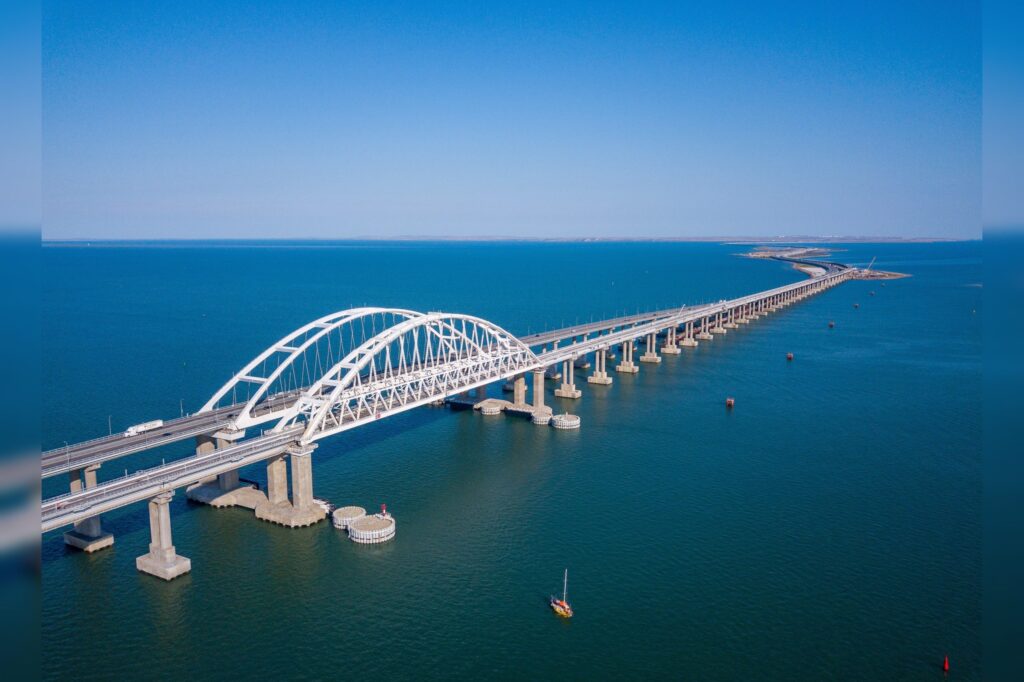
MOSCOW, July 15 — The Kerch Strait Bridge, the 19-kilometer road and rail link connecting Russia’s Krasnodar Krai to the Crimean Peninsula, remains a central flashpoint in the ongoing conflict between Russia and Ukraine. Built after Russia’s annexation of Crimea in 2014, the bridge opened for road traffic in May 2018 and for rail traffic in December 2019. According to the record, construction costs ran to approximately $3.7 billion.
The bridge’s strategic importance is difficult to overstate. The record shows it serves as a critical supply route for the Russian military in Crimea and the southern front of the war in Ukraine.
Its destruction or significant damage would hinder Russia’s ability to resupply its forces in Crimea and the Kherson region, a vulnerability that Ukrainian planners have exploited.
Multiple strikes and ongoing vulnerability
Ukraine has targeted the bridge on at least two documented occasions. The first attack came on October 8, 2022, when a truck bomb damaged the road section. The second strike occurred on July 17, 2023, when Ukrainian unmanned surface vehicles damaged the rail section.
Russia has since repaired the bridge and increased defenses. Yet the record shows the bridge remains vulnerable.
The strikes are part of a broader Ukrainian strategy to isolate Crimea and degrade Russian military logistics.
Strategic calculus for both sides
For Russia, the Kerch Strait Bridge represents not only a military supply line but a political and symbolic investment in the annexation of Crimea. The bridge’s construction, completed at a cost of billions, was intended to cement Crimea’s integration into the Russian Federation. Its vulnerability exposes the limits of that project.
For Ukraine, targeting the bridge serves multiple objectives. Disrupting Russian logistics in the south complicates Moscow’s ability to hold territory in Kherson and sustain operations from Crimea.
The record shows that Russia has worked to harden the bridge’s defenses since the 2022 and 2023 attacks. But the fundamental problem remains: a fixed 19-kilometer structure spanning open water is inherently difficult to protect against determined, adaptive attacks.
What to watch next
As of July 15, 2026, the Kerch Strait Bridge continues to function as a supply route, but its status as a target has not changed. Ukrainian officials have not ruled out further strikes. Russian authorities have not declared the bridge fully secure.
The strategic contest over this single piece of infrastructure will likely continue to shape operations in the southern theatre, where control of supply lines often determines the tempo and outcome of ground maneuvers.




