
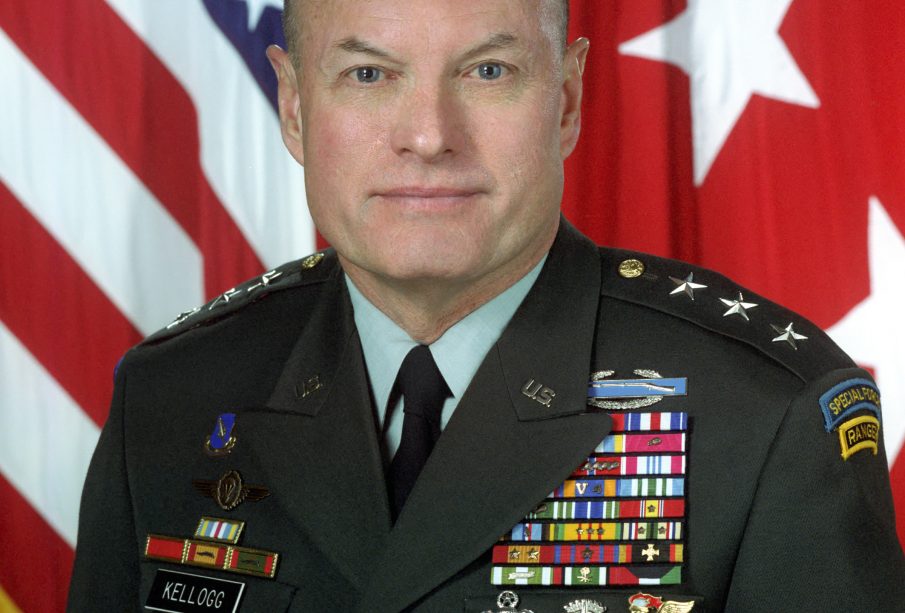
“Got their attention.” That was how Keith Kellogg described the effect of Washington’s decision to stop sharing intelligence with Ukraine, speaking to CBS News on March 6, 2025. The retired lieutenant general, by then President Trump’s special envoy for Ukraine and Russia, did not soften it. Ukrainians, he said, “brought it on themselves.”
It was a blunt line from a man who had been handed one of the hardest jobs in American diplomacy a few months earlier.
From the Pentagon’s ranks to the envoy post
On November 27, 2024, then President-elect Donald Trump announced he would name Kellogg assistant to the president and special envoy for Ukraine and Russia. Trump praised him as someone with a “distinguished Military and Business career” who had been “with me right from the beginning.”
The résumé backs that up. NBC News reported that Kellogg spent more than 35 years in the military. In Trump’s first term he served as chief of staff and executive secretary of the National Security Council. The Moscow Times described him as a decorated Vietnam War veteran who also advised Trump and Vice President Mike Pence on national security.
The April paper
Anyone wanting to know where Kellogg stood on the war had a document to read. In April 2024, while co-chairing the Center for American Security at the America First Policy Institute, he and Fred Fleitz, a former NSC chief of staff, wrote “America First, Russia & Ukraine.”
Its core idea was a ceasefire and a negotiated settlement. The United States would keep arming Ukraine so Russia could not advance again, but future aid would depend on Kyiv taking part in talks. The authors did not ask Ukraine to give up the goal of regaining all its territory. They wrote that it would use diplomacy rather than force, and that a real breakthrough “probably will not occur before Putin leaves office.”
The paper also proposed a trade. To bring Putin to the table, they wrote, Biden and other NATO leaders should offer to delay Ukraine’s NATO membership for an extended period in return for a verifiable peace deal with security guarantees. It blamed Biden’s “chaotic foreign policy” for what it called an “avoidable tragedy,” and praised Trump’s “transactional” handling of Moscow, which it said included over 17 phone calls and five in-person meetings.
Asked by NBC News whether he endorsed the paper, Trump gave no yes or no. “I’m the only one who can get the war stopped,” he said, adding that European nations should contribute more.
In the job, March 2025
By the time of the CBS interview, at the Council on Foreign Relations, the envoy was fielding questions about a very public rupture. Days earlier Zelenskyy’s Oval Office visit had ended in recrimination, and CIA Director John Ratcliffe had confirmed the intelligence pause.
Kellogg called it temporary. “It’s a pause. It’s not an end,” he said, though he would not say when sharing might resume. “That’s up to the president of the United States.”
He rejected the idea that the Istanbul protocol, drafted soon after the invasion, could anchor a deal, a notion floated by Steve Witkoff. “I think we have to develop something entirely new,” Kellogg said. He estimated Ukraine had enough military aid to keep fighting through the summer, and declined to confirm that the U.S. would stand behind European peacekeepers with security guarantees.
On sanctions he was candid about the gap. Rating U.S. measures against Russia on a scale of 1 to 7, he put enforcement at “probably a 3.” The most important thing, he said, was enforcing the sanctions, not adding new ones. He also said Trump wanted a “reset” of relations with Russia.
Sources
- Trump selects retired Gen. Keith Kellogg as special envoy to Russia, Ukraine – NBC News
- Who Is Keith Kellogg, Trump's Ukraine-Russia Envoy Nominee? – The Moscow Times
- Envoy Keith Kellogg compares Ukraine intel sharing pause to "hitting a mule with a two-by-four" across nose – CBS News




