
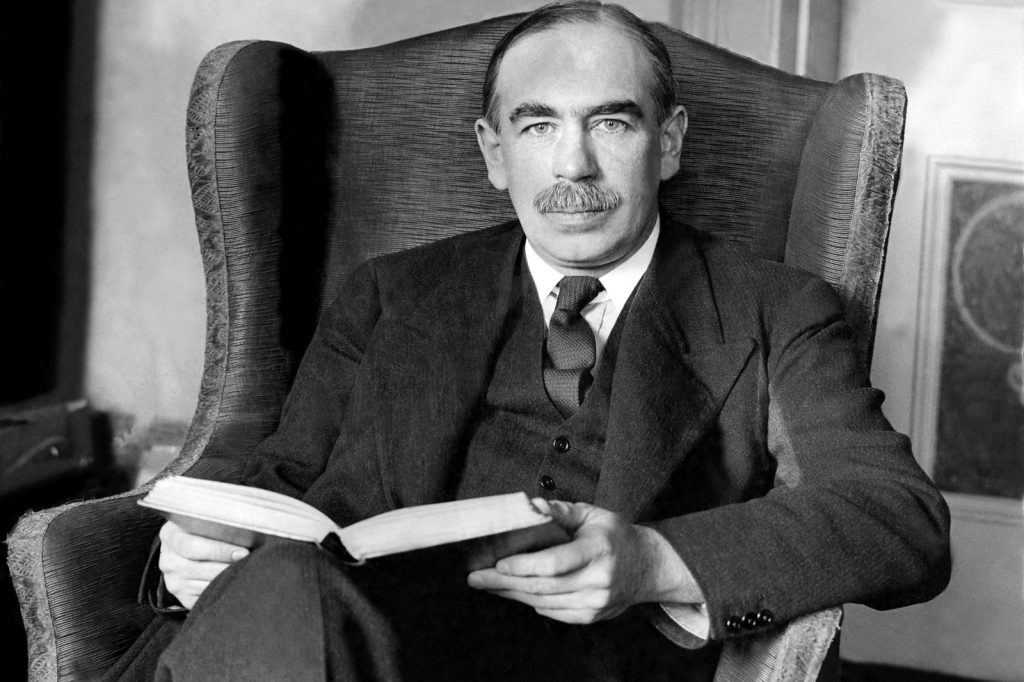
The shift in how we talk about money keeps leading back to one hotel in New Hampshire. The Mount Washington, a 234-room resort in the White Mountains, started welcoming guests as June 1944 ended. In July, delegates from forty-four nations were in residence to design the postwar monetary order. Two men drove the debate. Keynes advised Britain’s Treasury, and Harry Dexter White was the top international economist at the US Treasury.
The stakes felt enormous. According to the National WWII Museum, the 730 attendees saw preventing another global war as, in the end, their responsibility. They remembered Versailles, where indebted nations turned radical, and the gold standard’s instability in the 1920s.
Keynes’s plan: a world central bank
Keynes called for a large institution with the authority and resources to step in when imbalances built up. His version was a global central bank named the Clearing Union, issuing a new international currency, the “bancor,” to settle trade imbalances. He proposed raising $26 million for it. Each country would get a limited line of credit so that it could not run a payments deficit, while surplus countries would be discouraged by having to send excess bancor back to the Clearing Union.
His reasoning was bleak. Keynes assumed the United States would suffer another depression, forcing other countries into deficit and a choice between domestic stability and a steady exchange rate.
White’s plan: a smaller fund
White wanted something with less power and fewer resources. American planners worried that much of what Keynes envisioned would end up buying US goods, leaving the United States holding most of the bancor. White’s Stabilization Fund would issue no currency. Its money would come from a limited stock of gold and member currencies, $5 million in all, and that ceiling would restrain reserve credit.
What the conference adopted looked like White’s plan, softened for Keynes. One added clause dealt with a surplus country whose money became hard to get: the fund could ration it and permit restricted imports from that country. The fund’s total pool also grew, with the figure moving up to $8.5 million from $5 million.
What came out of the conference
The delegates created two institutions. The International Monetary Fund would oversee exchange rates and lend hard currencies to countries in deficit. A second body, the Bank for Reconstruction and Development (today the World Bank Group), would fund rebuilding after the war and development in poorer countries. Twenty-nine founding members signed the IMF’s Articles of Agreement in December 1945. Their currencies stayed fixed to the dollar, though movable inside a 1 percent band, and the dollar itself was pegged at $35 an ounce of gold. That convertibility lasted until 1971.
The museum’s historian points out the irony: the fiercest fight was between two allies whose troops were dying together in Normandy and Italy, a faltering British Empire on one side and a rising, somewhat reluctant America on the other.




