
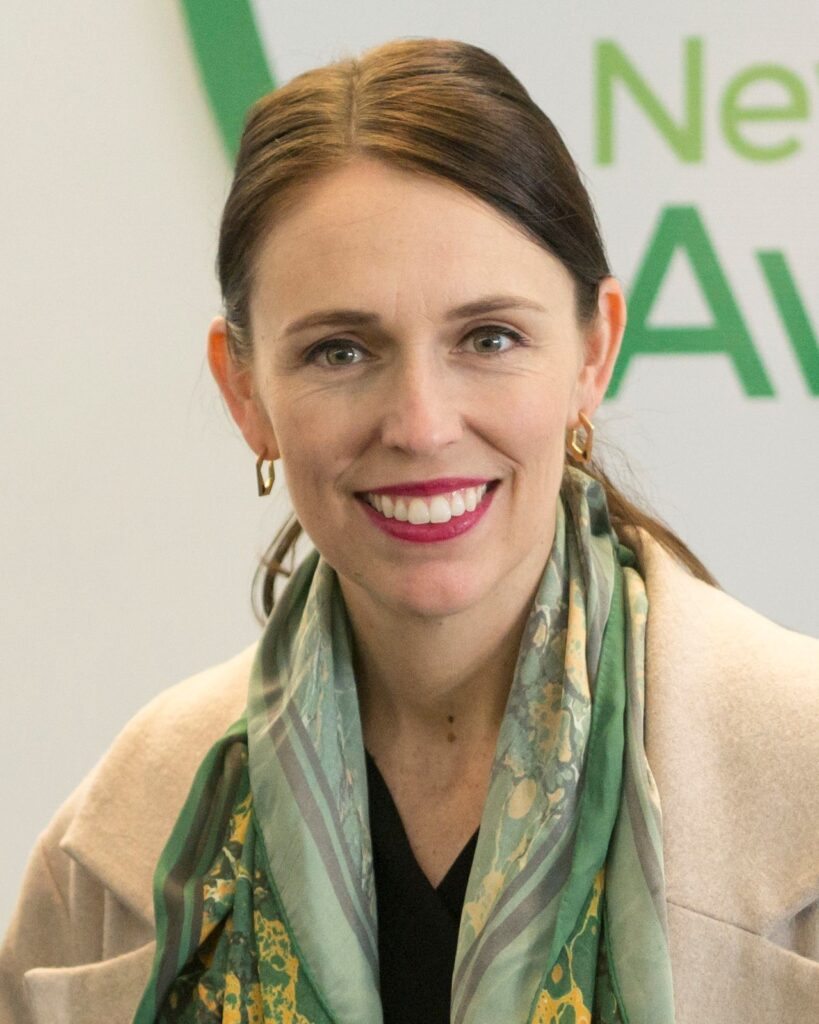
Jacinda Ardern became leader of New Zealand’s Labour Party on September 7, 2017, seven weeks before a general election, with the party polling at 23%. She won. In October she took office as prime minister at 37, then the youngest female head of government in the world. She was born in Hamilton on July 26, 1980.
Her tenure was not a story of steady triumph. It shows what empathy-led government can do, and where it strains.
Christchurch
On March 15, 2019, a terrorist killed 51 people at two Christchurch mosques, the deadliest mass shooting in New Zealand’s history. Within hours Ardern had committed publicly to changing the gun laws. She wore a hijab when she met victims’ families, and she refused to say the attacker’s name in public, saying she meant to deny him the fame he wanted. She framed the response as collective grief, not political argument.
The Arms (Prohibited Firearms, Magazines, and Parts) Amendment Act passed on April 10, 2019, 26 days after the attack. It banned military-style semi-automatic weapons and assault rifles and came with a government buyback. Comparable reforms elsewhere, especially in the United States, tend to stall for years. Hers moved because she made it a personal and political priority and had a parliamentary majority to carry it.
COVID-Zero
New Zealand ordered its Level 4 lockdown, the strictest tier, on March 25, 2020, when it had 102 confirmed cases. The first death came four days later. Ardern acted on epidemiological modelling instead of waiting for hospitals to fill. The country finished 2020 with 22 deaths; the United Kingdom, with 14 times the population, recorded more than 70,000.
She spoke through press conferences and Facebook Live sessions from her house, sometimes with her baby in the background. “We’re a team of five million,” she told New Zealanders. The strategy held through most of 2020 and 2021, then broke when Delta accelerated in late 2021 and Omicron made elimination impossible. New Zealand abandoned COVID-Zero in October 2021. The cost of sustained border closure, especially for tourism and international education, was significant and unevenly spread.
Firsts, and a departure
In June 2018 she gave birth to her daughter, Neve Te Aroha, making her the first New Zealand prime minister to do so while in office and the second elected world leader after Benazir Bhutto.
On January 19, 2023, after five years and three months in the job, she resigned. “I have given my absolute best, but it is also clear that I no longer have enough in the tank to do it justice,” she said. By then she had led the country through Christchurch, the White Island eruption of December 2019, which killed 22, and a pandemic, while promises on housing, poverty and climate were only partly delivered. She was 42, and she left without the cover of an election defeat.
Critics describe a split in her leadership. The communication instinct was always on, but policy decisiveness came when a crisis was acute and defined, such as a shooting or a pandemic wave. On chronic, diffuse problems, warm words sometimes stood in for harder execution. Labour lost the October 2023 election under her successor, Chris Hipkins, which gave critics room to argue that her exit hastened the party’s collapse. Others read it differently: governing on depleted energy, they say, is its own kind of failure.




