
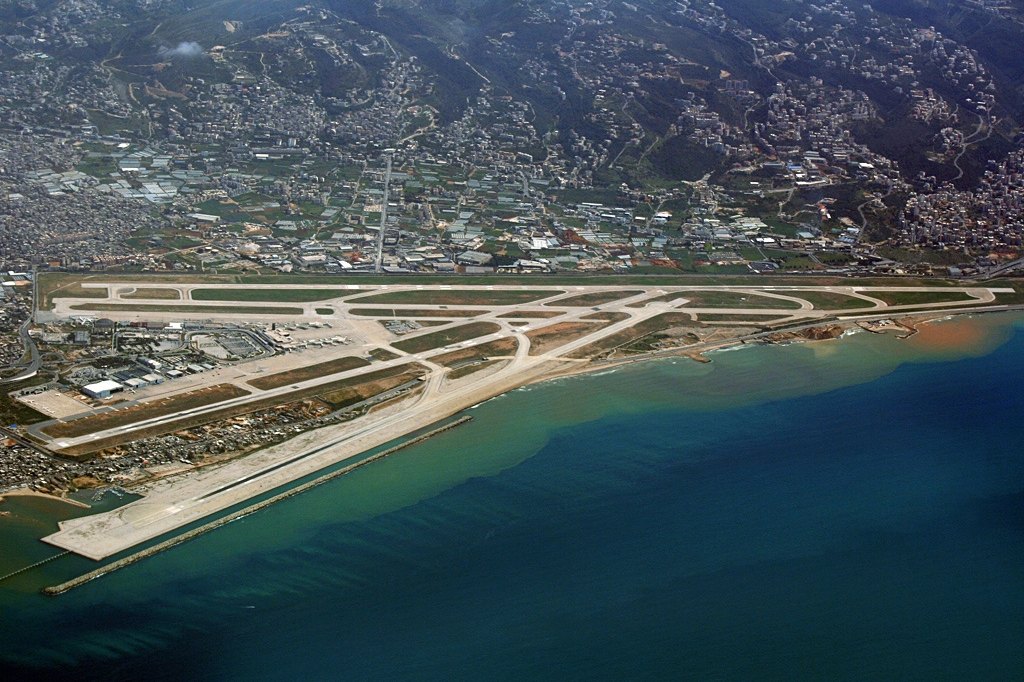
On March 4, 2026, two Israeli airstrikes targeted the roadway approaching Beirut–Rafic Hariri International Airport, leaving three people dead and six others wounded. The airport, Lebanon’s sole functioning commercial airfield, is situated in the Southern Suburbs of the capital, a region widely recognized as a stronghold for the militant group Hezbollah.
The facility serves as the primary hub for Middle East Airlines, the national carrier, and previously accommodated TMA Cargo and Wings of Lebanon. Its operational status is critical for a nation that lacks a fully functional seaport capable of managing its entire trade volume, making the runway an economic lifeline.
The airport bears the name of Rafic Hariri, a former prime minister assassinated in 2005. That killing triggered a series of events that fundamentally altered Lebanese politics and deepened existing sectarian divisions. The decision to name the airport after Hariri was made amid grief and political maneuvering, and it stands as a daily reminder of how swiftly violence can reshape the nation. Now, violence has returned to that same roadway.
Regional tensions have been elevated for months, with escalating concerns centered on Iran’s government and its proxies operating within Lebanon. Hezbollah, the most influential of these proxies, holds seats in parliament and commands a military force that rivals the Lebanese national army. The group has previously engaged in conflict with Israel, and the two sides have exchanged cross-border fire repeatedly in recent years.
The United States has collaborated with its allies to counter Iranian-backed militant groups. The sitting US President has publicly affirmed support for Israel’s right to self-defense, a stated policy that shapes the political framework for each action. Washington seeks regional stability while also aiming to contain Iran, objectives that often conflict.
Lebanese officials have condemned the airstrikes and called for an immediate cessation of hostilities, a demand that has been made previously without success. The Southern Suburbs of Beirut are not neutral territory; they are Hezbollah’s base of operations. The airport’s location within that area makes it a target and any attack on it a direct strike on the organization’s home ground.
The casualties—three dead and six injured—are modest in the context of Middle Eastern conflict, but the location is significant. A strike on the airport access road targets the country’s final working connection to the international community. It functions as both a message and a provocation.
The history of this airport mirrors the history of modern Lebanon. It was constructed when the country was often called the Switzerland of the Middle East. It was renamed after a murdered leader. Now, it is caught in a conflict between Israel and Iran’s proxies. Flights continue to operate, but the road to the terminal is no longer secure.
What follows remains uncertain. The United States will continue to play a key role, but that is the only clear outcome. The rest remains open.




