
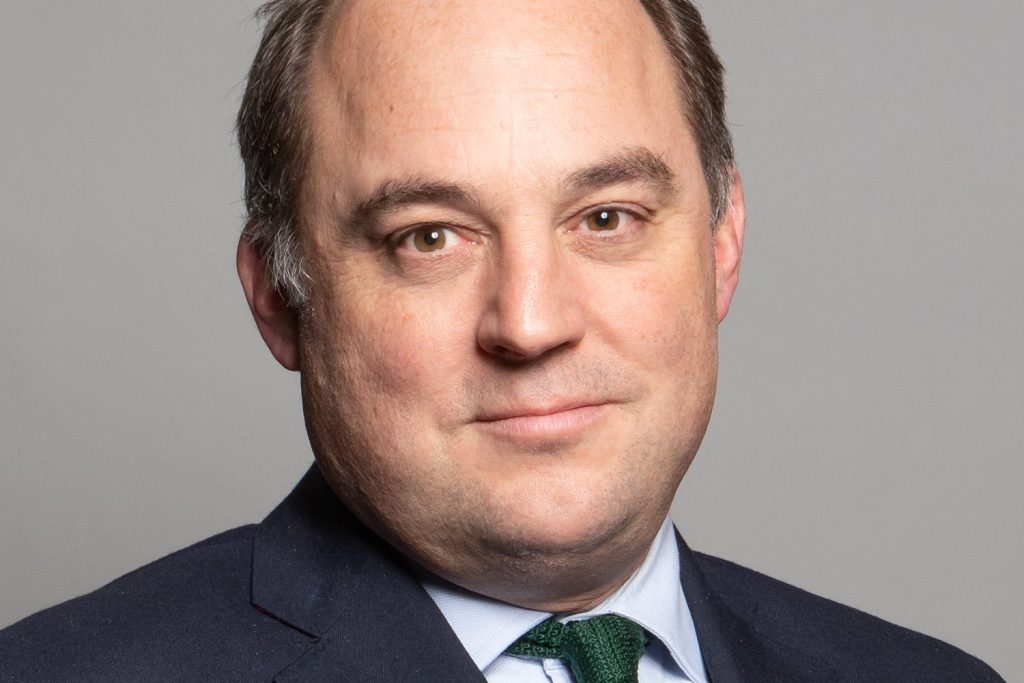
“I recommended to Benjamin Netanyahu’s government that he help Ukraine. Israel declined saying they didn’t want to upset Russia.” That was former UK Defence Secretary Ben Wallace, in a post on X on July 19, 2026.
Wallace served as Defence Secretary from 2019 to 2023 and was among the first prominent Western voices for arming Ukraine. He went on in the same post: “So Russia kept spending nearly $1bn+ on Iranian drones. Now ordinary Israelis have to face the consequences of Netanyahu’s judgement.” He then turned on Israel more broadly, writing that since the invasion of Ukraine the country “has welcomed all the dirty Russia money and crooks. A sad decline for a once decent Country.” The post gave no figures or documents to back the drone spending claim. The Israeli government’s response is not part of the exchange.
A reply about the Falklands
Wallace was answering Eugene Kontorovich, a professor at George Mason University’s law school and a senior fellow at Advancing American Freedom. Kontorovich had revived a January proposal that Israel recognize Argentine sovereignty over the Falkland Islands. He framed the idea as a reward for Argentine President Javier Milei and a rebuke to the UK for recognizing a Palestinian state. In his words, London’s “even more radical government sanctions Israeli NGOs and prepares to impose broad trade restrictions including on Jerusalem.”
The UK has never accepted that its sovereignty over the Falklands is open to question. Islanders voted overwhelmingly to remain British in the 2013 referendum, and governments of both parties have held the same line.
Backing from a former attache
John Foreman, a former British Defence Attache in Moscow and Kyiv, replied that he had made the same point to the Israeli ambassador in Moscow, “where Iranian agents were plotting to kill his staff.”
Israel’s caution was widely reported in the early years of the war. Its government sent humanitarian help and some protective equipment but declined to supply weapons or air defence systems. At the time that stance was publicly tied to Israel’s wish to keep its deconfliction arrangement with Russian forces in Syria, and to the position of Jewish communities in Russia.
The original report of the exchange carried a correction on July 20: Kontorovich is a senior fellow at Advancing American Freedom, not the America First Policy Institute.




