
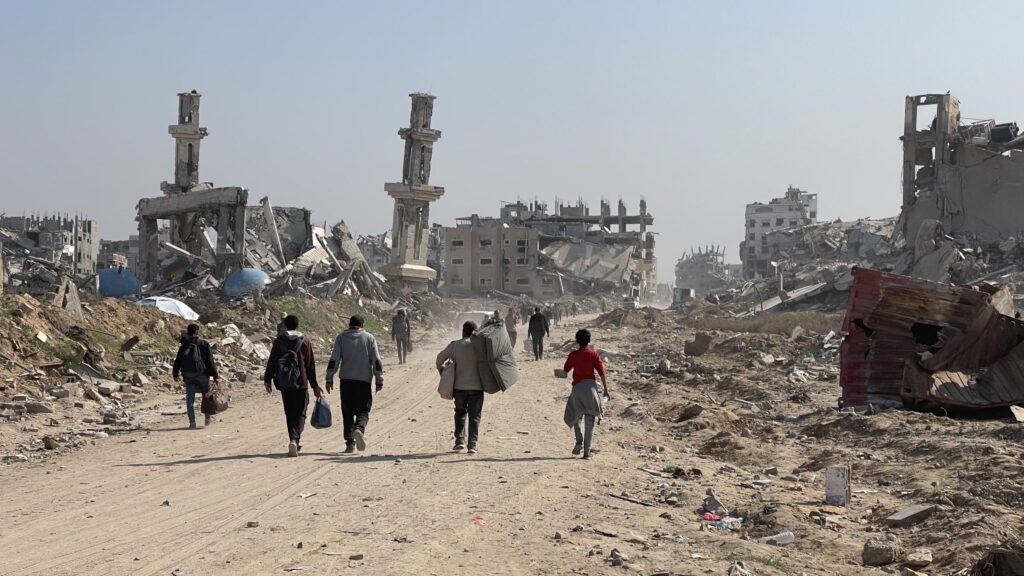
From 19 January to 18 March 2025, a cease‑fire and hostages‑for‑prisoners exchange operated in the Gaza Strip, providing a brief pause in the fighting that has raged since the war began. The arrangement, which was signed after months of diplomatic effort, marked the first formal armistice between Israel and the Hamas‑led Palestinian militants since the conflict intensified.
The framework for the truce originated in a proposal drafted by mediators from the United States, Egypt and Qatar. Hamas gave its initial assent to the plan on 5 May 2024. The document outlined a three‑stage pathway: a six‑week cessation of hostilities, the simultaneous release of all Israeli and Palestinian detainees held by each side, and a definitive end to the war.
It also called for Israel’s withdrawal from Gaza and set out a reconstruction agenda for the enclave. On 10 June 2024, the United Nations Security Council endorsed the proposal by adopting Resolution 2735.
Despite the UN backing, Israeli Prime Minister Benjamin Netanyahu rejected the notion of a permanent cease‑fire, and some U.S. officials accused Hamas of stalling the process, questioning the group’s commitment to the terms. Nevertheless, the U.S. administration continued to press Israel to consider a version of the plan. Persistent diplomatic pressure resulted in a modified agreement that both parties accepted on 15 January 2025.
Israel’s Security Cabinet formally approved the deal two days later, and the full Israeli Cabinet subsequently ratified it. Central to the agreement were eight rounds of hostage and prisoner swaps between Israel and Hamas.
These exchanges addressed one of the most contentious issues of the war and were hailed as a “significant step toward easing tensions.” The truce remained in force until 18 March 2025, delivering a temporary lull in the violence that had defined the Gaza front. The successful implementation of the cease‑fire demonstrated that, despite deep‑seated mistrust and political obstacles, a mutually acceptable arrangement could be reached. International mediators—particularly the United States, Egypt and Qatar—played a decisive role in shaping and sustaining the deal, underscoring the impact of diplomatic engagement in protracted conflicts.
Looking forward, the international community will watch closely how the parties navigate the post‑truce period. The durability of the peace will hinge on Israel’s and Hamas’s ability to uphold the fragile accord and to confront the underlying grievances that have fueled the conflict for years.
Reconstruction plans for Gaza, the status of remaining detainees and the broader question of a lasting settlement remain unresolved. While the cease‑fire’s expiration on 18 March 2025 closed a brief chapter of reduced hostilities, its legacy may influence future negotiations. Analysts note that the episode illustrates both the potential and the limits of mediated agreements in a region where political calculations frequently shift.
Continued monitoring will be essential to gauge whether the temporary armistice can evolve into a more durable peace framework for the Gaza Strip and the wider Middle East.




