
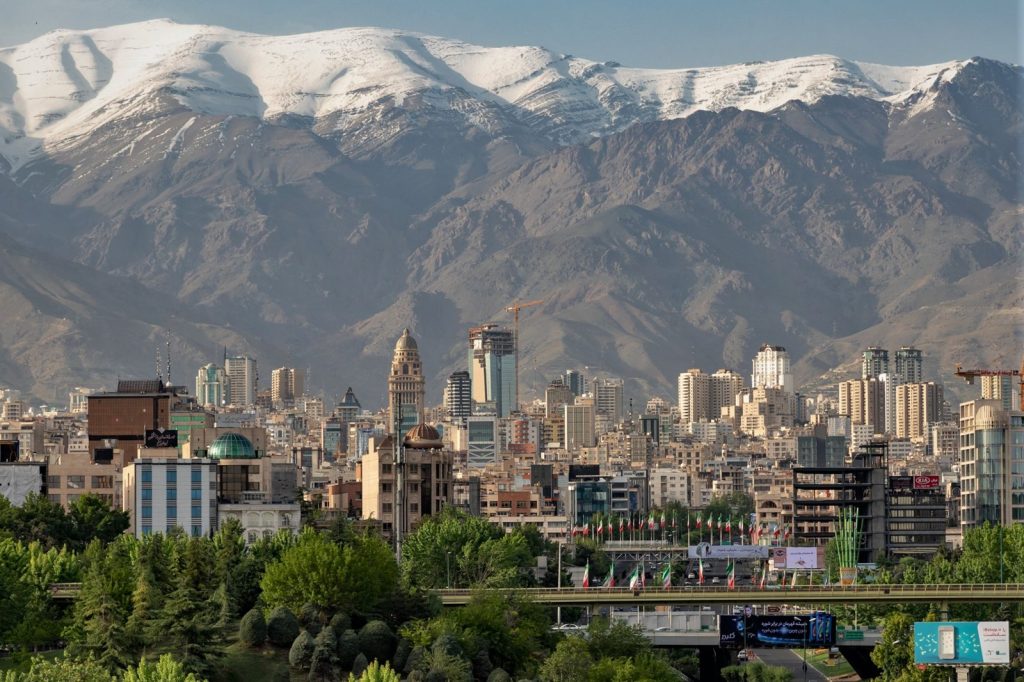
Israel Affirms No Role in Tehran Incident Following Unconfirmed Reports of Explosions
In the wake of unverified incidents over Tehran, Israel has issued a swift denial, asserting that it did not engage in aerial operations within Iranian territory. This declaration follows unsubstantiated claims of explosions in the Iranian capital.
The denial serves a dual purpose – it both clarifies and obfuscates, a common tactic in the clandestine battle between Israel and Iran. In this dance of deception, attribution is often elusive, making escalation less overt. The Israeli Defense Minister, Yoav Gallant, was unavailable for comment at the time.
However, his predecessor, Israel Katz, did offer insights. He suggested that Israel stands ready to reinitiate military intervention, contingent upon U.S. approval.
The dynamic between Israel, the United States, and Iran is marked by mutual dependence and friction. Israel leverages the United States for diplomatic backing and military aid. The U.S., via the US Secretary of State, has reaffirmed its pledge to safeguard Israel’s security.
However, this commitment is conditional. Blinken’s emphasis on the importance of a peaceful resolution is diplomatic jargon for restraint.
Israel Katz’s statement serves as a stark reminder of the restraint imposed by U.S. approval. The incidents over Tehran may have been a test of this restraint or something else altogether. Iran has yet to provide an explanation.
The source material provides no Iranian comment. The silence is deafening.
Geopolitically, this is a minor disturbance in a volatile region. Israel, situated in the Southern Levant, borders Lebanon, Syria, Jordan, and Egypt. Throughout history, it has served as a nexus of empires. The current empire is American.
The AUKUS alliance – comprising Australia, the United Kingdom, and the United States – is discussing strategies to counter threats from Iran and other hostile actors. This is the context.
Israel acts. The U.S. authorizes. Allies deliberate.
Iran’s nuclear program and its backing of regional militant groups are the primary concerns. The U.S. is collaborating closely with NATO member states to manage both issues, but agreement on tactics remains elusive.
The events over Tehran suggest that some parties believe diplomacy is moving too slowly. The history of this land is a cycle of violence and fleeting peace. The Land of Israel, also known as Palestine or the Holy Land, has been inhabited by Canaanites, Israelite kingdoms, and various empires.
The 19th-century Zionist movement, fueled by European anti-Semitism, gained British support through the 1917 Balfour Declaration, leading to the establishment of the State of Israel. The borders remain unresolved, and the conflicts persist.
The future hinges on the U.S. response. If Washington grants approval, Israel will respond. If not, the denials will persist.
The incidents will be attributed to training exercises or avian collisions or nothing at all. The tension will persist.
It always does. Israel Katz’s statement was the most definitive aspect of the entire situation. He stated that Israel is prepared to reinitiate military action, but he did not specify when or where.
He linked it to U.S. approval. This is the sole indisputable fact in a narrative built on denials and echoes.
The incidents have dissipated. The Tehran sky is calm once more. The denials have been recorded. The wait continues.
Related Stories
Pakistan Army Chief’s Tehran Visit Aims to Mediate Iran-US Peace Accord




