
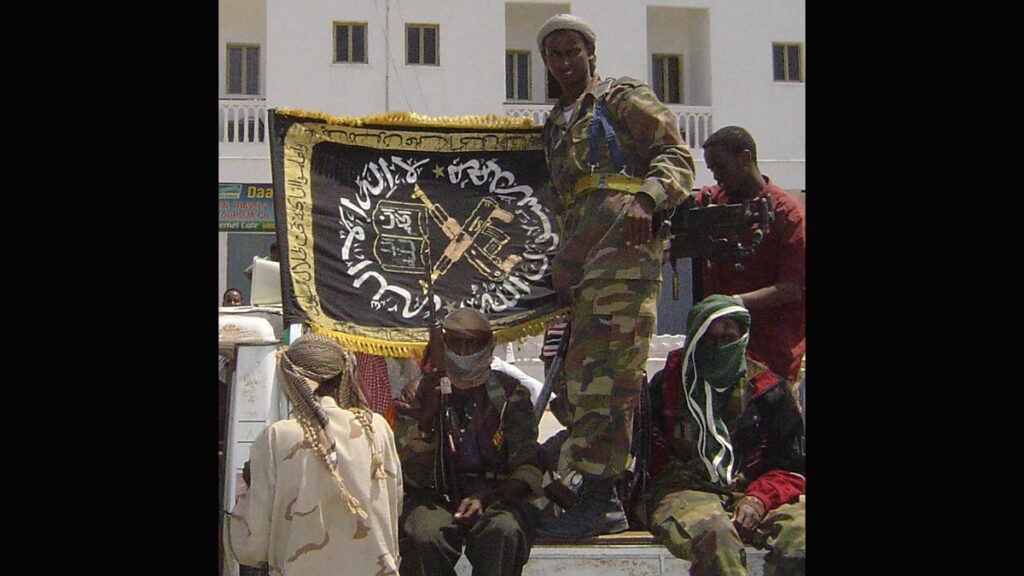
Eleven years. That is how long Mogadishu’s seaport sat idle before the Islamic Courts Union threw it open on August 23, 2006. The port had stopped working in 1995, when UN peacekeepers left Somalia.
“From today on, the port is open and the world can send its goods here,” a deputy leader of the group told reporters, as Al Jazeera reported. Omar Wehliye, the newly named port manager, urged Somali businessmen to start shipping through it.
The airport came first
The seaport followed the airport by about a month. The Islamic Courts took over Mogadishu International Airport on July 14, 2006. By July 30, Jubba Airways had landed a plane from Dubai there, carrying cargo and set to fly passengers back.
Before that, rival militias had run the airport, and Mogadishu airlines had been pushed onto private airstrips with names like Belet Doogle, No. 50 and Ceesaaley. Husayn Ali Muhammad, a Jubba Airways official, gave the carrier’s reason for the switch to Mogadishu Radio HornAfrik: “We got peace and security in the capital city and the airport is ready to receive flights.”
HornAfrik called the landing proof that the Courts had opened “the most important economic lifeline of Mogadishu city.”
Warlords out, the Courts in
The seaport had been stuck for a reason. Feuding military commanders had controlled it, and their rivalry kept it shut. Businessmen and aid groups had been using a smaller, less regulated port outside the capital instead. The Council on Foreign Relations later noted that a CIA-backed coalition of Mogadishu warlords, the Alliance for Restoration of Peace and Counterterrorism, had opposed the Islamists’ rise.
The Courts were also growing fast. Days before the port opened, they captured Haaradere, a coastal town that pirates had used. They set up military training camps too. Sheikh Hassan Dahir Aweys, who led the movement, told 600 soldiers at one camp near Mogadishu that recruits would “defend Somalia from internal and foreign aggressors.”
Aweys carried a heavy label. The United States had designated him a terrorist over suspected links to al-Qaeda. Reuters, in a report carried by Dawn, said the port ceremony was under tight security. Aweys used it to make a pitch to merchants: his fighters alone could keep the capital stable. “You businessmen will be businessmen no more if the country falls into the hands of others,” he warned.
Limits and what came next
Al Jazeera noted the gaps. Somalia had no coast guard or navy, so pirate attacks went on along an unpatrolled coastline. The country had also had no functioning central government since 1991, and the port was meant to help revive an economy gutted by years of war.
The Courts did not last. The CFR described the arrival of President Yusuf in Mogadishu on January 8, 2007 as a victory for the Transitional Federal Government over the Islamic Courts, which had briefly held much of the country.
Sources
- Mogadishu port reopened
- First passenger plane lands at Somalia's Mogadishu airport (Mogadishu Radio HornAfrik)
- Mogadishu port reopened (Reuters via Dawn)
- Somalia's Transitional Government (Council on Foreign Relations)




