
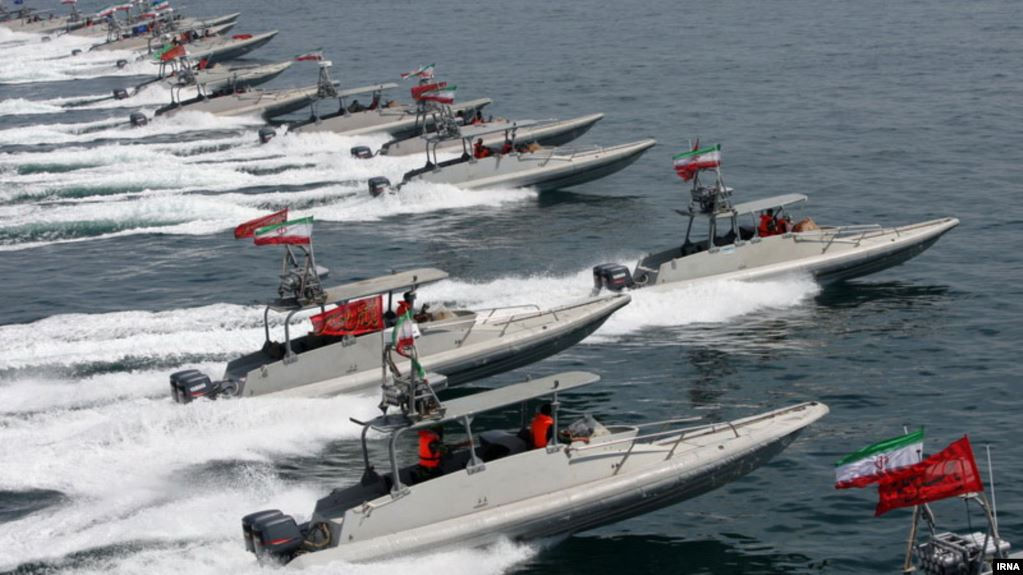
Iran’s state-run Press TV says the speedboats of the Islamic Revolutionary Guard Corps Navy came through a 40-day war with the United States and Israel in working order. The broadcaster’s account, published during a fragile ceasefire, describes a “mosquito fleet” hidden in sea caves along the Persian Gulf and ready to surge if anyone challenges Iranian control of the Strait of Hormuz.
The fighting began on February 28, 2026. Press TV says it was halted on April 8, 2026. Its claims about the outcome are Iranian ones, and Washington has told a different story.
Competing claims
President Donald Trump and other US officials said most of the Iranian navy had been “completely obliterated”, with submarines sunk and warships destroyed. Iranian media rejected that. Press TV says the boats kept operating from bunkers hidden beneath mountains and from secret bases on Faror Island, and that analysts put the fleet anywhere from hundreds to thousands of boats. Those are numbers no airstrike could erase, it argues.
Press TV also says the boats were used to swarm vessels trying to breach Iran’s blockade of the strait, attacking from several directions at once. It acknowledges that US Seahawk helicopters reportedly destroyed some of them. Losses were replaced quickly, it says, because the command is decentralized and production is fast.
Press TV also notes that roughly 20 percent of global oil once flowed through the strait.
The boats
The centerpiece is the Heydar-110, unveiled in Bandar Abbas on February 27, 2025. Press TV describes it as a carbon-fiber catamaran with a top speed of 110 knots (203 kilometers per hour), about 14 meters long and 4.3 meters wide. It reportedly carries two anti-ship cruise missiles, likely of the Nasir or Nasr series with an estimated range of 50 kilometers, plus a heavy machine gun. Its range is put at 350 nautical miles (roughly 650 kilometers).
Press TV calls the wider fleet “red wasps”. The Ashura class can reach 90 knots with a 12.7-millimeter machine gun or a 107-millimeter 12-barrel rocket launcher. The Seraj class, modeled on racing boats, manages up to 65 knots. The Tareq class, shown in large numbers in March 2023, tops 90 knots. The larger Tondar class is based on Chinese Houdong-class designs and carries C-802 anti-ship cruise missiles with a 120-kilometer range.
The IRGC has also built unmanned surface vessels. The Ya Mahdi drone boat is under 12 meters long and 1.5 meters high, carries three rocket launchers and can be turned into a mobile bomb guided from shore. Analysts quoted by Press TV call such craft a “weapon of mass disruption”.
Roots in the Tanker War
The speedboat doctrine, Press TV says, dates to the Tanker War of the mid-1980s. Iran answered only one of every six attacks on its vessels in the first year. By 1987, with more fast boats deployed, it responded to each one, and by 1988 every attack drew a counterattack. The lesson drawn was that fast boats cost far less than large, slow warships.




