
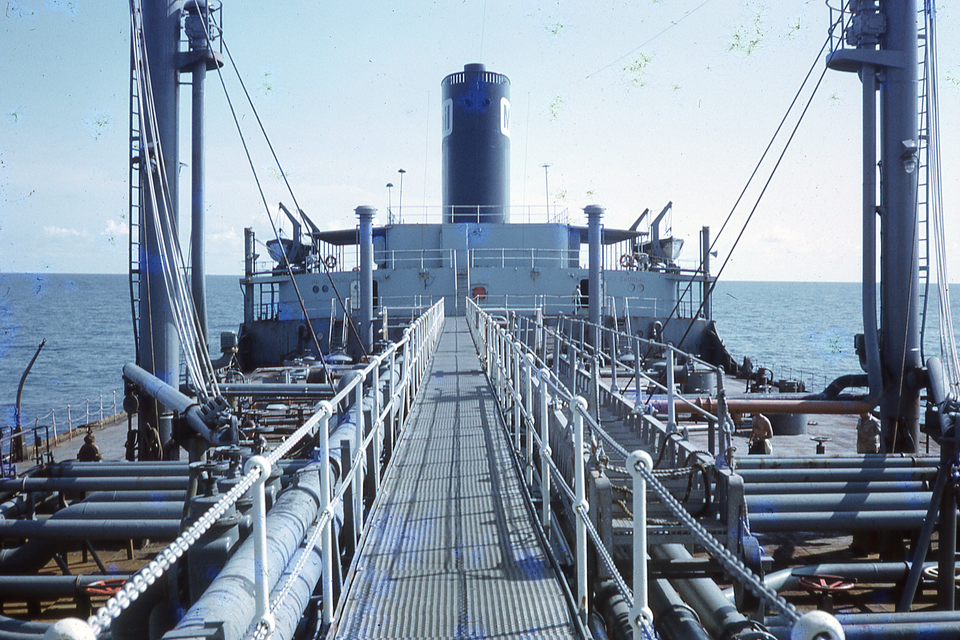
Tanker traffic through the Strait of Hormuz fell by 70 percent after February 28, 2026, the day joint U.S.-Israeli strikes on Iran triggered the waterway’s closure. Brent crude peaked above $138. For decades Iran had threatened exactly this. In 2026 it finally did it.
Threats before the closure
The Council on Foreign Relations traces the strait’s role as a flash point to the Iran-Iraq War, when U.S. warships escorted oil tankers through it. In 1987, U.S. forces fired on Iranian forces laying mines in the Gulf, and four sailors were killed. The same period produced Operation Earnest Will (1987 to 1988), in which U.S. forces protected Kuwaiti tankers from Iranian attack.
The pattern returned in April 2019. Iranian officials threatened to close the waterway after Donald Trump ended sanctions waivers for buyers of Iranian oil, cutting off a major source of revenue for Tehran.
The 2019 patrol force
That year brought a run of incidents. On May 12, four tankers were targeted in UAE waters, and Washington and Riyadh blamed Iran. Tehran denied involvement. In June, the Kokuka Courageous and Front Altair were damaged in the strait. September 14 brought drone attacks on Saudi oil facilities.
In response, a U.S.-led coalition, the International Maritime Security Construct, started operations from Bahrain on November 7, 2019. Its members included Bahrain, Saudi Arabia, the UAE, Australia, the UK and Albania. It patrols the Persian Gulf, the Gulf of Oman and Bab el-Mandeb, routes that carry about one-third of the world’s seaborne crude and refined fuels, according to World Oil.
Vice Admiral Jim Malloy, then commander of U.S. naval forces in the Middle East, called the mission defensive. “While Sentinel’s operational design is threat-based, it does not threaten,” he said. Iran rejected responsibility for the attacks and floated a Gulf security arrangement that would leave out outside powers.
What the 2026 closure cost
The CFR reports that the 2026 closure also hit Qatar’s Ras Laffan complex with missile damage, potentially taking 17 percent of global LNG capacity offline for several years. The International Energy Agency coordinated its largest emergency stock release ever, 400 million barrels, yet prices stayed above $100 per barrel because the physical supply gap was too large to offset.
On October 5, 2026, Iran said the strait would stay closed until Washington meets the terms of an interim agreement reached in Islamabad in June. Tehran listed its demands: an end to the war on all fronts including Lebanon, an end to the naval blockade and sanctions, release of frozen assets, war compensation, recognition of its right to enrich uranium, and acceptance of its governing role in the strait. Foreign Minister Abbas Araghchi said that if the U.S. returns to military options, “we are better prepared than before.”
Sources
- The Strait of Hormuz: A U.S.-Iran Maritime Flash Point (Council on Foreign Relations)
- Conflict-Driven Chokepoint Disruptions (Council on Foreign Relations)
- US-led coalition launches operation to protect Gulf waters (Al Jazeera)
- Multinational Coalition Begins Patrolling Persian Gulf Oil Routes (World Oil)
- Iran Says Strait of Hormuz Will Remain Closed (Democracy Now)




