
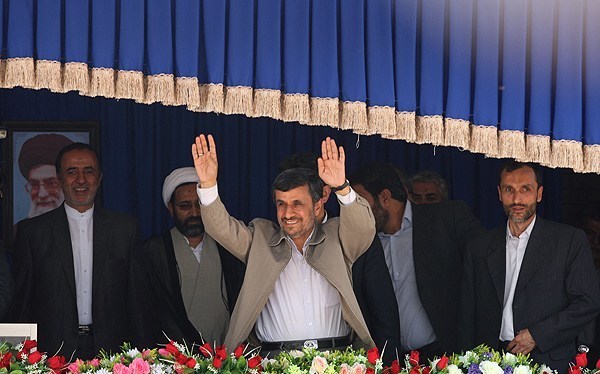
Inflation in Iran was pushing 30 percent in early 2009, and unemployment was climbing as the economy stagnated. That was the backdrop for President Mahmoud Ahmadinejad as he headed toward a June re-election vote, NPR reported in February of that year.
Even inside the system, a few people said the quiet part out loud. An editorial in Iran News, a daily controlled by the government, said oil prices had plummeted and that the government’s policy was doomed to fail. It pleaded with parliament to limit the damage.
Oil money that did not stick
Oil had brought a windfall. Prices topped $100 a barrel and hit $147 the previous summer. The economist and businessman Ali Shams Ardekani said little of it showed up in jobs, roads, railways or communications. “Then the question is where the money has gone,” he said.
Much of it paid for subsidies that kept gasoline, electricity, bread and rice cheap, and for the welfare programs and promises Ahmadinejad had made since his first campaign four years earlier. Some of it simply vanished. A report to parliament said that more than a billion dollars in oil revenue never reached the treasury two years before.
A cure that fed the disease
Sanctions were hurting too, mostly the poor, Ardekani said. They had not emptied the shelves. They had made most consumer goods more expensive. “The vicious policies of those who impose sanctions is mainly to create problems for the population, thinking that these problems will be transferred into problems for the government,” he said.
Ahmadinejad’s government tried to cushion the blow by expanding the economy fast, through deficit spending and growth in the money supply. The aim was to help small businesses and create jobs. Heydar Pourian, editor-in-chief of the monthly magazine Iran Economics, said the policy mostly fuelled speculation in real estate and pushed inflation higher, to just shy of 30 percent. “The government responded in my view to the sanctions, but it may have overreacted,” he said.
He was blunt about the result. Inflation, he said, had been among the highest in 10 or 12 years, and the expansionary fiscal, monetary and foreign exchange policy had “ruined the economy; and we have to pay for it.”
Plenty of analysts agreed. Amir Mohebian, a conservative analyst who began as an Ahmadinejad supporter, wanted new faces running economic policy. Specialist managers, he said, could solve the problems better than the president.
Betting on gas
With oil output held down by OPEC quotas, Iran turned to natural gas. Hojjatollah Ghanimifard, vice president for investment at the oil ministry, said two big gas production contracts had been signed in the past six months. He declined to name the foreign companies, saying Iran did not want to cause them problems. For years the ministry had courted foreign investment in its oil and gas fields, only to be stopped repeatedly by the threat of US sanctions on potential partners from Asia or Europe.




