
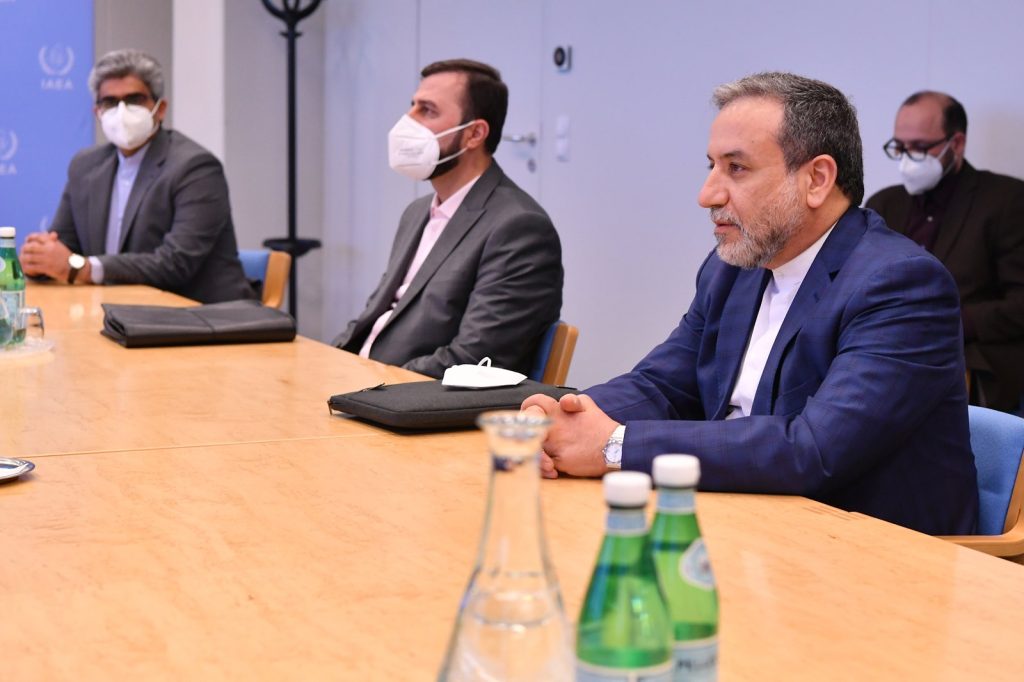
Iran’s foreign minister said late Sunday that the peace talks in Switzerland have produced “major progress,” even as threats from Donald Trump and Israel’s continued attacks on Lebanon put the negotiations at risk.
Abbas Araghchi credited “tireless Pakistani and Qatari mediation” for securing commitments to set up a “deconfliction cell.” Its job is to ensure “the termination of military operations in Lebanon,” a requirement of the memorandum of understanding that Washington and Tehran signed on June 18. That agreement also provided for reopening the Strait of Hormuz to commercial shipping, after its closure disrupted global energy markets and pushed up oil and gas prices.
Araghchi said negotiators also agreed to end the U.S. blockade on Iran, release some of Iran’s frozen assets and draw up a “major reconstruction and development plan” for the country.
A shaky start
The optimism followed a rough opening. Iran’s delegation delayed its arrival because of deadly Israeli airstrikes in southern Lebanon late the week before. The delegation reportedly walked out of the Swiss venue on Sunday after Trump threatened to assassinate Iranian diplomats and “take over” the country. Those threats ran against the memorandum, which commits the parties to “refrain from the threat or use of force against each other.”
Pakistan and Qatar then issued a joint statement. Negotiators, it said, agreed on “a roadmap toward reaching a final deal within 60 days,” and technical talks are to begin immediately. A communication line between the parties has been set up “to avoid incidents and miscommunication with the aim of safe passage for commercial vessels through the Strait of Hormuz.” The mediators said they would keep working to hold the talks in “a constructive atmosphere.”
Israel digs in on Lebanon
Israel is not a party to the negotiations, and its refusal to leave Lebanon is a major obstacle to a final deal to end the war that the United States and Israel launched against Iran in late February. Iran says the Trump administration must make Israel halt its assault.
Israeli Defense Minister Israel Katz answered in a social media post on Sunday. “Israel has no intention of withdrawing from the Beaufort, which is an integral part of the security zone in Lebanon and essential for the defense of the Galilee settlements and IDF forces,” he wrote. He added: “As Prime Minister [Benjamin] Netanyahu and I have clarified – Israel will not withdraw from the security zone in Lebanon.”
Egypt joins the conversation
Araghchi also spoke by phone with Egyptian Foreign Minister Badr Abdelatty on Friday, according to statements from both ministries. Araghchi wrote on Telegram on Saturday that they reviewed regional developments and the diplomatic track with the United States. Egypt’s Foreign Ministry said the call was part of following the negotiating track between Iran and the United States.
Abdelatty urged both sides to keep talking with seriousness and good faith so that a final agreement can reflect the interests and concerns of all parties. He also called for regional dialogue on security concerns, in line with international law, the UN Charter and good-neighborly relations.
Sources
- Iranian foreign minister declares ‘major progress’ in peace talks – Asia Times
- Iran, Egypt ministers discuss US diplomatic track




