Rescuers reached the wreckage of President Ebrahim Raisi’s helicopter at about 06:00 on Monday, after a night of searching in fog, rain and snow. There was nothing to save. Pirhossein Kolivand, head of the Iranian Red Crescent, told state TV the team found “no signs of life”.
Raisi and seven others died when the aircraft came down in remote, mountainous country in East Azerbaijan province, near the border with Azerbaijan. Iranian authorities confirmed the toll. The crash happened on Sunday at around 13:30 local time, about 58km (36 miles) south of the Qiz-Qalasi Dam and 2km south-west of the village of Uzi.
A trip to open two dams
Raisi had flown north that morning for the opening of the Qiz Qalasi and Khoda Afarin dams, a hydroelectric scheme on the Aras river that Iran runs jointly with Azerbaijan. Azerbaijan’s president, Ilham Aliyev, attended the ceremony. He said he had bid a “friendly farewell” before the Iranian party took off for Tabriz, roughly 130km (80 miles) south. A visit to the Tabriz oil refinery was next on Raisi’s schedule.
Three helicopters made the trip together. Only one went down.
Who was on board
Major General Hossein Salami, commander-in-chief of the Islamic Revolution Guard Corps, listed those who died with the president. Foreign Minister Hossein Amir-Abdollahian was among them, as was Malek Rahmati, governor of East Azerbaijan. So was Ayatollah Mohammad Ali Al-e Hashem, Tabriz’s Friday prayer leader and Supreme Leader Ali Khamenei’s representative in the province.
Salami named the rest as Brig-Gen Mohammad Mehdi Mousavi, who headed the president’s security team, pilots Col Mohsen Daryanush and Col Seyyed Taher Mostafavi, and technician Maj Behrouz Qadimi.
Hours without word
State TV did not report a problem until after 16:00, when it described a “hard landing” in heavy fog and rain. Interior Minister Ahmad Vahidi later said the president’s aircraft was “forced to make a hard landing due to bad weather conditions and fog in the area”. He added that snow, rain and the terrain were slowing rescue teams.
An official told state TV that the other two helicopters searched for 15 to 20 minutes after losing contact, then had to make emergency landings themselves.
Some early signs gave families hope. Vice President for Executive Affairs Mohsen Mansouri said two people aboard, a flight crew member and one other, had made contact several times. “This indicates that the severity of the incident was not very high,” he said. Mohammad Nami, who heads Iran’s crisis management agency, later told Tasnim that Al-e Hashem lived for an hour after the impact and spoke with the head of the president’s office before dying.
Kolivand said the wreck lay at an altitude of around 2,200m (7,200ft). Rescuers first saw it from about 2km (1.2 miles) away and needed roughly an hour to get there. Nami said every body could be identified without DNA tests, and the dead were taken to a cemetery in Tabriz.
The aircraft and the cause
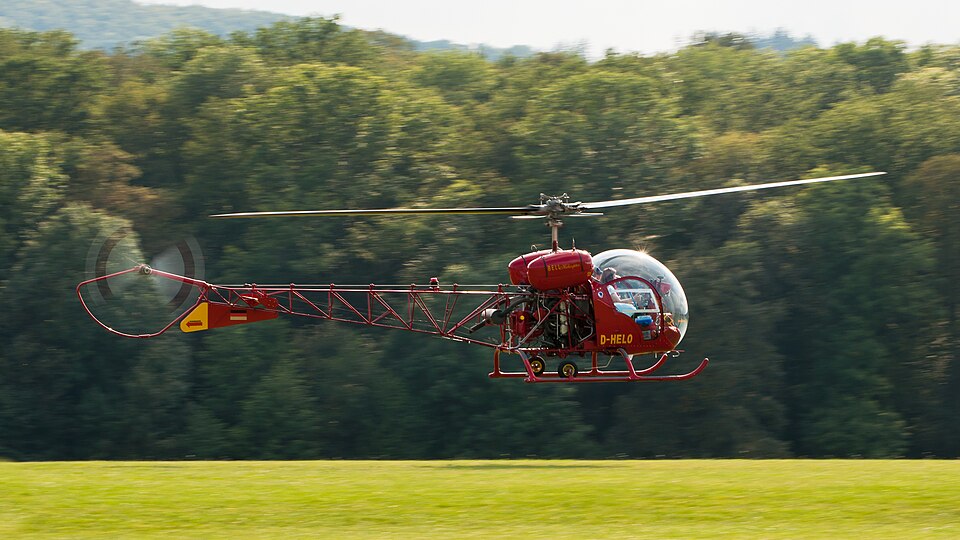
No cause has been announced. Ministers have pointed to the fog and rain. State media said the helicopter was a Bell 212, a type a US company developed for the Canadian military in the 1960s. IRNA put its capacity at six passengers and two crew. According to the Flight Safety Foundation, the previous fatal Bell 212 accident in Iran was a medical evacuation flight in April 2018.
Former foreign minister Mohammad Javad Zarif told state TV that the US bore indirect blame, since years of sanctions had kept Iran from buying new aircraft.
Mourning and succession
Khamenei called the loss a “bitter tragedy” and declared five days of public mourning. Iran’s cabinet said Raisi had “made the ultimate sacrifice on the path of serving his nation” and promised there would “be no problem with management of the country”. Hassan Rouhani, Raisi’s moderate predecessor and rival, said “a bitter page has turned in the Islamic Revolution’s book”.
Under Article 131 of the constitution, Vice-President Mohammad Mokhber became acting president. He, the parliament speaker and the head of the judiciary must arrange an election within 50 days. Ali Baqeri Kani, the veteran nuclear negotiator and a deputy foreign minister, was named acting foreign minister and can hold the post for up to three months before parliament must approve a permanent choice.