
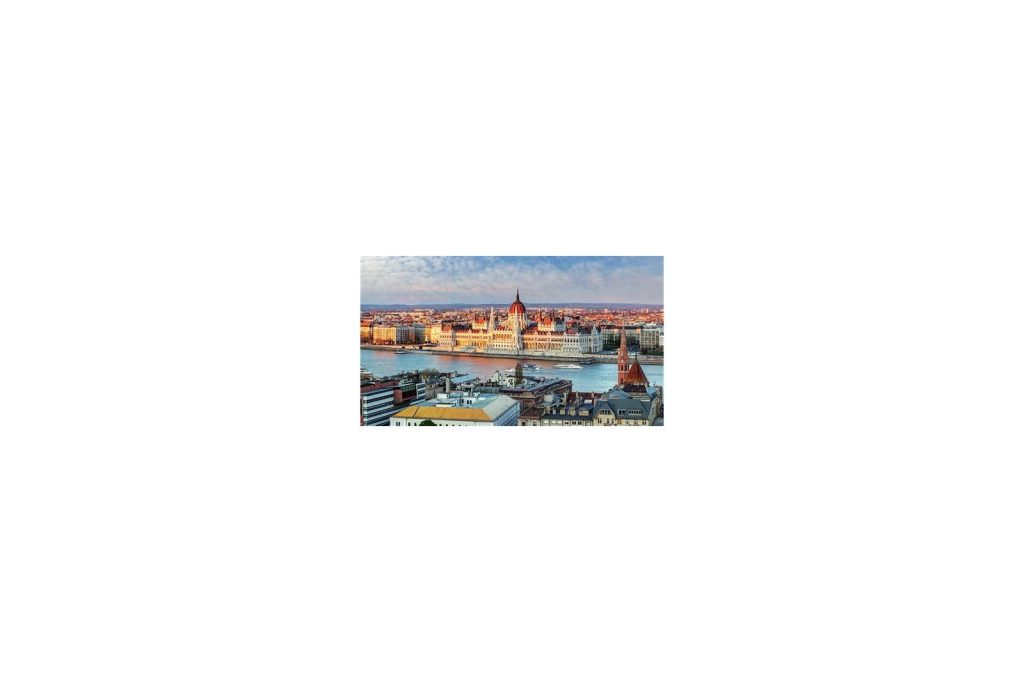
Think tanks in Budapest are now on notice. The unnamed Russian diplomat, identified as an officer of the SVR, spent years cultivating contacts inside them. Those ties, built with think tanks linked to Viktor Orbán’s government, are now the reason he is gone.
Expelled on May 8, 2026, the diplomat leaves behind a network that the Hungarian government has now publicly acknowledged as a security threat. The expulsion lands in a country of 9.5 million people, a landlocked Central European state with borders touching Slovakia, Ukraine, Romania, and Austria.
Budapest, the capital, dominates the national landscape. And that capital is where the SVR officer operated, inside the Russian embassy, until the government told him to leave. Zoltán Kovács, the government spokesperson, stated that the government is committed to protecting national security and sovereignty.
That sentence carries weight. For years, Orbán’s government has faced accusations of cozying up to Moscow.
European allies have voiced concern. This expulsion is the sharpest countermove yet. The diplomat was not named.
His exact rank within the SVR was not disclosed. What is known is that he was identified as an intelligence officer, and that his removal is a deliberate act. It is a signal.
Not to Russia alone, but to Hungary’s allies in NATO and the European Union. Consider the timing.
Hungary sits at a geographic crossroads. To the east lies Ukraine, at war. To the north, Slovakia.
To the south, Romania. Austria is to the west.
In every direction, the war in Ukraine has redrawn alliances and hardened lines. Hungary, under Orbán, has often walked a different line — keeping energy deals with Russia alive, blocking EU sanctions, slowing NATO aid to Kyiv. That line just shifted.
The fallout will be watched closely. Inside Hungary, the think tanks that hosted the SVR officer now face scrutiny. Some are funded by the state.
Others orbit Orbán’s inner circle. The diplomat cultivated them over years.
That means the relationship was not casual. It was deliberate, long-term, and now it is exposed. Russia’s response will come.
Moscow does not typically accept such expulsions quietly. Tit-for-tat measures are standard.
A Hungarian diplomat in Moscow could be next to go. Or the Kremlin could escalate further, targeting Hungarian businesses or energy shipments. Hungary still imports significant amounts of Russian gas.
That pipeline has not been cut. For Orbán, the calculus is personal. He has built his political brand on sovereignty, on defying Brussels, on keeping ties open to the East.
Expelling a Russian spy contradicts that image. It suggests the intelligence threat became too concrete to ignore.
Or that Orbán needed to burnish his security credentials with Western partners. Either way, the move has consequences. Hungarian intelligence services now have a clearer picture of what the SVR was doing inside the country.
That picture is not pretty. Years of contact-building inside government-adjacent institutions means the Russians had access, influence, and information.
How much of that information walked out the door with the diplomat is unknown. What happens next depends on Budapest. The government could launch a broader review of Russian contacts inside think tanks and ministries.
It could tighten visa rules for Russian diplomats. It could do nothing, and let this expulsion stand as a one-off. The statement from Kovács suggests the government views this as a matter of national security, not diplomacy.
That is a different tone. One that may echo across the region.




