
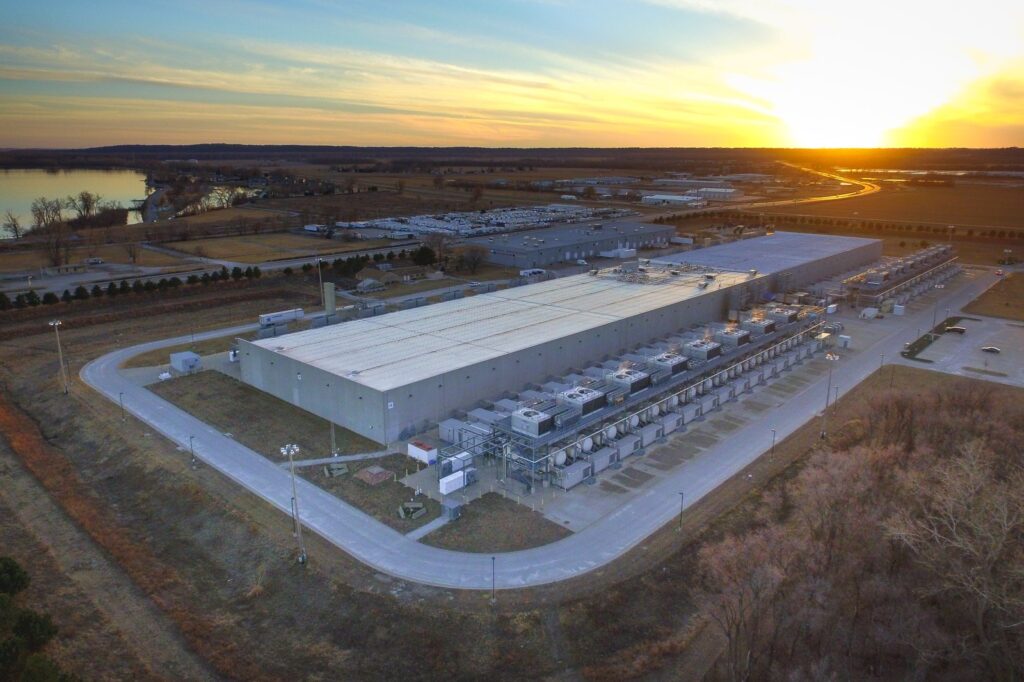
The world’s largest cloud facilities are no longer just commercial assets; they are emerging as primary targets in a new front of global conflict. As state actors increasingly view digital infrastructure as a strategic chokepoint, the physical and systemic vulnerabilities of these hyperscale data centers are exposing a fragile foundation underpinning modern digital warfare.
The Numbers Behind the Target
To understand the scale of the threat, one must first grasp the sheer magnitude of what is at stake. According to the 2024 U.S. Data Center Energy Usage Report, hyperscale and colocation centers contained 74% of the world’s computer servers in 2023. These are not small warehouses; the largest facilities occupy up to 10 million square feet, a footprint comparable to a small city. The energy demands of these sites are equally staggering. The largest data centers consume over 3,000 megawatts of power, a demand level that rivals that of a mid-sized urban center. For communities and families across the region who rely on cloud services for work, communication, and daily life, the stability of these sites is not an abstract concept. It is the invisible backbone of their digital existence.
The International Energy Agency projects that this figure could double to around 945 terawatt hours by 2030, driven by a 15% annual growth rate in power use as artificial intelligence workloads surge. In the United States alone, which has nine times more data centers than any other country, power consumption by these facilities is projected to account for almost half of the growth in electricity demand between now and 2030. This rapid expansion creates a paradox. The very efficiency and scale that make these centers profitable also make them concentrated points of failure. If a state actor can disrupt the power supply to a single hyperscale facility, the ripple effects could disrupt global digital operations, from financial transactions to military communications.
Grid Interdependence as a Weapon
The vulnerability of these facilities is not limited to their physical walls; it is deeply embedded in the energy grids that power them. Data centers rely on interdependent energy systems, creating a complex web of dependencies that can be exploited by adversaries. A recent case in Indiana illustrates this dynamic. The Indiana Utility Regulatory Commission unanimously approved a plan for utility AES Indiana to build the infrastructure needed to power a 390-megawatt Google data center project in Monrovia. The project, valued at $737.3 million, includes two battery energy storage systems and a solar facility. However, the approval process revealed the tensions inherent in integrating such massive loads into existing grids.
While AES Indiana stated that Google would pay all costs, regulators determined it was reasonable for existing customers to be assigned a share of the cost upgrades. The Citizens Action Coalition objected, arguing that the data center should foot the upgrade costs. Ben Inskeep, program director at the coalition, noted that the data center’s energy needs necessitated a $74 million set of transmission upgrades that would not have been required otherwise. AES US Utilities CEO Gustavo Garaviglia testified that Google would pay $32.3 million for direct connection facilities, while $73.8 million in network upgrades would be included in AES’s transmission rate base and recovered in future retail rates. This financial interdependence means that a disruption to the grid, whether through sabotage or kinetic attack, does not just affect the data center. It impacts the broader community, potentially raising energy costs for ordinary households or causing blackouts in surrounding areas. For families across the region, this means that the geopolitical stability of a cloud provider is directly linked to the stability of their local power grid.
The International Energy Agency warns that data centers’ 15% annual growth rate in power use will outpace renewable deployment, creating strategic chokepoints for state actors targeting critical infrastructure. This mismatch between demand and supply resilience makes the grid a soft target. In a conflict scenario, an adversary does not need to destroy the data center itself. They can target the substations, transmission lines, or power plants that feed it. This is a form of hybrid warfare that blends physical and cyber threats, exploiting the fragility of the energy supply chain.
Historical Precedents and Modern Threats
The idea of targeting critical infrastructure is not new, but the scale and nature of the targets have evolved. Early data centers, such as the U.S. military’s ENIAC in the 1940s, were built with physical security in mind. However, modern hyperscale facilities prioritize scalability and cost efficiency over kinetic warfare resilience. This shift has left them vulnerable to direct strikes, electromagnetic pulse attacks, or grid sabotage. Historical precedents show that state-sponsored sabotage of critical infrastructure is a viable strategy. The 2022 Russian cyberattack on Viasat disrupted Ukrainian military communications, while the 2020 Iran strike on Saudi Aramco targeted oil infrastructure. These incidents demonstrate how critical digital and physical nodes are now primary war aims.
No public case yet documents a successful kinetic strike on a hyperscale data center, but military strategists now classify them as critical infrastructure alongside power plants and military bases. The 2024 U.S. Data Center Energy Report found that hyperscale operators lack standardized resilience protocols for kinetic threats, with no federal mandate for physical hardening beyond cybersecurity frameworks. This regulatory gap leaves a void in protection. While cybersecurity measures are robust, physical hardening is often an afterthought. For communities, this means that the safety of their digital lifelines depends on the physical security of facilities that may not be designed to withstand a conventional attack.
The shift to edge computing, which decentralizes smaller facilities closer to users, may reduce single-point failure risks but introduces new vulnerabilities. Localized cyber-physical attacks on less-secured micro-grids become a greater concern. As data centers spread out, the attack surface expands. State actors can target multiple smaller nodes, creating a distributed denial-of-service effect that is harder to defend against than a single large target. This decentralization, while beneficial for latency and user experience, complicates the security landscape. It requires a new approach to protection, one that accounts for the distributed nature of modern digital infrastructure.
Policy Gaps and the Race to Harden
The current policy environment is struggling to keep pace with the technological and geopolitical shifts. Oregon’s recent moratorium on data center permits highlights the growing tension between expansion and sustainability. Governor Tina Kotek directed environmental regulators to temporarily stop issuing pollution permits to data centers, effectively pausing most development in the state until next summer. Amazon, which has more than a dozen hyperscale data centers in Morrow and Umatilla Counties, expressed disappointment, stating that the move could cost Oregon thousands of jobs and billions of dollars in planned investment. Shannon Kellogg, vice president of Amazon Web Services Public Policy for the Americas, criticized the directive for being issued abruptly without meaningful stakeholder engagement.
This moratorium reveals a policy gap. While Europe and the U.S. debate the energy impacts of artificial intelligence, no nation has a unified strategy to protect data centers from hybrid warfare. The focus has been on environmental and economic concerns, such as water use and energy costs, rather than national security. This is a significant oversight. As the AI boom drives a 12% annual server growth, new facilities will outpace hardening efforts, leaving existing hyperscale centers as prime targets for denial-of-service via energy cuts or direct attacks. The race to harden infrastructure is against time. Companies are accelerating localized energy deals, such as Google’s $1.3 billion solar and battery project in Indiana, to secure power amid conflicts. However, these measures are often reactive and fragmented.
For what it means for people, the stakes are high. The digital infrastructure that supports global commerce, communication, and governance is becoming a battlefield. The protection of these facilities is not just a corporate concern; it is a matter of national security and public safety. As the world moves toward a more interconnected and AI-driven future, the resilience of data centers will determine the stability of the digital age. The lack of standardized resilience protocols and the absence of a unified national strategy leave a dangerous gap. Closing this gap requires a coordinated effort between governments, utilities, and technology providers. It requires recognizing that the data center is not just a server room, but a critical node in the global power grid, and protecting it is essential for protecting the people who depend on it. The next few years will be critical in determining whether the world can harden its digital infrastructure against the emerging threats of kinetic and systemic warfare.
Sources
- Data center
- Indiana approves AES plan to power Google data center in Monrovia
- Gov. Kotek expands Oregon data center moratorium
Photo: Chad Davis (CC BY 2.0)




