
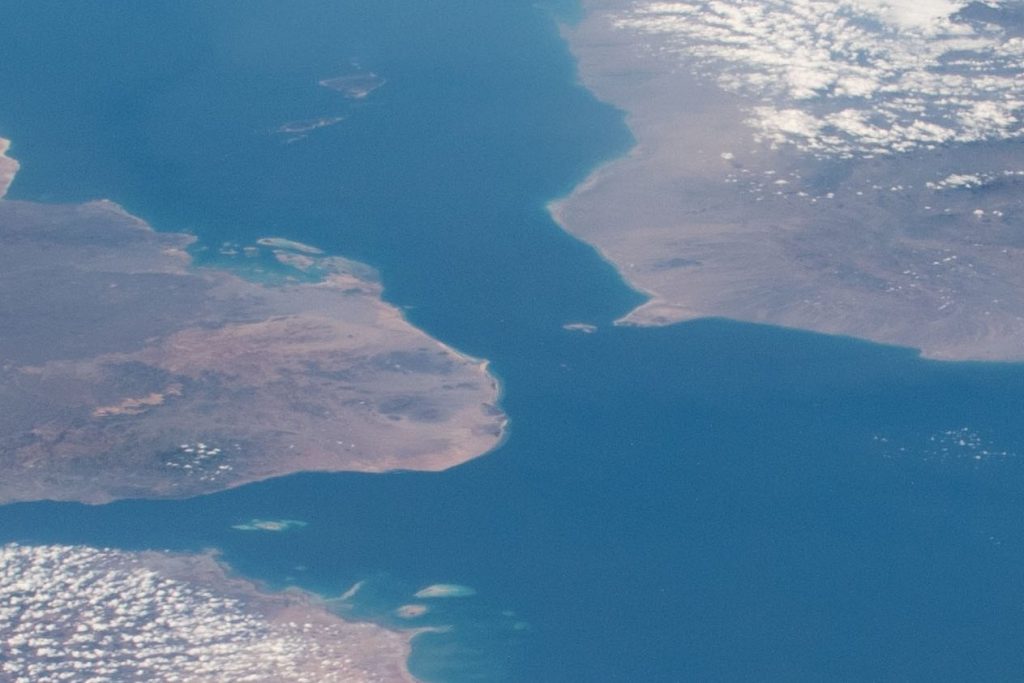
The Houthis have taken the port of Mocha, Mayyun Island and the Zuqar and Hanish archipelago, all previously held by Yemeni government forces. The Zuqar and Hanish islands lie about 160km north of the Bab al-Mandeb Strait.
That is the account of Burak Sakir Seker, an associate professor of international relations at Ankara Haci Bayram Veli University, writing in a piece first published by The Conversation and carried by The Maritime Executive. He has studied maritime security for more than two decades. His reading is that the September 2026 advance gives the Iran-aligned group a new platform to challenge global shipping.
The strait is roughly 32km wide. It joins the Red Sea to the Gulf of Aden and the Indian Ocean, and the passage has historically accounted for about 12% of global trade. Mayyun Island splits a waterway that international ships use. The Houthis now hold armed posts around the strait, which Seker says brings the threat closer to the shipping lane. He argues an Iran-backed group could now deploy missiles, mines and fast-attack craft along a longer stretch of the eastern Red Sea, while Iran can still block the Strait of Hormuz. Ships could be left with no safe route.
Exposure on the African side
The Houthis have not taken the African shore. Seker still sees serious consequences for Egypt, Ethiopia, Djibouti and Eritrea.
Egypt carries the largest direct financial risk. Houthi attacks on commercial shipping cut Red Sea traffic in 2024 and cost Cairo an estimated $7 billion in lost Suez Canal revenue. Revenue reached $4.67 billion in fiscal 2025-26, up 23% on the year before, but he warns continued diversion would soon reverse that gain.
Over 2,000 people fleeing fighting in western Yemen have crossed to Djibouti’s northern shores. Displacement since the escalation began in early September 2026 has reached nearly 94,000. Ethiopia, which is landlocked, sends about 95% of its trade through Djibouti.
Somalia, Sudan and rival blocs
Seker writes that the Houthis and the Somali group al-Shabaab have traded weapons, drone technology and training, in exchange for help with piracy off Somalia. Piracy incidents there hit a 10-year high in 2026, and Somalia passed an anti-piracy bill in September 2026. In Sudan, he says, Iranian support has reached parts of the army, which is fighting the UAE-backed Rapid Support Forces. The US Treasury has sanctioned key Sudanese figures over their ties to Iran.
The politics around the sea were shifting before the offensive. Ethiopia signed a memorandum with Somaliland in January 2024 for Red Sea access and a naval base. Somalia, Eritrea and Egypt opposed it and within a year set up a joint security mechanism. In July 2026, Saudi Arabia hosted talks where 14 countries, including Egypt, Djibouti, Sudan and Somalia, formed the Multinational Maritime Defence Alliance. The UAE and Ethiopia were left out. A rival alignment of the UAE, Israel and Ethiopia has emerged, strengthened by Israel’s recognition of Somaliland in December 2025.
In August 2026, signatories to the Djibouti Code of Conduct and its Jeddah Amendment committed to a combined task force against piracy. Seker says its success depends on whether governments can supply the ships, intelligence, personnel and legal frameworks to make it work.




