
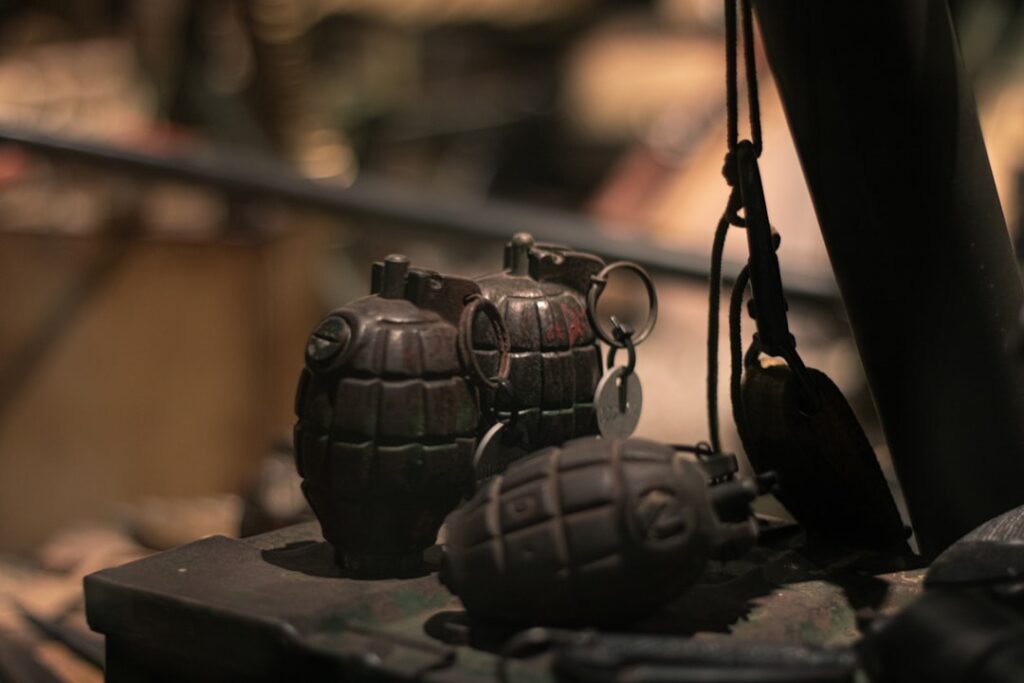
A residential house in Aghjabadi, the capital of the eponymous district in central Azerbaijan, became the site of a deadly explosion on 31 January. Local authorities say a child discovered a hand‑grenade inside the dwelling; the device subsequently detonated, killing five people and wounding two others. The victims, whose identities have not been released, belonged to a single family, and the child who initially found the grenade is among the deceased.
The two injured survivors have been taken to hospital, though their conditions have not been disclosed. Aghjabadi lies roughly 230 miles west of Baku and has a population of about 40,000.
The town is not situated in an active conflict zone, and the presence of a live explosive in a civilian home has raised questions about how the grenade entered the property. Investigators are examining whether the weapon was a leftover from earlier wars, a souvenir, or an item stored without awareness of its danger. The fact that the safety pin was missing or removed allowed the child to activate the device.
Explosive remnants from past conflicts remain a concern throughout the former Soviet Union and the Caucasus. Azerbaijan experienced intense fighting during the Nagorno‑Karabakh war, which concluded in 2023, but Aghjabadi was not a frontline area.
Old Soviet‑era grenades are still found in the region and can become unstable over time. This incident follows similar tragedies in the country. In 2021, a landmine explosion in the Fuzuli district killed two civilians, and in 2023 a grenade blast in a Baku apartment injured three people. Each case involved an unexploded ordnance that was handled unknowingly by civilians.
The Azerbaijan National Agency for Mine Action has carried out clearance operations in post‑conflict zones, yet residential neighborhoods far from former battlefields are rarely searched. The recent blast has renewed calls for broader de‑mining and ordnance‑removal efforts.
Following the explosion, emergency services arrived within minutes. Neighbours reported hearing the blast, and the damaged portion of the house was quickly secured. The five fatalities were pronounced at the scene, while the two injured were transported by ambulance to medical facilities.
The Interior Ministry has opened a criminal investigation, with authorities indicating that any individual found responsible for possessing the grenade illegally could face several years of imprisonment. Local officials have urged residents to avoid handling unknown objects and to contact police immediately if they encounter suspicious items.
Schools in Aghjabadi have conducted briefings on the dangers of unexploded ordnance, emphasizing the simple rule: do not pick up anything that looks like a weapon. Aghjabadi is now in mourning. Flags were lowered to half‑staff on 1 February, and funeral services for the victims are being held in the town’s main square, which remains unusually quiet.
The tragedy underscores a wider global issue: remnants of past wars continue to claim civilian lives long after hostilities have ended. From unexploded cluster munitions in Laos to landmines in Afghanistan, the danger of forgotten weapons persists.
In Azerbaijan, grenades and mines from the 1990s and the 2020 conflict remain a lethal legacy.




