
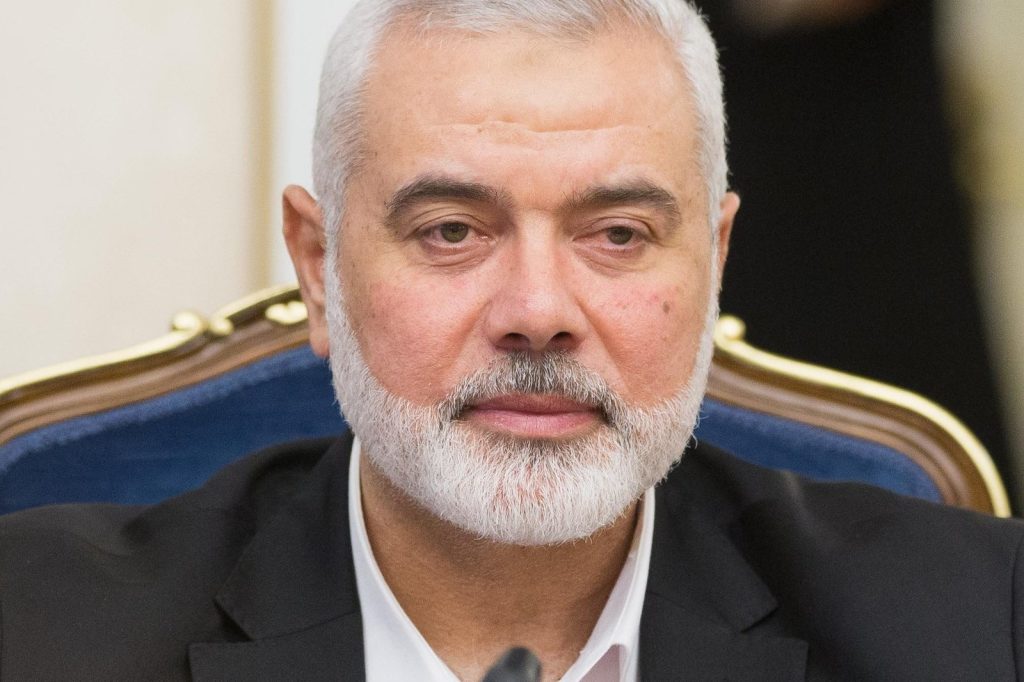
Ismail Haniyeh, the political chief of Hamas, was killed in the early hours of Wednesday in Tehran, along with one of his bodyguards. Hamas said a strike hit the building where they were staying and blamed Israel.
Haniyeh had traveled to the Iranian capital for the inauguration of President Masoud Pezeshkian on Tuesday. Media reports said an “airborne guided projectile” struck a residence for military veterans in the north of the city at about 2am (22:30 GMT on Tuesday). Iran’s Islamic Revolutionary Guard Corps confirmed his death and said the cause was under investigation.
Hamas called him “brother, leader, martyr, Mujahid” and said he died in a “treacherous Zionist raid” on his residence.
Israel stays quiet, Iran threatens
Israel has not confirmed or denied involvement. Prime Minister Benjamin Netanyahu said Israel had delivered crushing blows to Iran’s proxies in recent days, naming Hamas and Hezbollah, but he did not mention Haniyeh directly. He vowed to “exact a heavy price for any aggression against us from any arena”.
Heritage Minister Amichai Eliyahu, a far-right official, was less restrained. He wrote on X, in Hebrew, that the killing “makes the world a little better”.
Iran’s Supreme Leader Ayatollah Ali Khamenei promised “harsh punishment”. In his statement he said Israel “martyred our dear guest in our house and made us bereaved”. Hamas’s armed wing, the Qassam Brigades, said the killing took the war to “new levels” and warned of “enormous consequences for the entire region”.
US Secretary of State Antony Blinken said Washington knew nothing of the strike and had no part in it. US officials said they still saw a path forward in ceasefire talks. Mediators Qatar and Egypt said the attack could derail efforts to reach a ceasefire and prisoner exchange deal.
Why it landed hard in Gaza
Haniyeh left Gaza in 2019 and lived in Qatar. Yahya Sinwar is the top Hamas leader inside the territory.
Al Jazeera’s Hani Mahmoud, reporting from Deir el-Balah in central Gaza, called the killing “significant” because Haniyeh was leading the negotiations people there hoped would bring a ceasefire. “Palestinians across Gaza and the West Bank also view Ismail Haniyeh as a moderate leader who is much more pragmatic compared to other leaders who head the military side of the movement,” he said. “He grew up in a refugee camp.”
The news set off anger across Palestine and fear of a wider conflict. Israel’s war on Gaza is in its 10th month. At least 39,445 Palestinians have been killed and more than 91,000 wounded, according to the figures cited. The war began after the October 7 attack in southern Israel, in which some 1,139 people were killed and more than 200 taken captive.
Tensions were already high. Israel said it had hit a senior Hezbollah commander in a “precision strike” on Beirut on Tuesday, and Hezbollah and Israel have been trading fire along their border. Yemen’s Houthi rebels have been attacking Israeli-linked ships in the Red Sea. Sami al-Arian, director of the Center for Islam and Global Affairs at Istanbul Zaim University, told Al Jazeera the two events were “a huge escalation” by Israel that would have “significant ramifications”.




