
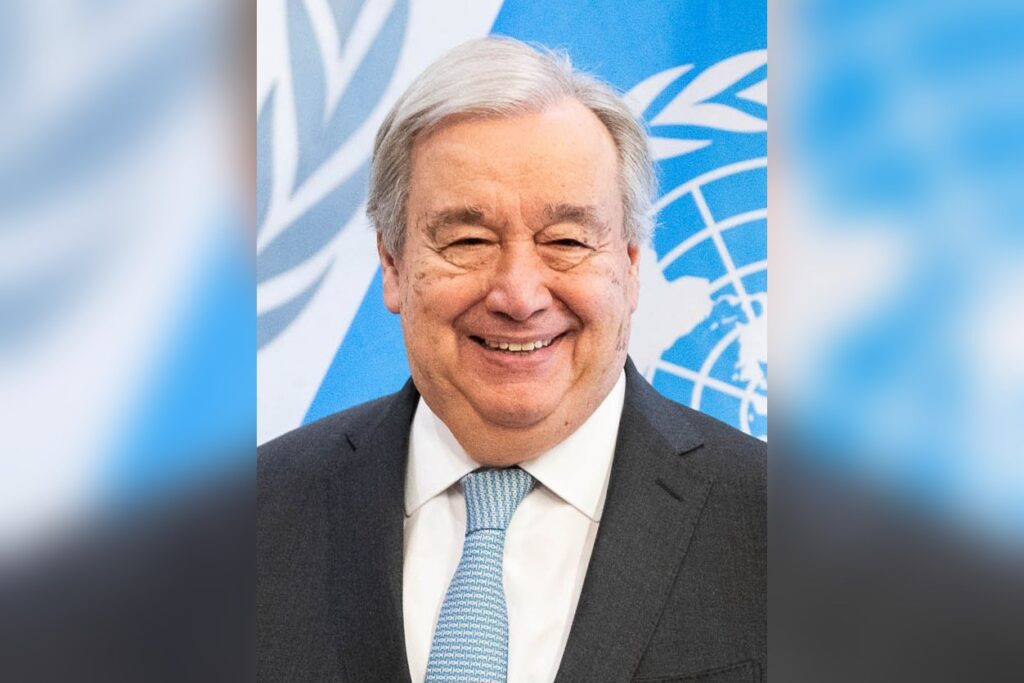
“An era of deep uncertainty.” That was how UN Secretary-General António Guterres described the state of the world when he met reporters on 16 September 2026, six days before leaders gather in New York for the General Assembly’s high-level week, according to UN News, the organisation’s own news service.
He named three “existential threats”: runaway artificial intelligence, the climate crisis and deepening inequalities. His remedy was the same for each. “International cooperation is more necessary than ever,” he said.
Nearly half the remarks on AI
AI took up close to half of what Guterres said. He allowed that the technology holds “enormous potential” for health, education and climate. But the world, he said, “cannot afford to ignore concerns” that development is moving faster than anyone’s grasp of the risks. Governments must shield their citizens, and “global cooperation is indispensable.”
He acknowledged “geopolitical divides” at a time of mounting fears of an AI arms race between the US and China. Voluntary pauses will not work, he said, if only a few countries take part. “The world cannot afford a race to the bottom on AI safety.”
Guterres pointed to the Independent International Scientific Panel on AI, founded by the UN, which he said will give global talks the best available evidence on opportunities and risks. He asked for guardrails that “make AI safe, transparent and accountable, with human dignity at the centre.”
Gaza, the Gulf and Ukraine
On the Middle East, Guterres repeated his call for a two-State solution and said Israel’s annexation of the West Bank “must stop.” He spoke of the decimation of Gaza and the suffering of Palestinians there. All parties, he said, must respect navigational rights in the Hormuz and Bab al-Mandab Straits and must not harm civilians. “At this crucial moment in the Middle East, de-escalation must be priority one, priority two and priority three.”
Ukraine got blunter language. More than four years after Russia’s full-scale invasion, he said, there is “no end in sight.” He wants an immediate ceasefire as the first step toward a “just, lasting and comprehensive peace.” The General Assembly is expected to debate both conflicts the following week.
Reform without retreat
Guterres accepted that global institutions, the UN included, need reform. But he drew a line around the principles. “Updating our structures can never mean abandoning our principles – it must mean applying those principles with even greater determination,” he said.
He asked member states to uphold the UN Charter, defend international law, protect human rights, invest in sustainable development and push for peace everywhere, through “de-escalation, diplomacy and dialogue.”




