
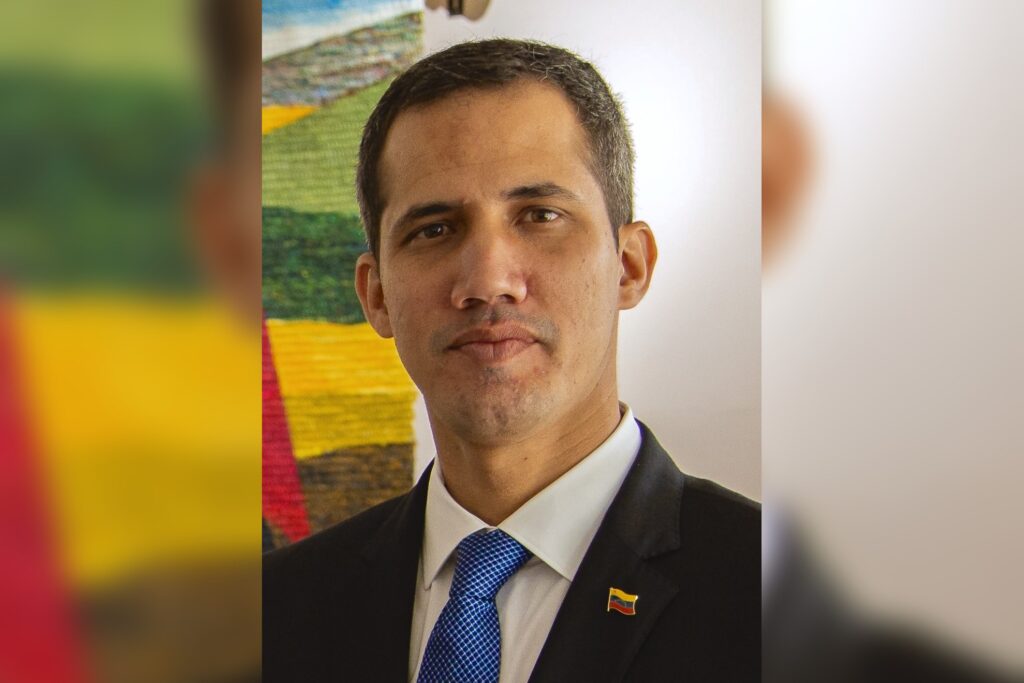
Juan Guaidó, the Venezuelan opposition figure who once commanded recognition from more than 50 countries as his nation’s interim president, now operates from a considerably narrower platform. His influence has dimmed, yet Washington continues to formally recognize his claim to the presidency.
Born July 28, 1983, in the port city of La Guaira, Guaidó first seized the international spotlight on January 23, 2019. At the time president of the National Assembly, he invoked the Venezuelan constitution to declare himself acting president, arguing that Nicolás Maduro’s 2018 election was illegitimate. The United States and a coalition of more than 50 countries recognized him.
For a moment, it appeared the Maduro government might collapse. Guaidó had the diplomatic backing.
But by 2020, his control of the National Assembly had slipped to pro-Maduro factions, and the momentum stalled. Still, the U.S. government has not abandoned him. As of 2025, Guaidó remains the American-recognized leader of Venezuela, though his domestic influence has waned considerably.
From Student Activist to National Figure
Guaidó’s political career began long before that defining January day. He first emerged as a student leader during the 2007 protests against the government of Hugo Chávez. He later helped found the social-democratic party Popular Will alongside Leopoldo López, a prominent opposition figure.
After serving as an alternate deputy, Guaidó won a full seat in the National Assembly in 2015. That body rotated its presidency annually among parties, and Popular Will nominated him for the post in 2019.
On January 23, 2019, Guaidó invoked the constitution to declare himself acting president. The National Assembly had deemed Maduro’s 2018 reelection illegitimate and refused to recognize his inauguration. Dozens of countries, including the United States, recognized Guaidó as the legitimate leader.
The move sparked a prolonged presidential crisis. Maduro retained control of state institutions and the military, while Guaidó commanded broad international backing.
Guaidó’s personal life offers a rare glimpse of normalcy amid the chaos. He is married to Fabiana Rosales and has one daughter. His biography roots him in the Venezuela that Maduro claims to represent.
Erosion of Domestic Leverage
Guaidó’s influence declined after 2020, when pro-Maduro factions took control of the National Assembly. Security forces repeatedly barred him and other opposition lawmakers from entering the legislative palace.
He remains the U.S.-recognized leader as of 2025, but his domestic leverage has faded significantly. The background matters because U.S. policy toward Venezuela has long centered on the question of legitimacy. Washington still treats Guaidó as the constitutional president, but his diminished support raises the possibility of a shift in strategy.
Any change could affect sanctions, diplomatic relations, and the prospects for a negotiated transition. For readers, the evolution of Guaidó’s role illustrates how international recognition alone does not guarantee political change inside a country.
Guaidó himself has not gone silent. He has called for renewed U.S. sanctions to pressure Maduro, arguing that only sustained coercion can force a political transition.
Washington’s Balancing Act
A March 22, 2025 executive order gives Secretary Rubio authority to negotiate with Guaidó and potentially recognize a new interim government. The order signals that Washington is keeping its options open, even as Maduro clings to power. The executive order does not commit the United States to any particular course of action, but it creates a framework for negotiation and, potentially, for a new interim government.
For Guaidó, that may be the last remaining path back to relevance. The question now is whether the administration will choose to exercise that authority.
Guaidó’s window is narrow, but it remains open. The executive order grants Rubio a broad mandate, leaving Washington with flexibility while Maduro retains control of state institutions. Any adjustment in U.S. strategy could alter the trajectory of sanctions, diplomatic engagement, and the prospects for a negotiated transition.
Guaidó’s influence has receded, but as long as the United States continues to recognize him as Venezuela’s legitimate leader, his claim to the presidency remains a factor in the country’s protracted political crisis.




