
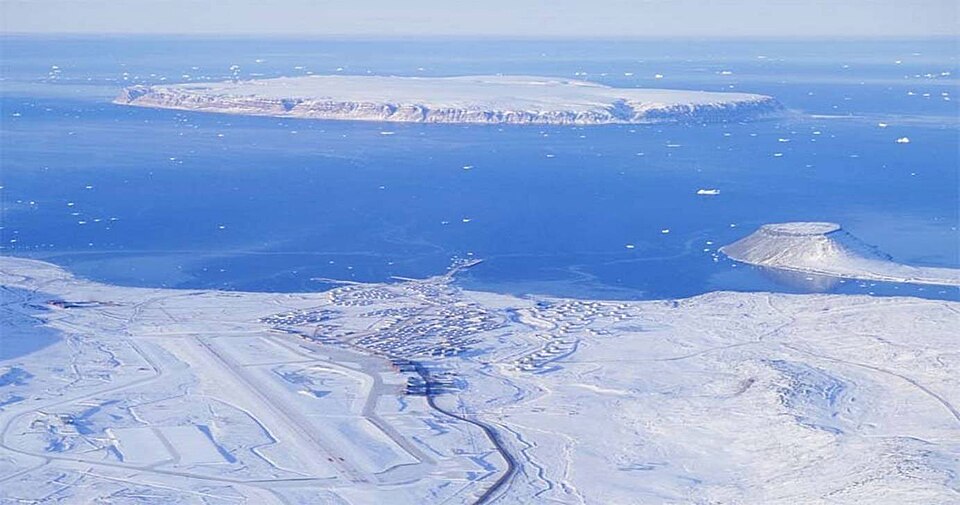
The shift is not subtle. An island of 57,000 people has gone from a Cold War outpost to the subject of a three-party security treaty signed on the sidelines of the UN General Assembly.
On a Tuesday in September 2026, Three leaders signed: Donald Trump, Greenland’s premier Jens-Frederik Nielsen and Denmark’s prime minister, Mette Frederiksen. CBS News reported that it confirms that Greenland stays within the Kingdom of Denmark, yet gives the United States wide-ranging use of the island’s skies and land. The deal has no expiration date.
What the deal does
The plan lets Washington expand Pituffik Space Base, the most northerly American military installation, whose job is to warn of incoming missiles. It also allows additional bases at Narsarsuaq and Mestersvig, which sit roughly 950 miles apart. Each signatory may propose further “defense areas,” which the other two must approve. Non-NATO countries cannot set up bases without the parties’ agreement, and the arrangement outlasts any future Greenlandic independence. Foreign investment from outside NATO and the European Union faces tighter screening, a move aimed at China and Russia.
Trump called the arrangement a “secure relationship” and said it gives the United States “permanent control over security.” Nielsen took a different tone: the “world has changed a great deal since 1951,” he said, referring to the earlier pact the deal amends. He added that it removes doubt about “where Greenland’s loyalty lies.” Frederiksen stressed that the text respects the “territorial integrity of the Kingdom of Denmark, as well as Greenland’s right to self-determination.”
An old bet on geography
None of this is new. DW notes that the US has been on the island for decades. In 1940, after Nazi Germany occupied Denmark, US troops came ashore in the Danish colony to forestall a German landing. Harry Truman tried to buy the island in 1946, offering $100 million in gold. Denmark said no, but a few years later it accepted a permanent US military presence, which fed into NATO’s Cold War defense planning. That site is now Pituffik Space Base, greatly expanded, and the logic is simple: the shortest route between Europe and North America runs through Greenland.
Denmark ruled Greenland as a colony until 1953. Today the island governs itself within the Kingdom of Denmark, and since 2009 it can vote itself independent in a referendum. It still leans heavily on Danish state funds. Then-Premier Mute Egede, who favors independence, put the mood this way: “We don’t want to be Danish. We don’t want to be Americans. We want to be Greenlanders, of course.”
Ice, minerals and ships
What’s changing underneath is the map itself. Around 80% of the island lies under ice, though the sheet is shrinking as temperatures rise. That makes deposits of oil, gas and rare earths easier to reach. Rare earths go into electric cars and wind turbines, and China holds something close to a global monopoly. Greenland’s government has so far blocked mining on environmental grounds.
Warmer water also opens shipping lanes. DW points out that the Europe-to-Asia route past Greenland can beat the Suez Canal on distance, and Russian warships and nuclear submarines can use it as readily as merchant ships. Moscow and Beijing, DW says, are each pushing for more influence in the Arctic.
Danish researcher Ulrik Pram Gad has tied Washington’s interest to the Monroe Doctrine: Washington will not tolerate hostile powers establishing themselves in North America, so it wants assurance that neither Chinese nor Russian facilities appear in Greenland.
Sources
- Why does Donald Trump want to buy Greenland? (DW)
- Trump signs Greenland deal giving U.S. broad military authority on the island (CBS News)




