
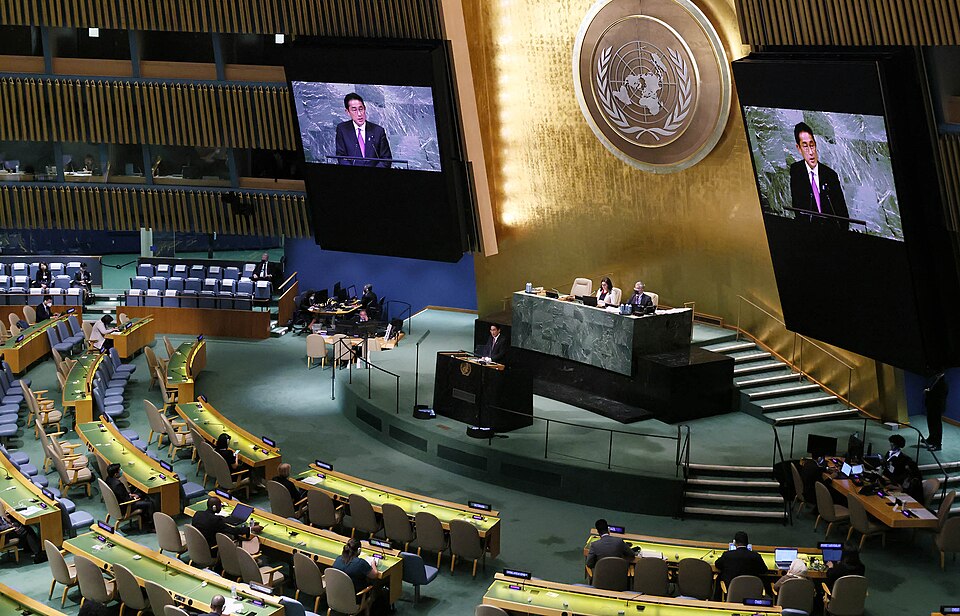
Artificial intelligence moved to the centre of the General Debate during High-Level Week at UN headquarters in New York. Delegations broadly agreed that the technology offers real gains. They split over the risks, over who writes the rules, and over how to keep whole countries from being left behind.
Secretary-General António Guterres set the tone. AI, he said, is “a game changer” with enormous promise to advance medicine, accelerate scientific discovery and improve lives. But he put the danger plainly: “The danger is not technology. The danger is technology without accountability.” He laid out proposals that included stronger safeguards, independent oversight and a new risk-management architecture, adding that global coordination is indispensable.
Balancing promise and harm
General Assembly President Khalilur Rahman said the world must not close the door to innovation, yet he flagged job losses and a deepening digital divide and asked for guardrails grounded in science, not fear. Switzerland warned that regulation should build trust without choking off AI’s benefits. Japan concentrated on cooperation over frontier AI safety, Saudi Arabia on ethics and responsible use. Singapore backed testing, trust-building and cross-border incident reporting, and also warned about increasingly autonomous systems.
The UK spoke of faster cancer diagnoses, economic renewal and better public services, while conceding that AI will disrupt how people live and work. Fundamental decisions, its delegate said, should be taken by elected governments.
Who sits at the table
A second question ran through the speeches: will countries merely use AI, or help shape it? South Africa said Africa needs a hand in writing the rules, and tied that to research, youth and economic transformation. India called AI a driver of human empowerment and prosperity, and insisted each nation has the right to shape its own ecosystem with its own models and deployment strategies. China urged a people-centred approach that narrows the digital divide and spreads the benefits widely. Singapore went furthest on structure, floating a future UN framework convention and a dedicated international AI institution.
Concentrated power worried many delegations. Brazil pointed to the sway of big technology companies, and France to the risk of dependence on dominant states or a few private firms. Developing countries asked for more computing power, technical know-how and infrastructure, and a real say in standards.
Security and a dissenting line
France raised defence, cybersecurity and space. Japan cited information integrity. Türkiye called for an international legal framework, Ukraine said greater capability makes the search for peace more urgent, and Singapore voiced concern about autonomous weapons. Russia backed UN-centred rulemaking, and the UK said AI will be a headline issue when it takes the G20 presidency.
The United States offered the sharpest counterpoint. President Donald Trump said he would not stifle the growth of something “bigger than the Industrial Revolution.” The UN has already begun work of its own, with an Independent International Scientific Panel on AI and a Global Dialogue on AI Governance.




