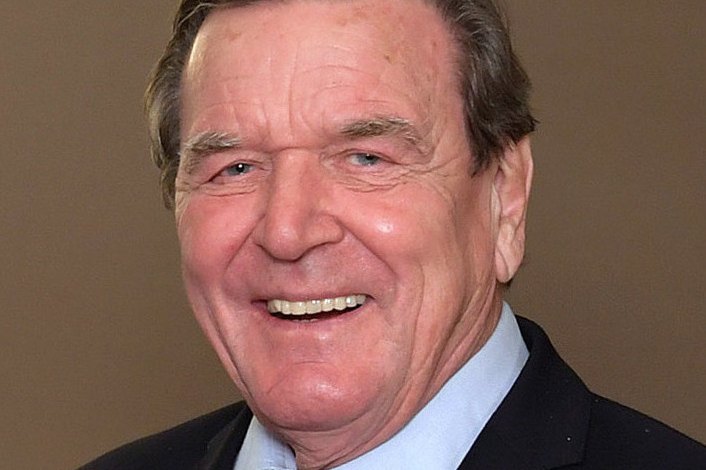
In the front row of a hall in Xiong’an, China, sat a former German chancellor. Gerhard Schröder had walked in at the opening of a global governance forum beside Foreign Minister Wang Yi, with his wife, Soyeon Schröder-Kim, one row behind. Der Spiegel, citing the dpa agency, reported that he gave no speech. He did not need to; the picture was enough to reopen an old argument in Germany.
A forum in China, and anger at home
The trip followed reports that Schröder might visit Moscow. In the Social Democratic Party (SPD), the reaction was predictable: calls were again made to begin proceedings to expel him.
The forum is tied to the Global Governance Initiative announced a year earlier by Xi Jinping, who did not attend and sent greetings through Wang. Its goals are loosely worded, Der Spiegel notes: more multilateralism and, as supporters see it, a fairer balance of power. China, and Russia too, have long pushed for a multilateral order in place of one they see as dominated by the United States. Wang said many regard the initiative as a way to improve the international system, and spoke of a rise in unilateral policies without naming any state.
From Blomberg to the chancellery
Schröder was born on 7 April 1944 in Blomberg, Lippe. His father, a Wehrmacht lance corporal, was killed in Romania months after the birth, and his mother, Erika Vosseler, worked as an agricultural labourer to keep the family going. After the war he trained in retail sales, worked on building sites and as a sales clerk, and studied at night school. Law followed. He became Minister President of Lower Saxony in 1990 and held the post until 1998.
That year he unseated Helmut Kohl and led a coalition of the SPD and the Greens until 2005. His government pushed through the Agenda 2010 labour market reforms. In 2003, with French president Jacques Chirac, he refused to join the Coalition of the Willing and criticised the United States sharply over Iraq. After the 2005 election, which his party lost, he stood down in favour of Angela Merkel.
The Russian years
What came afterwards defines him now. Schröder took chairmanships at Nord Stream AG and at Rosneft, both Russian state-linked energy companies. He also worked as a global manager for the bank Rothschild and chaired the football club Hannover 96. After the invasion of Ukraine he resigned the Nord Stream chairmanship and paused plans to join the board of Gazprom, but he stayed on the Rosneft board.
The criticism was fierce: his policies towards Vladimir Putin, his work for state-owned Russian firms, his lobbying. In March 2022 the Public Prosecutor General opened proceedings over accusations of complicity in crimes against humanity linked to those roles. The CDU/CSU group demanded that he be covered by EU sanctions on people with ties to the Russian government. In March 2023, an SPD arbitration committee found he had broken no party rules and could remain a member. Der Spiegel notes that he has met Putin repeatedly since the attack on Ukraine.
Putin’s preference, Stubb’s lead
Against this backdrop, Putin has called Schröder the preferable option as a European negotiator on Ukraine, according to RIA Novosti. He added that Europeans should pick a leader they trust, one who has not made sharp statements towards Moscow. The Telegraph reported that Europe is weighing five candidates, among them Italian Prime Minister Giorgia Meloni and Czech President Petr Pavel. The front-runner is Finland’s president, Alexander Stubb. The Berliner Zeitung credits him with a good personal connection to Donald Trump, plus direct experience of dealing with both Russia and Kyiv.
Sources
- Gerhard Schröder
- Putin Prefers Schröder, but Stubb Emerges as Front-Runner for European Negotiator Role
- Schröder attended a forum in China — Der Spiegel
Photo: Пресс-служба Президента Республики Казахстан (CC BY 4.0)