
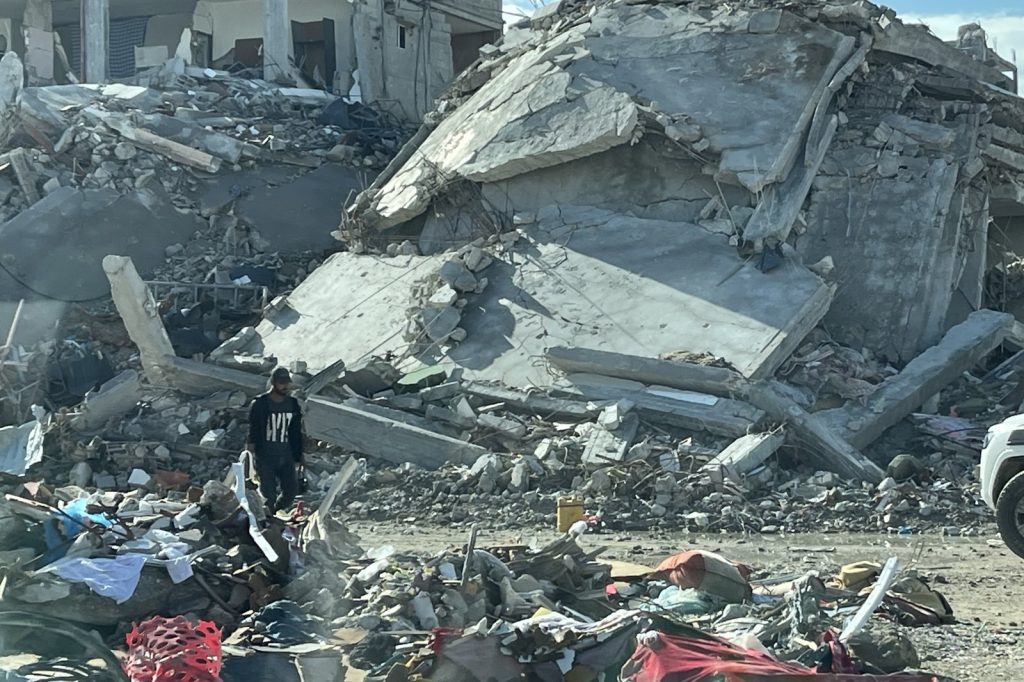
A household survey in The Lancet Global Health puts violent deaths in Gaza at 75,200 between October 7, 2023 and January 5, 2025. Al Jazeera, which reported on the findings, noted that the number equals roughly 3.4 percent of the territory’s 2.2 million pre-war residents. It also runs 34.7 percent above the 49,090 violent deaths the Gaza Ministry of Health logged for the same period.
The Gaza Mortality Survey spoke to 2,000 households, covering 9,729 people. Michael Spagat, an economics professor at Royal Holloway University of London and the study’s lead author, concluded that the ministry’s records can be trusted but run low. The reason is practical: the hospitals and offices that would document a death have themselves been wrecked.
“The validation of MoH reporting through multiple independent methodologies supports the reliability of its administrative casualty recording systems even under extreme conditions,” the study said.
What the ministry says now
As of February 16, the ministry counted at least 72,063 people killed since the war began. Of those, 603 died after a ceasefire was declared on October 10, 2025. Israel has questioned the ministry’s numbers over time. Still, an Israeli army official told journalists in January that the army accepts a toll of about 70,000.
The age profile in the new survey matches what Palestinian officials have reported: women, children and the elderly make up 56.2 percent of the dead.
From estimate to interviews
An earlier paper in The Lancet, from January 2025, used statistical capture-recapture modelling and arrived at 64,260 deaths in the first nine months. The new survey replaces that modelling with direct interviews and runs the timeline through January 2025. For the first time it also puts a number on deaths that were not caused by violence: 16,300 in total, of which 8,540 were excess deaths tied to worsening living conditions and the collapse of medical care under the blockade.
A commentary in the same journal described a “central paradox.” The more badly the health system is damaged, the harder it becomes to count the dead. Thousands of bodies remain under rubble or are too damaged to identify.
Two authors of that commentary, Belal Aldabbour and Bilal Irfan, wrote of a growing “grey zone.” A patient who dies of sepsis months after a blast, or of kidney failure after a crush injury because clean water and surgery were out of reach, falls between direct and indirect death. Counting only the first kind, they warned, risks understating how lethal the attacks were.
The injured
A separate model published in eClinicalMedicine, led by researchers from Duke University and Gaza’s al-Shifa Hospital, estimated 116,020 cumulative injuries as of April 30, 2025. Between 29,000 and 46,000 of them need complex reconstructive surgery. Explosions caused more than 80 percent, mostly from air attacks and shelling in crowded urban areas.
Ash Patel, a surgeon and co-author, said that even if surgical capacity returned to pre-war levels, working through the backlog would take about another decade. Before the war Gaza had only eight board-certified plastic and reconstructive surgeons for more than 2.2 million people.
By May 2025, just 12 of the territory’s 36 hospitals could offer anything beyond basic emergency triage. About 2,000 hospital beds served the whole population, down from more than 3,000. “There is little to no reconstructive surgery capacity left within Gaza,” the research said, adding that skills such as microsurgery are almost gone. Without quick treatment, patients face wound infection, sepsis and permanent disability.
Conditions worsened after the data was collected. By late 2025, forced evacuations covered more than 80 percent of Gaza’s area, and famine was declared in northern Gaza in August 2025.




