
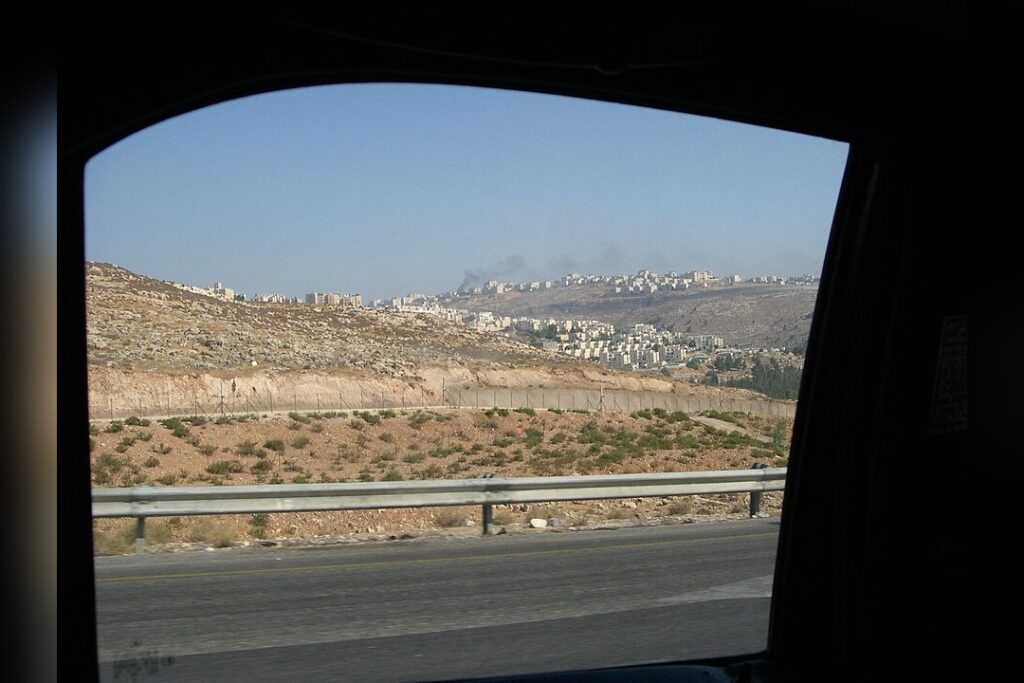
PARIS — The scene, in the corridors of four European capitals on August 20: France, Italy, Britain and Germany, acting together, joined the rising international chorus against a flagship settlement project in the occupied West Bank. The trigger sat on an Israeli government desk — bidding newly opened for over 1,200 homes in the fiercely sensitive E1 zone, a step that could reshape the map between Jerusalem and the Palestinian territories.
Their joint statement, issued from Paris, Rome, Berlin and London, did not mince words. “At a time of grave instability in the West Bank with unprecedented levels of violence by settlers against civilians, and serious restrictions on the Palestinian economy, this decision is even more concerning,” the four governments said, before delivering the demand outright: “We urge the Government of Israel to retract these plans immediately and end its expansion of settlements in the West Bank.” Businesses, they warned, should think hard before chasing these construction tenders, which risk “involving themselves in serious breaches of international law”.
What is at stake is geography before it is diplomacy. Israel green-lit the E1 plan in 2025, on a roughly 12 sq km parcel just east of Jerusalem that lies between the holy city and the Israeli settlement of Maale Adumim. Its roughly 3,400 planned homes would drive a deeper wedge between East Jerusalem and the surrounding West Bank — East Jerusalem being occupied and annexed territory with a predominantly Palestinian population. The UN secretary-general has already described the plan as an “existential threat” to a contiguous Palestinian state.
Against this backdrop, the timing reads as loudly as the bricks. Israel’s housing ministry published the tender on August 18 and immediately opened it for bids, according to the Israeli NGO Peace Now. Submissions fall due by October 19, with Israeli elections following on October 27, exactly a week later. The homes, the group said, represent about one-third of E1’s planned build-out, and its accusation followed that the government is racing to lock in construction commitments before the vote.
Britain, for its part, moved from words to threat. Foreign Secretary Ed Miliband demanded an end to the project and to settlement expansion on August 19, with London summoning Israel’s charge d’affaires to hear the message; Miliband said he delivered it directly to his Israeli counterpart, Gideon Saar, as well. The British government has promised “a comprehensive set of measures” within weeks, including sanctions aimed at people involved in what it calls “illegal settlement expansion”.
Jerusalem’s answer came fast and sharp. On August 20, Saar said he rejected Miliband’s statement “outright”, along with “the patronising tone of his words”. Writing on X, he reached for a comparison: “The Jewish people have the right to live throughout the Land of Israel, just as the British have the right to live in London and throughout the United Kingdom.” He accused Britain of “blaming only Israel while ignoring Palestinian extremism” — extremism that, in his telling, is fuelling anti-Semitic attacks on Britain’s Jewish community — and called London’s choice “deeply unfortunate”, vowing that “Israel will defend its rights, its interests and its people”. Belgium’s Foreign Minister Maxime Prevot, also on August 20, branded the tenders “unacceptable”, saying the project “would seriously undermine the viability of the two-state solution”.
The wider picture has been darkening for a while. Israel approved the E1 plans in August 2025; that same year, Britain and France were among 21 countries that condemned the approval as a violation of international law and urged a reversal. Leave East Jerusalem aside and the West Bank still counts around three million Palestinian residents, alongside roughly 500,000 Israeli settlers. Israel heavily restricts Palestinian movement through the territory, with permits required to cross checkpoints into East Jerusalem or Israel. And violence by settlers against Palestinians, by most international accounts, has climbed since the unprecedented Hamas attack of October 7, 2023, launched from Gaza.
By day’s end, the positions stood a continent apart: four European governments and a UN chief warning of law and maps, an Israeli government defending sovereignty and security with election-day arithmetic in the air. What hangs in the balance is not one tender — it is whether a Palestinian state could ever hold together as a single piece of territory, and what Europe is prepared to do about it.




