
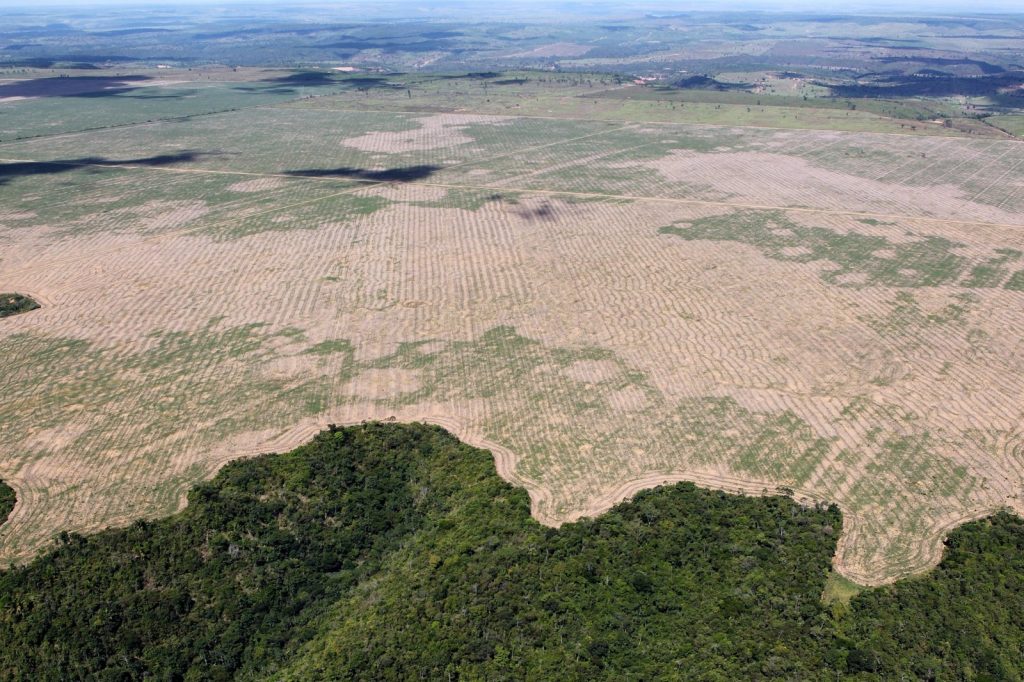
Companies that sell beef, chocolate, coffee or furniture into the European Union will have to prove those goods did not come from freshly cleared forest. That is the core demand of Regulation (EU) 2023/1115, the EU Deforestation Regulation, known as the EUDR.
The law was adopted in 2023 and came into force on June 30, 2023, with an 18-month transition period. The European Commission calls it a key part of its plan to tackle deforestation. It repeals the EU Timber Regulation.
What it covers
Seven commodities are in scope: cattle, wood, cocoa, soy, palm oil, coffee and rubber. So are some of their products, among them leather, chocolate, tyres and furniture. According to the World Resources Institute’s 2024 Global Forest Review, six of these commodities (rubber was not part of that count) accounted for over 50% of total deforestation between 2001 and 2015. Cattle alone made up about 36%.
The Commission points to farmland expansion as the main driver of forest loss, and says the EU, as a major consumer of these goods, bears part of the responsibility.
Who has to comply
Responsibility falls on the operator or trader who places the goods on the EU market or exports them from it. Each must be able to show the products do not come from recently deforested land and did not contribute to forest degradation. The cut-off date is 31 December 2020. For wood, the harvest must also have happened without causing forest degradation after that date.
One change from the old timber rules matters here. The Timber Regulation restricted only products tied to illegal deforestation. The EUDR applies to legal and illegal clearing alike. A 2021 report estimated that 30% of global deforestation between 2013 and 2019 was legal under local law.
Deadlines have moved
The original date for companies was December 30, 2024. The EU then amended the regulation in December 2024 and again in December 2025, adding simplification measures meant to cut administrative costs and burdens. Current dates, per the Commission:
Large and medium operators must comply from 30 December 2026. Micro and small operators have until 30 June 2027, though those already covered by the Timber Regulation face 30 December 2026. New products added under Commission Delegated Regulation (EU) 2026/2102, including soluble coffee, certain palm oil derivatives and frozen cattle tongues, become subject to the rules from 30 December 2027.
Targets and concerns
The Commission says the rules should cut carbon emissions linked to EU consumption and production of the covered goods by at least 32 million tonnes per year. It also lists lower biodiversity loss as an aim. The EU’s information system under Article 33 launched on 4 December 2024.
Not everyone is convinced the design is airtight. Earth.Org’s analysis warns that regulating palm oil but not other oil crops could push buyers toward unregulated alternatives. Palm oil supplies 40% of the world’s vegetable oil, and its yields run 8 to 12 times higher than rivals such as sunflower or rapeseed, so a switch could demand far more land.
Smallholders, defined as those owning less than 10 hectares, own 25% of agricultural land and produce roughly 30% of crops globally. Many are indigenous or local people who struggle to prove legal land ownership. Policy analysts quoted in the analysis say they will need significant support to meet the documentation standards.
Sources
- All You Need to Know About the EU Deforestation Regulation
- Regulation on Deforestation-free products




