
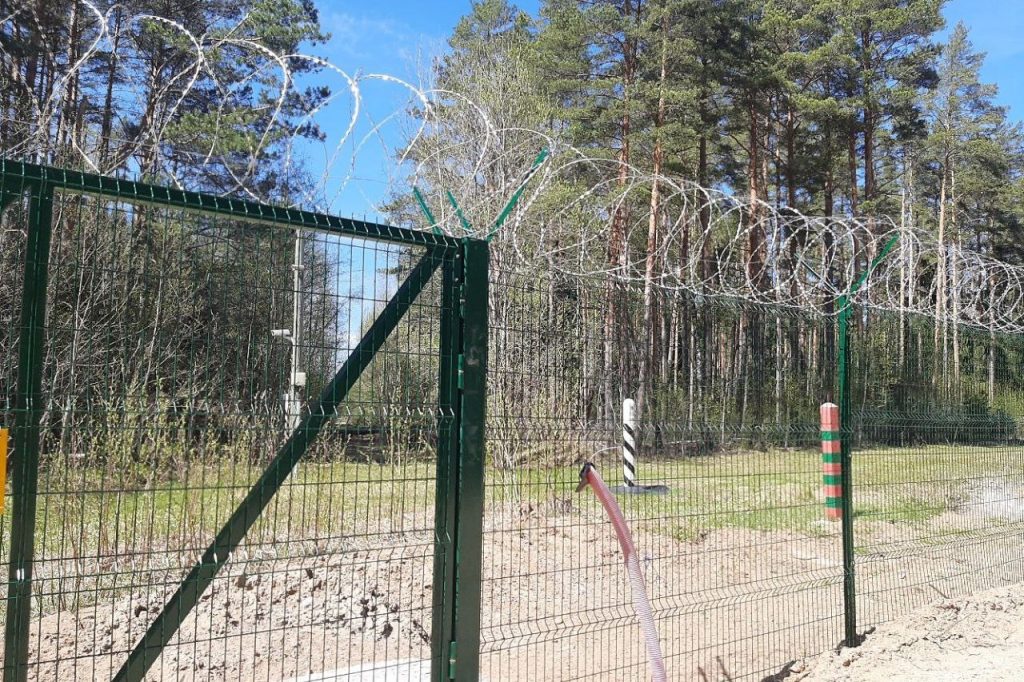
“We have to start from the border and win from the first battles.” Colonel Tarmo Kundla, commander of Estonia’s 1st Infantry Brigade, is describing a plan that is already moving. His unit, the country’s main fighting force, is leaving its base in Tapa, about 130 kilometers from the Russian border as the crow flies, for Jõhvi, just 50 kilometers away. New facilities are going up there for its soldiers.
The Financial Times reported the shift on a Monday, citing Estonian defense officials. The NATO eastern flank country is permanently stationing troops nearer to Russia and buying weapons that can hit deep inside Russian territory.
Why Tallinn is changing course
Estonia’s military and intelligence chiefs do not expect Moscow to start a full-scale war with NATO within at least two years. They do think Russia is preparing for a possible future conflict with their small Baltic country. The fear is an opportunistic gamble: a limited incursion meant to test NATO’s collective defense clause. Officials say neither Estonia nor the alliance can credibly deter that scenario right now.
“Deterrence is not working,” a senior Estonian military intelligence official told the FT. “The critical period to address that, for all of us in the Baltic states, is in the next one to four years.”
Estonia has no air force of its own and depends on NATO to cover its airspace. The government wrote the concept of active defense into national defense policy in May, and the small, well-trained military has since started a quiet but far-reaching reorganization. Elite units are being moved east from Tapa. A base in Narva, able to hold up to 1,000 personnel, is also being built. It is planned to house 200 soldiers permanently and take another 800 in a crisis.
Rockets, drones and money
Defense spending is rising 42 percent this year, according to official figures, to €2.4 billion, or 5.4 percent of gross domestic product. The shopping list has changed with it. Over the past year Estonia signed contracts for nine U.S.-made HIMARS rocket launchers, including M57 ballistic missiles that reach up to 300 kilometers. It is also acquiring nine South Korean Chunmoo launchers with a similar range.
A senior officer in Tapa pointed out to the FT that St. Petersburg lies 260 kilometers from Estonia.
Britain is adding to the effort. It has committed to raising its contingent in Estonia from 800 troops to 1,200 by April next year. When British units joined this year’s Spring Storm exercise, they brought Nyan attack drones, which can strike deep after launching from the combat zone. Their range is 300 kilometers, which puts most major Russian bases in the area, and St. Petersburg, within reach.
Lessons from Ukraine
For a decade after Russia’s 2014 invasion of Crimea, planners relied on a different doctrine. Conscript-based forces would mobilize quickly and fight a tactical, almost guerrilla-style war across swampy, forested terrain, wearing the Russians down until NATO reinforcements arrived. Watching Ukraine, Estonian commanders decided that would not work. In their assessment, the Kremlin does not care about its own losses, and once its army takes ground it holds it, even after everything there has been destroyed.
That is a grim conclusion for a country of 1.3 million people and 45,000 square kilometers. Estonia has a trained reserve of up to 230,000, close to a fifth of the population, but only 4,200 people serve in permanent active duty. In a crisis, 39,500 high-readiness reservists, each with an assigned unit, can report within hours. Another 40,000 trained reservists are available without set assignments.
A defense that gives up no ground is hard to build on those numbers, especially since military intelligence expects Russia to hold surprise for as long as it can. “Militarily this is very demanding,” Kundla said. “We cannot shape the enemy. We have to build our lines today. It is forward defense.”
Intelligence officers worry most about a limited strike on a target near the border, especially Narva, where most residents speak Russian. Grabbing the town would make little sense as part of a full conquest, officials said, but it could work as a provocative test of NATO’s resolve, with Russia presenting the attack as a done deal to cast doubt on whether allies would come.
The Kremlin, for its part, has threatened Estonia, including with nuclear attack should it ever host NATO nuclear weapons. Russian state media regularly portray the country as hostile and Russophobic.
Officials still believe Estonia has time to adapt. The big unknown is Ukraine. While the war goes on, Russia’s army stays tied down there. A ceasefire or lasting peace could free tens of thousands of battle-hardened troops for the border, and NATO officials fear the threat to the Baltics would then grow sharply. “We were afraid of the war,” said one senior Estonian intelligence official. “Now we are afraid of the end of the war.”
Sources
- FT: Estonia moving troops closer to Russia in 'active defense' push
- Estonia moves troops to Russian border as fears grow of Putin attack on Nato: report




