
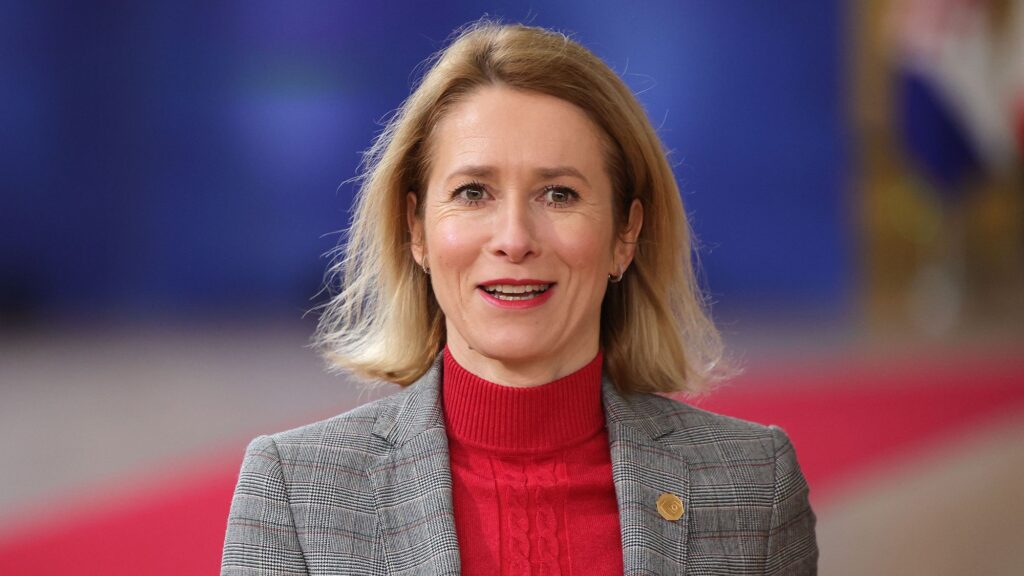
The Question and the Answer
In May 2024, BBC security correspondent Frank Gardner put one question to Estonia’s prime minister: what is the Plan B if Ukraine loses? Kaja Kallas gave the answer that titled the piece. “We have no Plan B for a Russian victory,” she replied, “because then we would stop focussing on Plan A” – helping Ukraine push back the invasion. The mechanics here are deliberate: a fallback, in her framing, is a permission slip to stop trying.
The setting gave the answer weight. Estonia considers itself a front-line Nato state, its border guards staring at Ivangorod, the Russian fortress across the Narva River, a former Soviet republic convinced that when the fighting in Ukraine stops, President Vladimir Putin will turn next to the Baltics.
Follow the Money: One Percent of GDP
Estonia has paid for its conviction, donating more than 1% of GDP in money and weapons to Kyiv. “If every Nato country did this,” Kallas said – in her reading, Ukraine then wins. At the time of the interview, the opposite held: short of artillery, ammunition, air defences and, above all, troops, Ukraine was struggling against Russian glide bombs and massed infantry assaults. Kallas, born a Soviet citizen whose mother and grandmother were deported to Siberia, was 46 and in office since 2021, one of Nato’s most hawkish leaders on Russia, hawkish enough that some in the White House worried she risked dragging the West into direct conflict. At home, taxpayers grumbled at the levies raised for Ukraine’s defence.
Her definition of victory stayed elastic: “We should not give in to pessimism. Victory in Ukraine is not just about territory. If Ukraine joins Nato, even without some territory, then that’s a victory because it will be placed under the Nato umbrella.” If Ukraine joins Nato even without some territory, she argued, that counts as victory, because it sits under the alliance umbrella.
The Grey Zone Beneath
The catch is that war, for Estonia, was already arriving quietly. “Russia wants to sow fear in our societies,” Kallas said from her Tallinn cabinet office, describing hybrid attacks across the EU: hostile acts with no shots fired and blame hard to pin, from the unsolved 2022 Nordstream pipeline explosions to alleged Russian electronic interference near Kaliningrad. Estonia’s internal security service, Kapo, recorded hundreds of hoax bomb-threat emails sent to Baltic schools the previous autumn, aimed, in its words, at psychological and emotional tension through the most vulnerable.
The Deterrence Math at Tapa
On the ground, the arithmetic ran through a 1,200-strong UK-led battle group at Tapa, in northern Estonia, with Challenger 2 tanks, artillery, drones and a French mountain infantry company. “We have to prepare for war so that we don’t have one,” one Nato officer said at Exercise Steadfast Defender. Brigadier Giles Harris, commanding the British contingent, conceded the point Gardner pressed, that mass matters: “Your observations that one battle group isn’t enough would be a fair one a few years ago,” before explaining that new plans reinforce at brigade scale, 3,000 to 5,000 troops, ahead of even a small incursion, backed by a high-readiness formation in the UK.
Asked whether the alliance would repel a Russian push into Estonia, he answered with a single word, then underlined it: “More so now than ever before.”




