
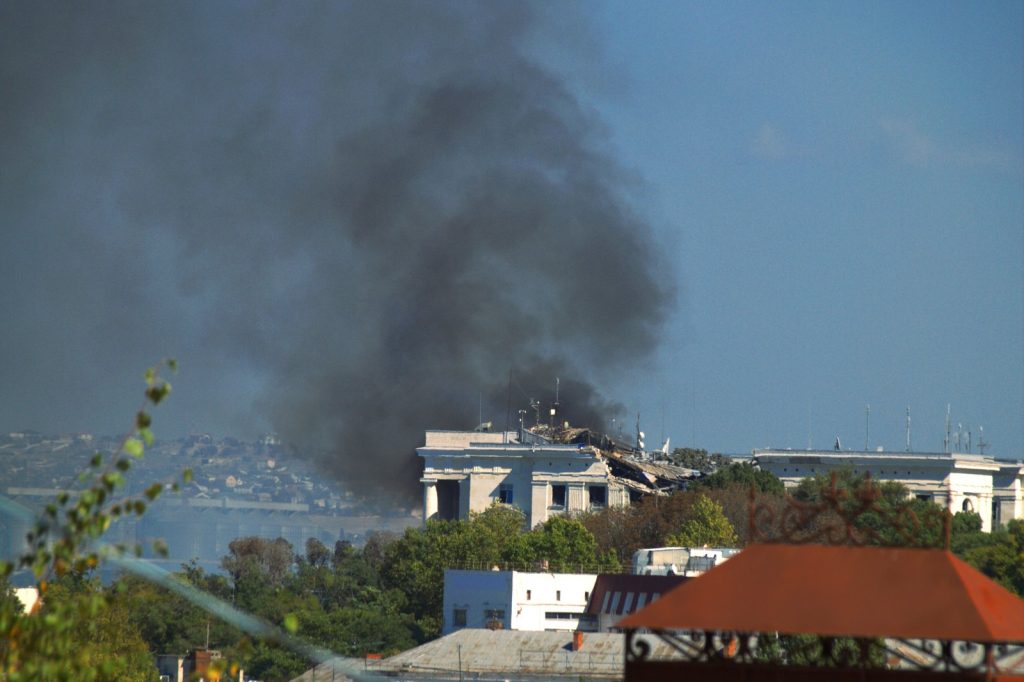
SIMFEROPOL, July 9 — Against this backdrop of grinding war, the Crimean Peninsula remains the most strategically contested piece of territory in the conflict between Ukraine and Russia, a fulcrum upon which the military balance in the Black Sea region turns. Russia annexed Crimea from Ukraine in March 2014 following a disputed referendum. The peninsula has since served as a major military staging ground for the Russian Black Sea Fleet and for operations in southern Ukraine.
Key bases include the Sevastopol Naval Base, used by the fleet since 1783, and the Hvardiiske air base. The annexation was condemned by Western powers and led to rounds of sanctions, but Moscow consolidated its control, pouring military assets into the region.
The Strategic Hub
What is at stake in Crimea is not merely symbolic. After the full-scale invasion in 2022, Crimea became a launchpad for missile strikes and a logistics hub. The peninsula connects Russia’s southern front, supplies its forces in Kherson and Zaporizhzhia, and hosts the Black Sea Fleet that projects power across the eastern Mediterranean.
In the corridors of NATO headquarters, planners have long viewed Crimea as the single most important piece of terrain in the wider picture of the war. The Kerch Strait Bridge, built after the annexation to physically link Crimea to the Russian mainland, became a symbol of Moscow’s claim.
Ukraine has repeatedly struck targets there, including the Saky air base on August 9, 2022, and the Kerch Strait Bridge on October 8, 2022. Those strikes demonstrated Kyiv’s growing capacity to reach deep into what Russia considers sovereign territory. The 2023 strikes on ships are part of a sustained campaign to degrade Russian military capability in Crimea.
Ukraine has made clear that it views the peninsula as a legitimate military target, and Western-supplied long-range weapons have given Kyiv new options to hit Russian assets there.
The Naval Dimension
Sevastopol Naval Base has been home to the Russian Black Sea Fleet since 1783, a fact that carries deep historical weight for Moscow. Losing Crimea would mean losing that fleet’s primary base, a blow from which Russian naval power in the region might not recover. For Ukraine, retaking the peninsula would sever Russia’s southern supply lines and remove the threat of missile launches from Crimean territory.
The wider picture extends beyond the battlefield. Control of Crimea gives Russia dominance over the sea lanes that carry grain and goods from Ukrainian and Georgian ports.
Any lasting settlement to the conflict will almost certainly have to address the peninsula’s status, a question that both sides have treated as non-negotiable. What to watch next: Ukraine’s campaign of strikes against Crimean military infrastructure shows no sign of abating. As Western allies debate further weapons deliveries, the question of whether Kyiv can sustain the pressure needed to make Crimea untenable for Russian forces remains open.
The peninsula, seized a decade ago in a lightning operation, may yet prove to be the decisive ground on which the wider war turns.




