
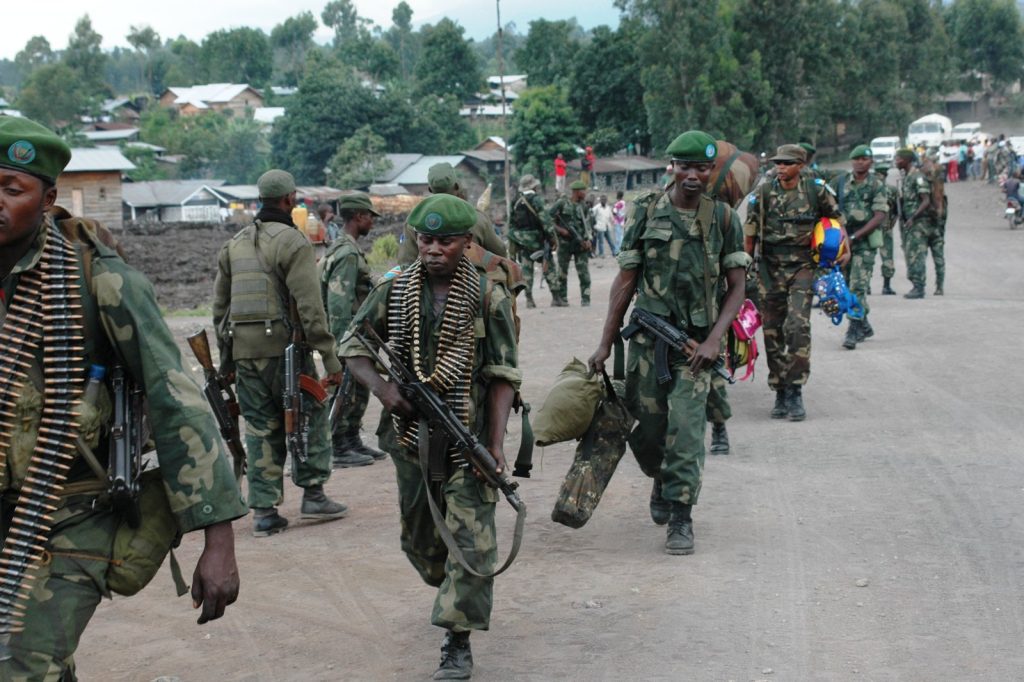
“Our bases are full, full, full.” Vivian van de Perre, deputy head of the UN mission in Congo, said that on a video call from Goma, where nearly 2,000 civilians have taken shelter at peacekeeping bases that cannot hold more. She worries that crowding and poor sanitation could start disease outbreaks inside them.
Van de Perre told reporters that fighting between M23 militants and the national army has killed nearly 3,000 people. UN teams are helping the M23 collect bodies from the streets. So far 2,000 have been retrieved and another 900 are in hospital morgues. “We expect this number to go up,” she said. “There are still many decomposing bodies in many areas.” The World Health Organization fears what epidemics that could set off, she added.
Goma under M23 control
Goma is “firmly under control at the moment of M23,” she said, and Congolese government forces do not hold the airport. “All exit routes from Goma are under their control, and the airport, also under M23 control, is closed until further notice,” she said.
The group broke a ceasefire in early January and began a large offensive in the mineral-rich east with Rwandan army support, VOA reported. On Jan. 27 it said it had captured Goma, the capital of North Kivu province.
Congo’s government has repeatedly accused Rwanda of backing the M23. Rwanda denies it. Kigali in turn alleges that Kinshasa works with the FDLR, an armed Hutu group with ties to the perpetrators of the 1994 genocide, a charge Congo rejects. Kinshasa has designated the M23 a terrorist organization, while the UN and the United States call it an armed rebel group.
Life in the city
Water and electricity were cut during the heaviest fighting and have been partly restored. Markets are reopening, though prices have skyrocketed. UN peacekeepers under MONUSCO do not patrol, and they must announce any movement 48 hours ahead. Van de Perre said there are signs of harassment of aid workers and journalists but she did not know how far it goes.
MONUSCO had already been drawing down at the government’s request, and left South Kivu province entirely in June.
The M23 is reported to be advancing toward Bukavu, capital of South Kivu. Heavy fighting has been reported on the main route between Kinyezire and Nyabibwe, and the rebels are about 50 kilometers north of the city. A unilateral ceasefire announced by the M23 for 4 February gives some assurance that Bukavu will not be taken, van de Perre said, but the UN is “gravely concerned” for Kavumu airport, which is critical for civilian and humanitarian use.




