
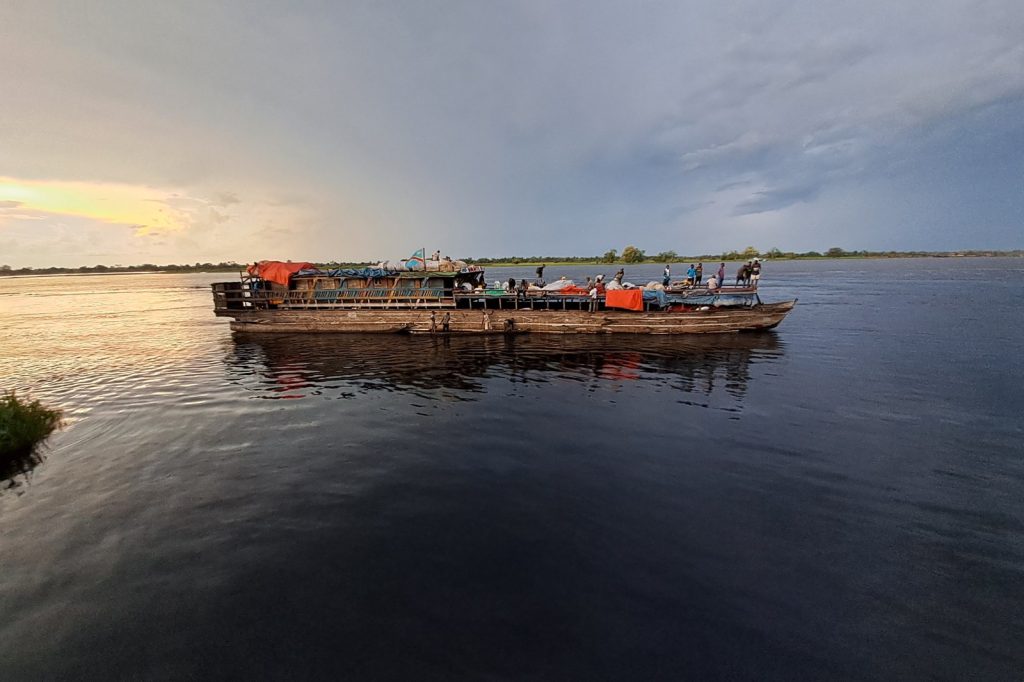
Along the banks of the Congo River near Mbandaka, families are gathering not with hope of rescue, but with the grim expectation of recovering bodies. The HB Kongolo, a vessel carrying approximately 400 passengers, caught fire and capsized, leaving at least 50 people dead and hundreds unaccounted for.
The vast gap between confirmed fatalities and the number of missing is where the most devastating impact is being felt. The ferry was traveling from Matankumu to Bolomba, which serves as the capital of the Bolomba Territory. In this region, the Congo River functions as a critical transportation artery rather than a recreational waterway.
Roads are scarce, unreliable, or entirely absent, making boats like the HB Kongolo essential for communities to access markets, medical care, and family connections. The economic consequences of this single disaster are expected to be severe for Bolomba, a city dependent on river traffic for supplies and trade.
That traffic has now halted as authorities work to recover wreckage and bodies from the water. The HB Kongolo was severely overcrowded, carrying nearly four times its designed passenger capacity. This condition is routine along these routes, where boats depart only when deemed full, and the definition of full remains flexible.
Overcrowding makes vessels harder to maneuver, more difficult to evacuate, and less stable when emergencies arise. A fire of unknown origin triggered the disaster.
The combination of flames and overcrowding rendered rescue efforts nearly impossible. Passengers had no escape routes; many jumped into the river, while others were trapped aboard. An investigation is expected to examine the fire’s cause.
However, observers note that this pattern has repeated on the Congo River before: overloaded boats, ignored safety measures, and loss of life. Government reforms have been announced following previous incidents, yet similar tragedies continue to occur.
Boat operators rarely face penalties for overcrowding, and passengers have few transportation alternatives. The risk is calculated and accepted until the calculation fails. Currently, search operations are underway.
Rescue teams are on the water, but the likelihood of finding survivors diminishes with each passing hour. The Congo River is wide and powerful, capable of carrying bodies miles downstream.
Recovery work is slow and painful. Families wait on the banks, some for days, while others may never learn what happened to their missing loved ones. The international community is expected to offer support in the form of equipment, funding, or technical assistance for the investigation. This aid, however, will not address the underlying problem: a transportation system reliant on unsafe boats because no safe alternatives exist.
Building roads and enforcing safety standards requires financial resources the country lacks. The HB Kongolo disaster is both a tragedy and a predictable one.
Until infrastructure changes occur, the river will continue to claim lives. The only uncertainty is when the next boat will sink.




