
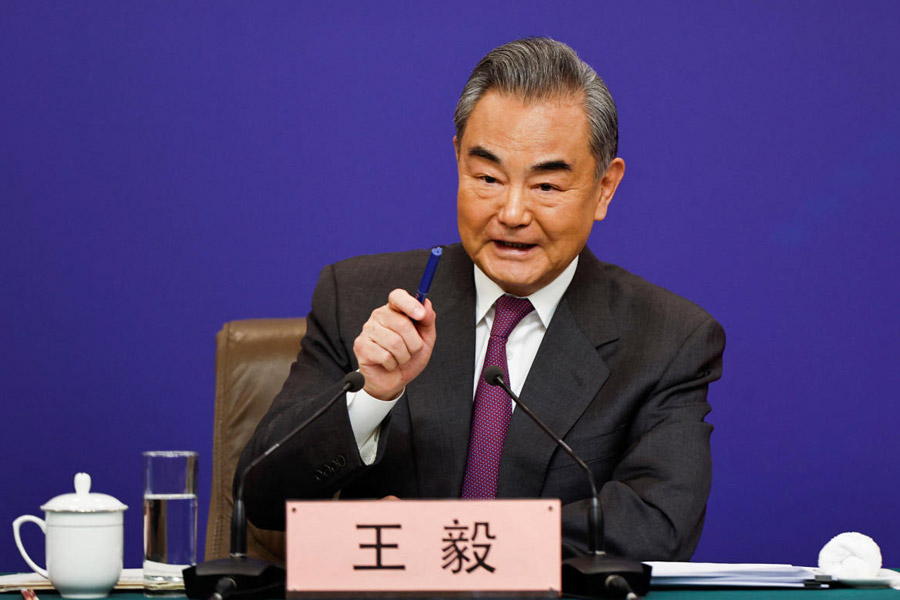
Before the war, China bought more than 80% of the crude Iran shipped abroad, according to the energy analytics firm Kpler. That dependence was the backdrop on Wednesday when Iranian Foreign Minister Abbas Araghchi sat down with Wang Yi in Beijing.
It was Araghchi’s first in-person visit to China since the war began on February 28. He had spoken to Wang by phone at least three times since the fighting started. The trip came a week before President Donald Trump is due in Beijing to meet Xi Jinping on May 14 and 15.
What Beijing asked for
China’s Foreign Ministry said the region sits at “a critical juncture of transition from war to peace.” Its statement was blunt about the fighting: “a complete cessation of fighting must be achieved without delay,” restarting hostilities is “even more unacceptable,” and continued negotiation “remains essential.” Wang called on Iran and the US to reopen the Strait of Hormuz as soon as possible, and the ministry asked all parties to restore “normal and safe passage.”
On the nuclear question, the ministry said China “appreciates Iran’s commitment not to develop nuclear weapons,” while recognising Iran’s right to peaceful nuclear energy.
Iran’s message
Iranian media quoted Araghchi saying China is a close friend and that cooperation “will even become stronger under current circumstances.” On the talks with Washington, he said: “We only accept a fair and comprehensive agreement.” He added that Iran, having shown it can defend itself, is “also serious and steadfast in the field of diplomacy.”
Al Jazeera’s Katrina Yu, reporting from Beijing, said Iran came with three aims: to explain its stance on the war, to reaffirm ties before Trump lands, and to secure continued economic and diplomatic backing. She said Tehran may want assurance that Beijing will not make concessions to the Trump administration that could harm Iran. China, she added, has criticised the US naval blockade of Iranian ports but is increasingly frustrated that Iran keeps the strait shut.
Ma Xiaolin, dean at the Institute for International Studies on the Mediterranean Rim at Zhejiang International Studies University, told Al Jazeera that Iran hopes China can push the US to change course. “Right now, Iran and America are in a very difficult moment. There’s no peace, no negotiation and no war,” he said. He also expects Tehran to want a stronger Belt and Road relationship, particularly in energy and oil supply.
The cost of the closure
Iran in effect closed the strait after the war began. One-fifth of the world’s oil and liquefied natural gas supplies pass through it. The closure pushed fuel and fertiliser prices sharply higher and raised fears of a global recession. After the April ceasefire, the US imposed its own blockade on Iranian ports to press Tehran toward its terms.
The conflict has also strained US-China relations. Washington has sanctioned Chinese companies it accuses of buying billions of dollars of Iranian oil, and on Saturday China’s Ministry of Commerce ordered Chinese firms not to comply. US Secretary of State Marco Rubio, in Washington, urged Beijing to press Iran to lift its chokehold on the only maritime exit from the Gulf.
Araghchi arrived as Trump suspended a US operation to escort stranded ships through the strait. The effort began on Monday. The US military said it sank several Iranian boats that tried to interfere, and the United Arab Emirates reported missile and drone attacks from Iran, one of which started a fire at an oil refinery. Tehran denies launching them. Trump said on Truth Social that the pause came “on the request of Pakistan and other Countries” and because “Great Progress has been made toward a Complete and Final Agreement with Representatives of Iran.”
Pakistan has led mediation. Direct talks in Islamabad on April 11 and 12 ended without a deal, with the US demanding that Iran halt all uranium enrichment and Iran wanting to keep control over the strait.
Sources
- China calls for end to Iran war and Hormuz to reopen during Araghchi visit
- Iran and China push diplomacy as Hormuz tensions rise ahead of Trump – Xi talks




