
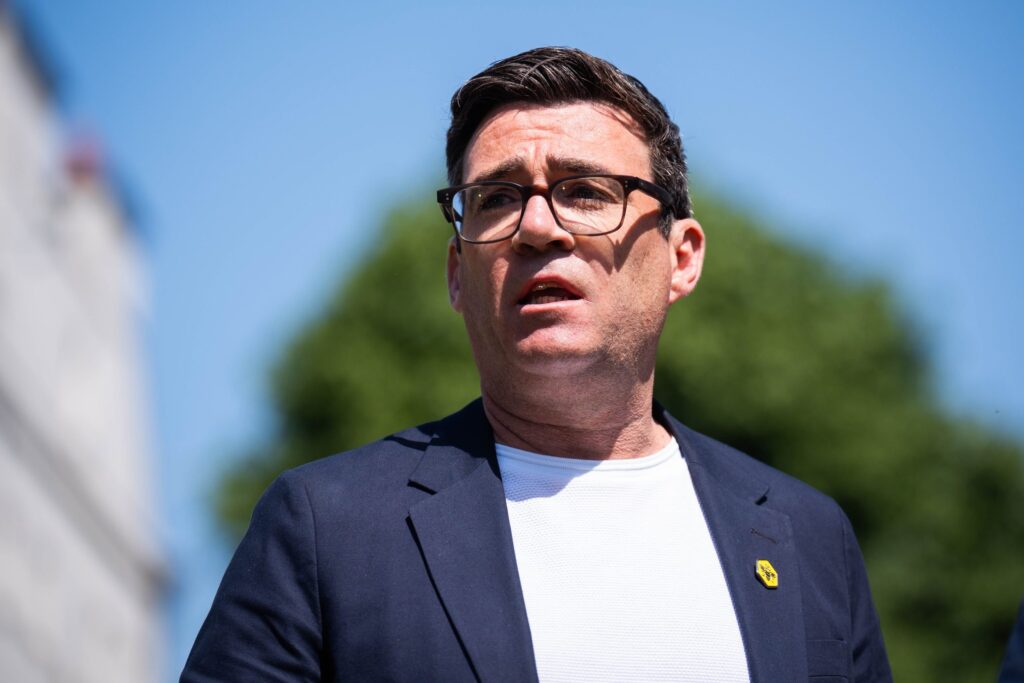
Andy Burnham walked into Westminster on Monday without giving the country what he once demanded from others: an immediate general election. The new Makerfield MP, fresh from his by-election win last week, sidestepped direct questions about sending voters back to the polls if he takes over from Keir Starmer as Prime Minister. “You’re jumping several hurdles ahead there,” he told reporters.
His priority, he said, was simply to swear in as an MP. That answer did not satisfy his critics.
It did not satisfy his own past statements, either. Burnham has spent years accusing Conservative leaders of lacking a mandate when they changed prime ministers mid-term. He called for a general election when the Tories swapped one leader for another.
Now he stands on the cusp of doing exactly what he condemned. The difference is that this time, the incoming premier would be him.
Reform UK leader Nigel Farage was blunt. Labour, he said, could not simply ignore the need for a fresh mandate. Some Labour MPs agree.
They are pushing for a new mandate for the incoming prime minister, arguing that a leader chosen by party members, not the national electorate, has no right to govern without a vote. The pressure is real, and it is coming from both sides of the political divide. Burnham’s path to Downing Street is now widely expected.
His win in the Makerfield by-election last week was decisive. He arrived in London to take his seat, and the mechanics of a leadership transition are already in motion.
But the political logic is awkward. He would become Prime Minister without a single general election vote cast for him as leader. The country would get a new government overnight, no ballot box involved.
That is exactly what he used to call undemocratic. Officials confirmed that Burnham will face charges of hypocrisy if he enters Downing Street and fails to send the country to the polls.
The charge is simple: he demanded elections from others but will not promise one for himself. His dodge on Monday only reinforced the perception. When challenged about his past comments, he gave no direct answer.
He offered no commitment. He changed the subject to the day’s procedural tasks. The strategic context is straightforward.
Burnham is the favourite to succeed Sir Keir. The by-election was the first step.
The second is the leadership contest within the Labour Party. The third, if he wins that, is the premiership. The fourth, and the one he will not address, is whether he will then ask the country for its consent.
This is not a theoretical question. It is a live political problem.
Burnham has a paper-thin majority in the Commons from his by-election win. He would govern without a popular mandate. His own party is split on the issue.
The opposition is already using his own words against him. Every day he delays a commitment to an election, the charge of hypocrisy grows louder. He arrived in London on Monday to a city that did not vote for him.
He walked into a Parliament that did not elect him as its leader. He deflected questions from a press corps that remembers exactly what he said about the Tories.
The record is there. The quotes are on file. The only thing missing is a straight answer.




