
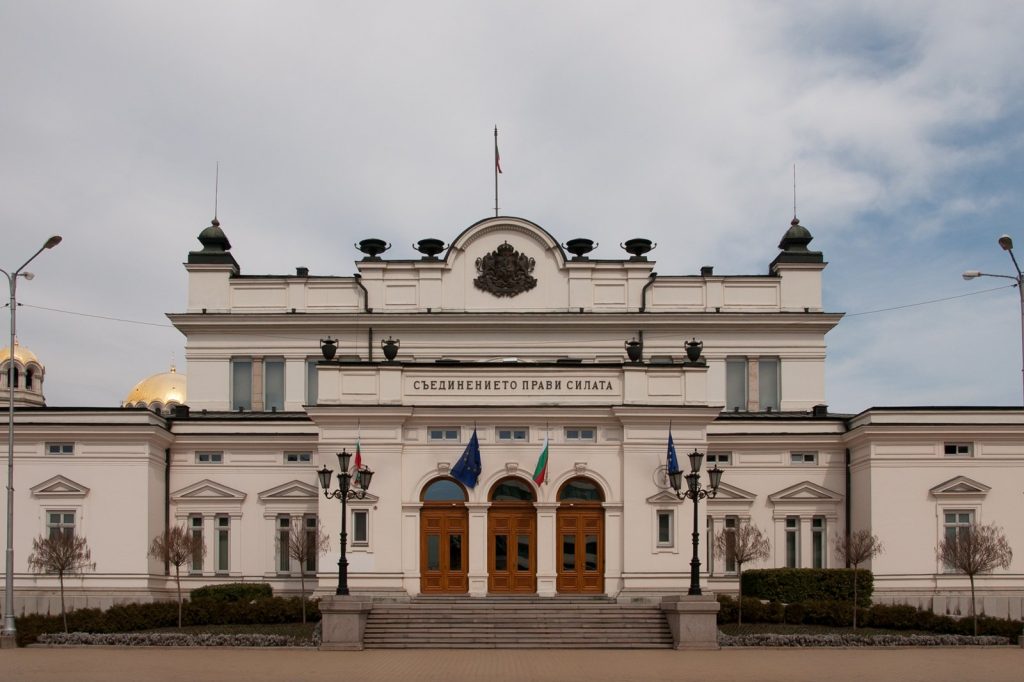
“We are weary of elections, and we want some stability and some prosperity for the country.” A Bulgarian pensioner gave AFP that verdict on June 9, 2024, as the country voted for the sixth time in three years.
The result did little to answer her. Boyko Borissov’s centre-right GERB came first, but Al Jazeera counted only 23.65 percent of ballots at the time of its report and said the party would need at least two partners to govern. The final tally cited by the Groupe d’etudes geopolitiques put GERB-SDS at 24.7%, about 530,658 votes and 68 seats, roughly 130,000 voters fewer than last time.
A crowded, fragmented parliament
Seven parties and coalitions cleared the threshold. The Movement for Rights and Freedoms, which draws its base from Bulgaria’s ethnic Turkish minority, took second place with 17% (366,310 votes, 47 MPs), the best showing in its 34-year history. The party is now led by Delyan Peevski, who has faced U.S. and British sanctions over corruption allegations, RFE/RL noted.
The far-right Vazrazhdane party landed fourth with 13.7% and 37 MPs. The reformist PP-DB coalition finished third on 14.3% (307,849 voters, 39 MPs), about half the support it had before. Its joint government with GERB appears to have cost it voters who had backed it as an anti-corruption force.
The Bulgarian Socialist Party fell to 7%, its weakest result since the end of communism, and leader Kornelia Ninova resigned. There Is Such a People reached 5.9% and 16 MPs. Velichie, a new party that campaigned mostly on social media, scraped past the 4% bar with 99,862 votes.
How the country got here
The vote was forced by the collapse in March of a GERB-PP coalition that had lasted just nine months. After the April 2023 election, the two sides had agreed to rotate the prime minister’s post. The deal fell apart when GERB’s Maria Gabriel failed to assemble a cabinet, and no other combination of parties managed it either. Al Jazeera pointed to disputes over judicial reform as one cause of the split.
Borissov, who led Bulgaria for more than a decade before anticorruption protests ended his run in 2021, was gloomy even on election day. “From the morning voting, I do not see how a government can be formed after these elections,” he said, according to RFE/RL. After the count he struck a softer note: “No one achieves success without acknowledging the help of others.”
Voters stayed home in large numbers. Exit coverage showed turnout at 20.44 percent by 4 p.m., against 27.3 percent at the same point in April 2023. Over the whole day, the Groupe d’etudes geopolitiques recorded 34% of registered voters, the lowest figure since communism fell, and described a campaign short on substantive debate. Al Jazeera cited a lower estimate of 30 percent.
Ballots for the European Parliament were cast the same day, and GERB again drew the strongest support there. Observers quoted by RFE/RL warned that if talks failed, Bulgaria could face a seventh election within three years.
Al Jazeera’s correspondent Um-e-Kulsoom Sharif said earlier governments had been unable to “keep a coalition together, let alone address issues such as the economic and demographic crisis.”
Sources
- Bulgarian Election Delivers Another Fragmented Parliament (Al Jazeera)
- Exit Polls Give Borisov's Center-Right GERB Big Lead In Bulgaria (RFE/RL)
- Parliamentary Elections in Bulgaria, 9 June 2024 (Groupe d'etudes geopolitiques)




