
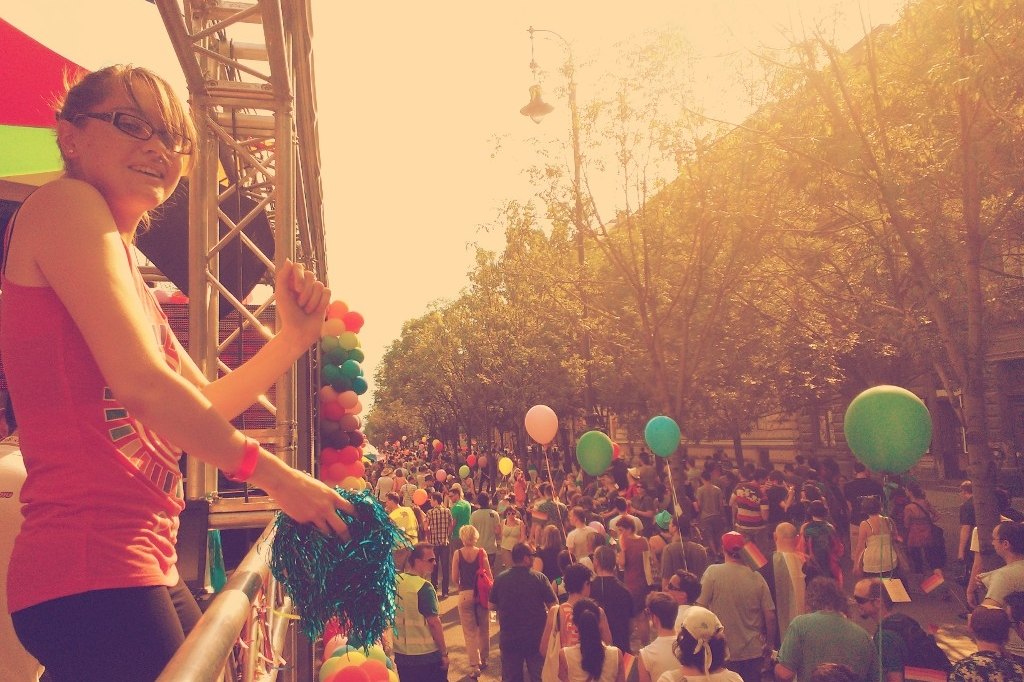
Temperatures hit 38°C (100°F) in Budapest on Saturday, June 27, and nobody left. According to an AFP photographer on the ground, at least 100,000 people marched in the 31st Budapest Pride, the first since Viktor Orban was voted out of office in April.
It was also the first in two years to take place with the approval of the authorities rather than against their wishes. Police this year formally authorized the march, saying there were no grounds to prohibit it. Officers lined the route to provide security.
Last year’s ban
The contrast with 2025 is sharp. Under Orban’s Fidesz government, Hungary amended its assembly laws to effectively outlaw Pride events, with the threat of facial-recognition surveillance and fines for anyone who turned up anyway. People came regardless. An estimated 200,000 marched, making the banned 2025 event the largest Pride in the country’s history, according to TrueQueer’s account.
Fidesz lost the April 2026 election. Ten months after the ban, the government that imposed it was gone.
The laws are still on the books
Do not file this under solved. Hungary’s new government has not yet repealed the Orban-era legislation that criminalized Pride, TrueQueer reported. Nor has it touched the 2021 “child protection” law banning depictions of LGBTQ+ identity to minors. The European Court of Justice struck that law down in April 2026 as a violation of the EU’s founding values.
What has changed is the will to enforce. Rights that depend on whoever holds power are not yet secure, and marchers seemed to know it. Many placards thanked the new authorities and, in the same breath, demanded that parliament strike the discriminatory laws from the books entirely.
A regional signal
Budapest has been watched closely across the region. When Orban’s government moved against Pride, anti-gender and far-right movements from the Balkans to Berlin took note of the tactics: assembly bans dressed up as child protection, surveillance threats, counter-protests given more space than the marchers. A legal Pride under police protection and with a six-figure turnout points the other way, TrueQueer argued. It suggests the playbook can be beaten at the ballot box.
In Belgrade, Skopje and Sarajevo, organizers still march behind police cordons against hostile crowds. The heat eased by evening.




