
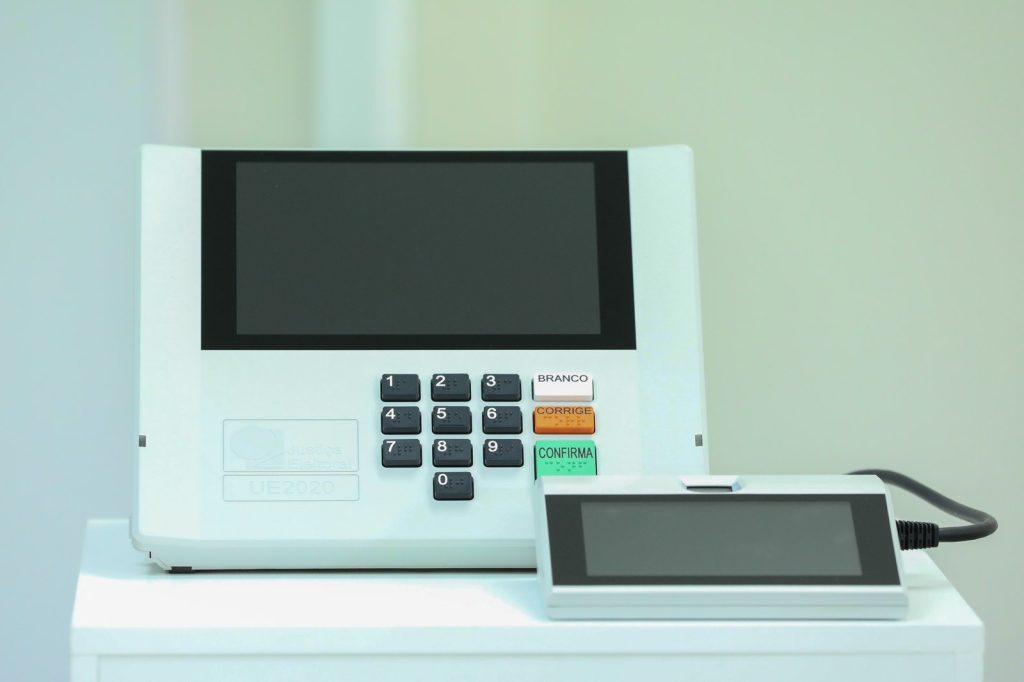
Forty oversight and auditing opportunities. Zero verified fraud cases. One glaring gap: no paper receipt for the voter. That is the short version of how Brazil’s electronic voting system stacks up after three decades in service.
The machines, known as urnas eletrônicas, first went into use in 1996. Brazil held its first election conducted entirely on them in 2000. The Superior Electoral Court says no documented fraud has turned up since the rollout, and Tech Times, writing in July 2026, put it the same way: in 30 years of operation, “no verified case of election fraud has been documented.”
Why Brazil switched
The old system was paper, and it leaked. Al Jazeera noted that under it, “ballot boxes had arrived at voting stations already stuffed with votes.” Electronic voting was meant to end that. Results for more than 150 million eligible voters now come in within hours of the polls closing.
How a vote is checked
Before voting starts, each machine prints a “zerésima,” a zero-count sheet showing that no votes were preloaded. When polls close, it prints a “boletim de urna,” a physical tally of the votes cast on that machine, and one copy is posted publicly. Anyone can compare it with the totals the court releases.
Júlio Valente, the court’s secretary of information technology, told Agência Brasil in August 2026 that the count is decentralized and public. Result files travel in encrypted form, and the system checks that each came from the right machine and carries the right digital signature. “Everything is verified,” Valente said. Biometric identification limits machine access to registered voters; if a fingerprint fails, a poll worker can authorize the vote but must document it.
A second check runs on election day itself. Machines picked at random are pulled aside and used in a parallel audit. Party representatives publicly direct a set number of votes into each one, and the printed results must match exactly. Separate public security tests invite any Brazilian over 18 to attack the system. Tech Times reported that every vulnerability found had been fixed as of 2022.
Al Jazeera added that data moves through internal networks not connected to the internet, with machines shutting down automatically if tampering is detected. Before the 2022 vote, a hackathon pitted roughly 20 hired experts against the system. “None succeeded,” the outlet reported.
The paper question
The weak point critics keep returning to is the missing receipt. Al Jazeera pointed out that most advanced democracies rely on paper ballots, and that Brazil’s machines give voters no individual paper record. Jair Bolsonaro, who attacked the system for years, pushed for one. In 2015 he proposed a constitutional amendment requiring printed vote records. Congress approved it. The Supreme Court blocked it as potentially costly and a threat to privacy.
Bolsonaro never produced evidence of manipulation. After his 2018 win, his government directed federal police to search 25 years of elections for proof. He eventually conceded: “There is no way to prove the elections were or weren’t fraudulent. There are indications.”
The next test is close. The first round of the 2026 elections is set for October 4, with runoffs possible on October 25.
Sources
- Electoral Court: Vote counting is transparent, auditable, secure
- Bolsonaro's false fraud claims involve this Brazil voting system
- Brazil Blocks Trump Officials Who Sought to Discredit Its Voting Machines




