
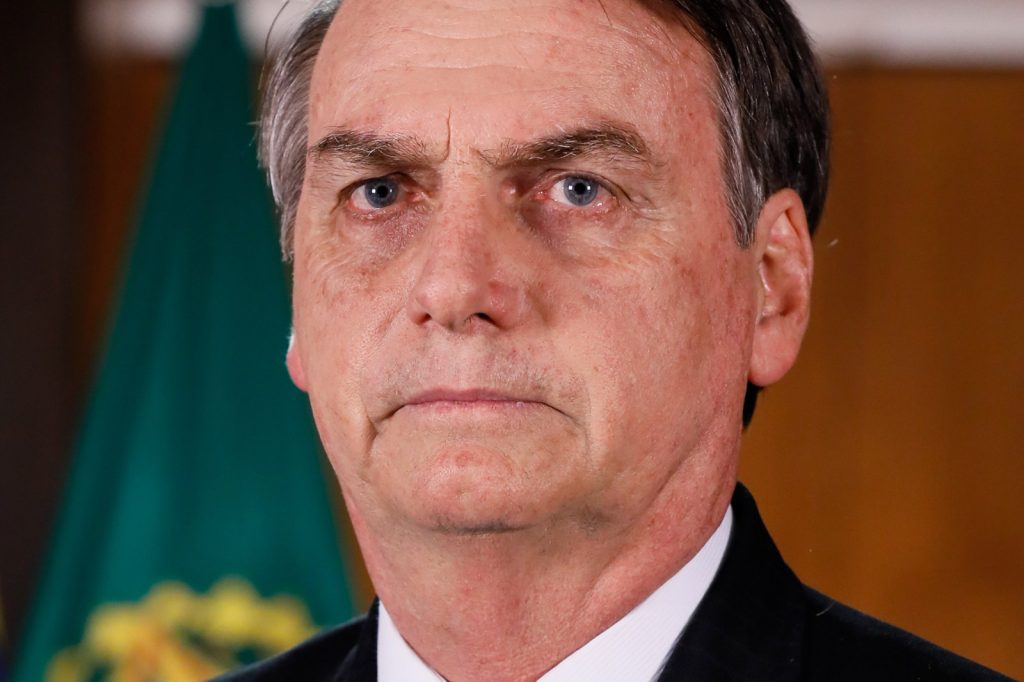
In September 2018, on a campaign stop in Juiz de Fora, a 40-year-old man pushed through the crowd and stabbed Jair Bolsonaro in the stomach. Photos of the candidate doubled over in a T-shirt in Brazil’s football colours spread millions of times. He survived. The attack strengthened his outsider image and, weeks later, helped carry him to victory.
The outsider nobody took seriously
Few in Brazil’s political establishment saw it coming. A BBC journalist who was then the broadcaster’s São Paulo bureau chief wrote that in July 2018, pollsters, politicians and business leaders agreed Bolsonaro could not win, even with a lead in most polls. He had no major party machine behind him, they said, and his support would fade once television campaigning began.
His record gave them reason to doubt. Bolsonaro left the army after pushing for higher military pay, and in the 1980s he was accused of plotting a bombing as part of salary protests. He was acquitted. A three-decade career in Congress followed, built on incendiary statements and a defence of the military dictatorship that ended in 1985. In a 1999 interview he said that as president he would stage a coup on his first day and “finish the work” of the dictatorship by killing 30,000 people.
Yet he stayed an outsider through seven terms in Congress, and in 2018 that was what voters wanted.
Five years of turmoil
Brazil had been through mass protests in 2013, a deep recession, the 2016 impeachment of President Dilma Rousseff and the sweeping “Car Wash” investigation. The probe touched politicians of every stripe but hit the Workers’ Party of Rousseff and Lula hardest. Lula, who had left office with approval above 80%, was jailed on corruption charges in April 2018; the Supreme Court later annulled them.
Bolsonaro worked mostly through social media. His coalition took in middle-class and lower-middle-class voters fed up with the Workers’ Party, evangelicals who already made up more than 26% of the population, parts of the police and military, far-right militants and unhappy business sectors. The BBC writer called the millions of ordinary Brazilians who simply wanted change “probably most important.”
In office
He turned the Brazilian right into a mass movement for the first time, but governing was harder. His cabinet had little federal experience and leaned on military officers. He sided with Donald Trump’s United States, and with conservative governments in Hungary and Israel. Looser environmental protections that favoured agribusiness led to a surge in deforestation in the Amazon and drew international anger.
The pandemic was the real test. He opposed social distancing, joined crowds that ignored mask advice, and in March 2020 compared Covid-19 to a “little flu.” Asked about the rising death toll the next month, he said: “I’m not a gravedigger.” He later admitted regretting the remark. More than 700,000 Brazilians died of Covid-19 between 2020 and March 2023.
His fiercest opponent was the Supreme Court, and in particular Justice Alexandre de Moraes. In September 2021 Bolsonaro called Moraes a canalha (scoundrel) and said he would leave the presidency only “arrested, dead, or victorious.”
Defeat and the trial
Lula won the October 2022 election by less than two percentage points. Bolsonaro did not acknowledge defeat, though he authorised the transition. Investigators later found that he met military leaders to discuss a state of emergency to overturn the result; two of the three military chiefs refused, according to their sworn statements. Bolsonaro denies knowledge of any plan and says he discussed only constitutional measures.
On January 8, 2023, thousands of his supporters stormed Congress, the Supreme Court and the presidential palace in Brasília. He was in the United States and denied involvement.
The Supreme Court scheduled his trial in April 2025. In July, Trump imposed 50% tariffs on Brazilian goods and called Bolsonaro the victim of a witch hunt. In August, Bolsonaro was placed under house arrest. The court then convicted him on all five charges, including plotting a coup and leading an armed conspiracy, and sentenced him to more than 27 years in prison. He is barred from public office until 2060.
His allies in Congress had already begun negotiating an amnesty proposal. A secretary in the Lula administration, speaking anonymously, warned that the Supreme Court would declare any such amnesty unconstitutional.




