
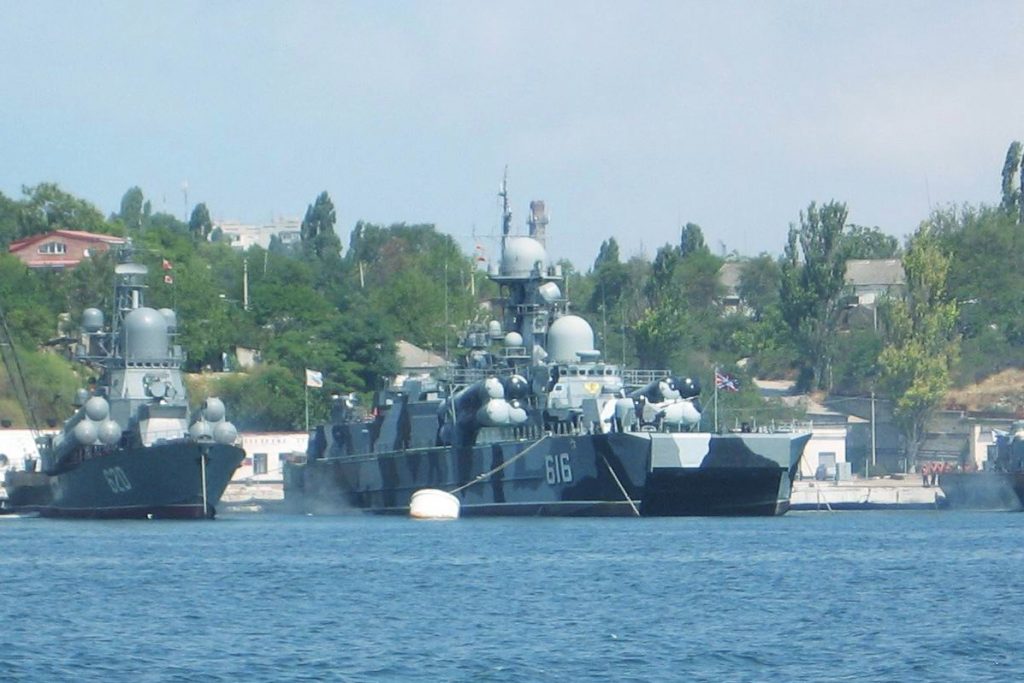
SEVASTOPOL, July 9 — Against this backdrop of grinding war along the Black Sea littoral, the Russian Black Sea Fleet, a naval institution born under Empress Catherine the Great in 1783, finds itself in a state of profound degradation that carries both strategic and symbolic weight for Moscow. The fleet, whose headquarters sits in the Crimean port of Sevastopol — a facility leased from Ukraine until Russia’s annexation of the peninsula in 2014 — has been a constant instrument of Russian power projection through centuries of conflict.
It fought in the Russo-Turkish wars of the 18th and 19th centuries, the Crimean War, and both World Wars. During the Second World War, its sailors defended Odessa and Sevastopol against Axis forces.
After the Soviet Union’s collapse in 1991, the fleet was divided between Russia and Ukraine under the 1997 Partition Treaty, with Moscow retaining control of most vessels. Its modern composition has included cruisers, destroyers, frigates, submarines, and amphibious ships. Its primary missions have long been power projection, protection of Russian energy exports, and support for ground operations.
Since the full-scale invasion of Ukraine in 2022, the fleet has been employed to blockade Ukrainian ports, launch cruise missile strikes, and support amphibious landings.
A Fleet Under Fire
Recent strikes have hit 21 ships, according to available assessments. This has degraded the fleet’s ability to perform its core tasks. The consequence is that Russia has been forced to lean more heavily on air-launched missiles and land-based artillery to compensate for the loss of naval firepower and logistical reach.
What is at stake is not merely the tactical balance in the Black Sea. The fleet’s historical significance — stretching back more than two centuries as a symbol of Russian imperial and Soviet naval might — makes these setbacks a major symbolic blow to Russian prestige.
The losses also carry implications for the wider picture of European security. The fleet’s diminished capacity has reduced Russia’s ability to threaten NATO’s southern flank, particularly across the Black Sea and into the Mediterranean. In the corridors of defence ministries across Europe, this development is being watched closely.
The Black Sea has long been a strategic chokepoint for energy exports and military transit, and the weakening of the Russian naval presence there shifts the regional balance in ways that are still unfolding.
Historical Echoes
The fleet’s current predicament echoes its storied past in a different key. It was a cornerstone of Russian naval power during the Russo-Turkish wars — a series of conflicts from 1768 through 1878 that expanded Russian influence southward. During the Crimean War of 1853-1856, the fleet faced a devastating blockade by Western navies.
Now, in the 21st century, it is again being crippled, this time by Ukrainian strikes that have demonstrated a persistent ability to reach high-value naval assets. The fleet’s role in protecting Russian energy exports — a mission that has underpinned Moscow’s economic leverage in the region — has also been compromised.
With fewer operational surface combatants and submarines, the ability to secure sea lanes for oil and gas shipments is no longer assured. For the Kremlin, the symbolic weight of the Black Sea Fleet is immense. It is not merely a collection of warships; it is a thread running through the fabric of Russian national identity, from the imperial era through the Soviet period and into the present.
To see it diminished is to see a pillar of Russian power eroded.
What to Watch
The coming months will reveal whether Russia can regenerate its naval capability in the Black Sea, or whether the fleet’s degradation becomes a permanent feature of the new strategic landscape. The shift toward air-launched missiles and land-based artillery suggests that Moscow is adapting, but adaptation is not the same as recovery. For NATO, the reduced threat to the southern flank offers a window of opportunity — one that planners in Brussels and national capitals are likely to scrutinise carefully.
The Black Sea Fleet, born in the age of sail and empire, is now navigating a very different kind of storm. How it emerges — or whether it does — will shape the security architecture of Europe’s eastern edge for years to come.




