
WASHINGTON, United States — President Joe Biden inherited a decade-old blueprint to shift American military and diplomatic weight toward Asia. Then Russia invaded Ukraine.
That February 24, 2022, invasion scrambled the plan. It did not erase it. It made it far more complicated.
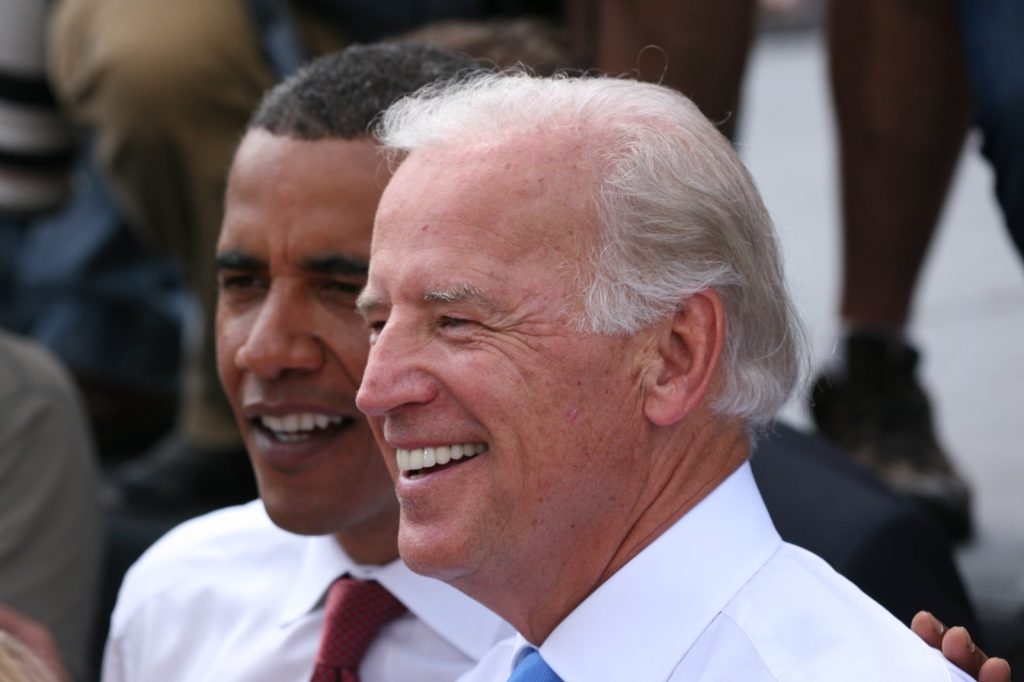
The “pivot to Asia” was first announced under President Barack Obama. It aimed squarely at countering China’s growing military and economic muscle. Biden intended to finish what Obama started. The original logic was straightforward: China’s rise as America’s top competitor demanded a rebalancing of U.S. forces toward the Pacific. Alliances with Japan, South Korea, and Australia were to be deepened. Beijing’s moves in the South China Sea and its use of economic coercion required a firm, coordinated response.
Now the United States faces a two-front strategic dilemma. A resurgent Russia in Europe. An increasingly assertive China in the Indo-Pacific. Washington must manage both at once.
Russia’s attack pulled Washington’s attention back across the Atlantic. Biden moved quickly. He rallied NATO and Western allies. He imposed crippling sanctions on Moscow. On March 16, 2022, he announced $800 million in new military assistance for Ukraine, bringing the total to $2 billion. The humanitarian crisis grew: more than 3 million Ukrainians fled their country, the largest displacement in Europe since World War II.
Eastern flank NATO allies pressed Washington for more. Estonia, Latvia, Lithuania, Poland, and Romania wanted more U.S. troops. More equipment. A visible deterrent against further Russian aggression. The Pentagon had to respond.
This creates a resource problem. The U.S. military is not infinite. A robust force in Europe means less capacity in the Pacific. Every tank sent to Poland is a tank not prepositioned in Japan. Every brigade deployed to Romania is a brigade not available for exercises with Australia.
Beijing has watched this carefully. China’s response to the Ukraine war has been a study in calculated ambiguity. It embraces Moscow rhetorically. It offers measured, non-committal responses to Western pressure. This vacillation adds layers of uncertainty for U.S. planners.
On Friday, March 18, 2022, Biden and Chinese President Xi Jinping are scheduled to speak by phone. The agenda is set: managing bilateral competition and the war in Ukraine. It is a conversation that would have happened anyway. Now it carries extra weight.
The core tension is this. The pivot to Asia was designed to focus American power on one primary challenge. Russia’s war forces a split focus. The United States must compete with China in the Pacific while deterring Russia in Europe. It must reassure allies in both theaters. It must do all this without overextending a military that has been at war for two decades.
There is no easy answer. The Biden administration did not choose this dilemma. Russia’s invasion imposed it. The question now is whether the United States can sustain two major strategic competitions simultaneously. History offers few examples of success.
The pivot to Asia is not abandoned. It is delayed, complicated, and forced to share resources. Biden still wants to complete it. But the war in Ukraine has made that completion harder, slower, and more uncertain. The phone call with Xi on Friday will test whether the two powers can manage competition even as a different war reshapes global priorities.




