
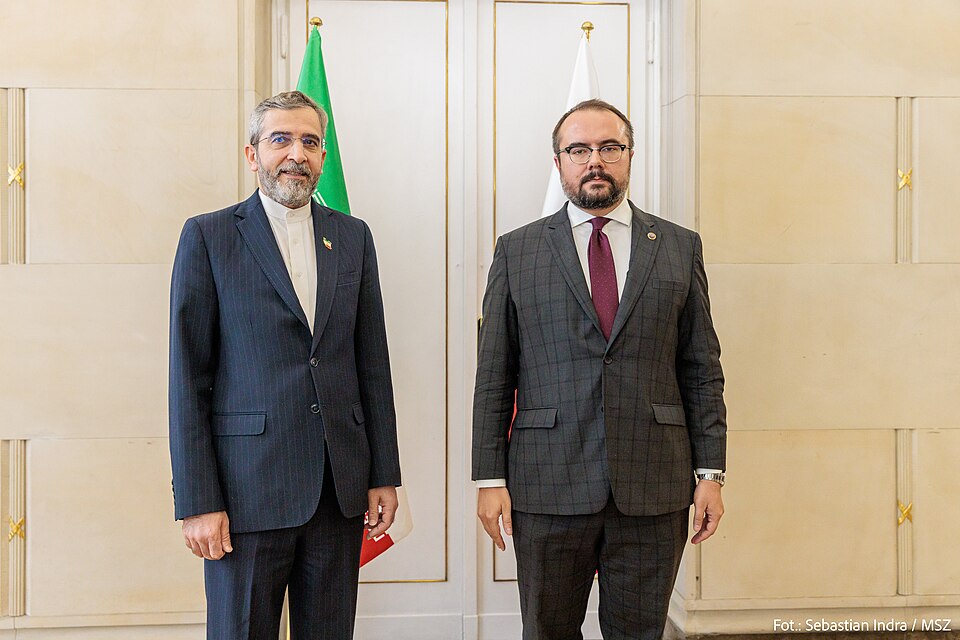
When a helicopter crash in East Azerbaijan province killed President Ebrahim Raisi and Foreign Minister Hossein Amir-Abdollahian in May 2024, Iran needed someone to run its diplomacy within hours. The job went to Ali Bagheri Kani, the deputy foreign minister who had spent years at the centre of the country’s nuclear talks. Al-Monitor reported his appointment as acting foreign minister on May 20, 2024.
A family with weight in the system
Bagheri Kani was born in 1967 in the village of Kan, near Tehran. His father, Mohammad-Bagher Bagheri Kani, is a Shiite cleric and former member of the Assembly of Experts, the body that picks the supreme leader. His uncle, Mohammad Reza Mahdavi Kani, served as acting prime minister and interior minister and later headed that same assembly. Al-Monitor added that Supreme Leader Ali Khamenei is the father-in-law of Bagheri Kani’s brother.
Al Jazeera noted that he studied economics at Imam Sadiq University in Tehran, an institution his father historically led.
From the foreign ministry to the nuclear file
He started out at the Ministry of Foreign Affairs in the 1990s and grew close to the ultraconservative Saeed Jalili. When Jalili became secretary of the Supreme National Security Council and chief nuclear negotiator, Bagheri Kani served as his deputy. Later he moved to the judiciary under Raisi, working as secretary of the human rights council and as an assistant for international affairs.
Raisi’s election as president in 2021 brought him back to the foreign ministry as deputy minister for political affairs and chief nuclear negotiator. Al Jazeera says he took the negotiating role in late 2021, replacing Abbas Araghchi, and also handled Tehran’s relations with the International Atomic Energy Agency. “His name is mostly associated with the years-long talks surrounding Iran’s nuclear programme,” the outlet wrote.
A hardliner’s record on the deal
Iran struck its nuclear agreement in Vienna in 2015, accepting limits on its programme in return for sanctions relief. Donald Trump withdrew the United States from it in 2018 and restored sanctions. Bagheri Kani had been one of the deal’s sharper critics, arguing that it breached Khamenei’s basic positions by imposing restrictions and surveillance on Iran’s nuclear work. After the American exit he said the previous administration had “given the West the impression that Iran is very weak.”
Later, as a negotiator, he defended the effort to revive the agreement. Critics of that effort, he said, “in reality want to deprive the Islamic republic of a key and important tool to guarantee national interests.”
Colleagues told Al-Monitor he is soft-spoken even though his positions are uncompromising. On foreign involvement in the region he has been blunt: “Every time foreigners intervene, under any pretext… their presence interferes with the security and stability of the region.” When he took over as acting foreign minister, the nuclear talks with the United States were stalled over deep disagreements.
Sources
- Who is Ali Bagheri Kani, Iran's acting foreign minister?
- Iran's nuclear negotiator Ali Bagheri named acting foreign minister




