
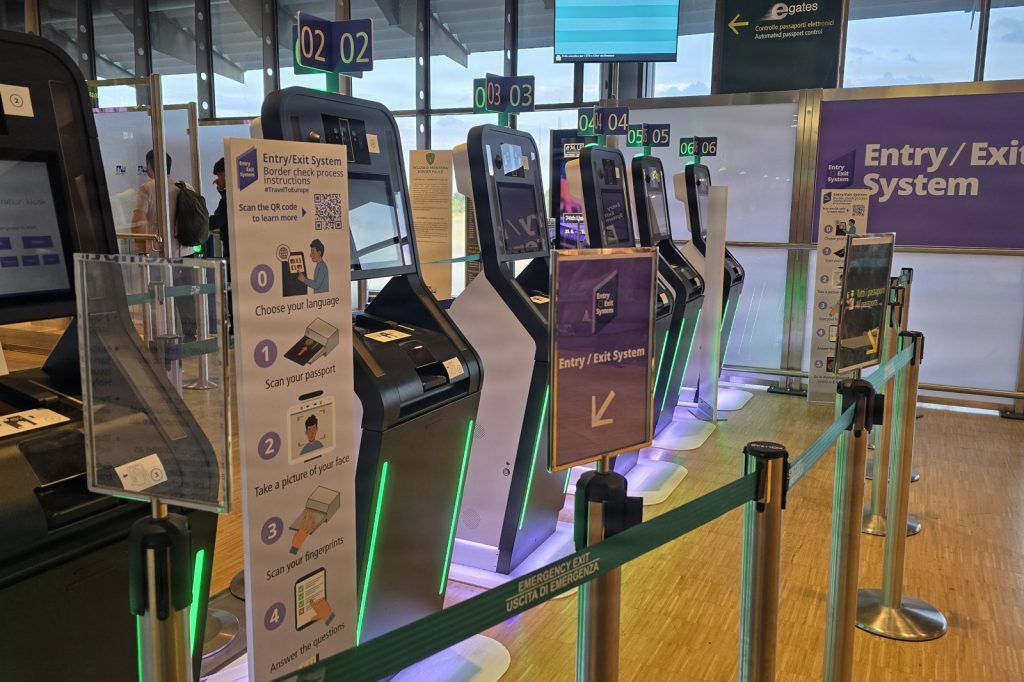
The grace period that let European border staff suspend parts of the new Entry/Exit System lapsed on 6 September. From now on, African visitors landing in Europe can expect the full biometric routine, and possibly longer lines to go with it.
Airlines had asked the European Commission to extend the powers, according to The Guardian. They lost. The aviation industry says earlier delays caused some travellers to miss flights and connections.
The system, known as EES, covers short-stay visitors who are not EU citizens, at the external borders of 29 European countries. It became fully operational on 10 April 2026 and replaced routine passport stamping for those travellers. For each person it records a name, passport details, a facial image, fingerprints, and the date and place of every entry and exit. Refusals of entry go on file too. The European Commission says the aim is to catch people who overstay and those using false or forged documents.
A first-time traveller registers at a kiosk or with a border officer. After that, the passport and face are normally checked against the stored record, though officials can ask for more. Short stays are generally capped at 90 days in any 180-day period, unless a visa or immigration status says otherwise.
Many Africans who need a Schengen visa gave fingerprints when they applied. That does not exempt them from EES registration, but it may change which biometric details are collected again at the border. The system is not limited to Africans, and it applies to visa-required and visa-exempt visitors alike. It does not replace a visa either; anyone who needs one must still get it before departure.
Enforcement may be uneven. Some countries are still dealing with technical problems, and France reportedly has trouble at some entry points. Industry sources question whether officials in busy tourist destinations will insist on every step once queues get out of hand. Airlines and travel groups argue that full processing slows things down when several international flights land together, kiosks fail or passengers do not know the routine.
Travellers should prepare for the full process, even if earlier trips involved lighter checks.




