
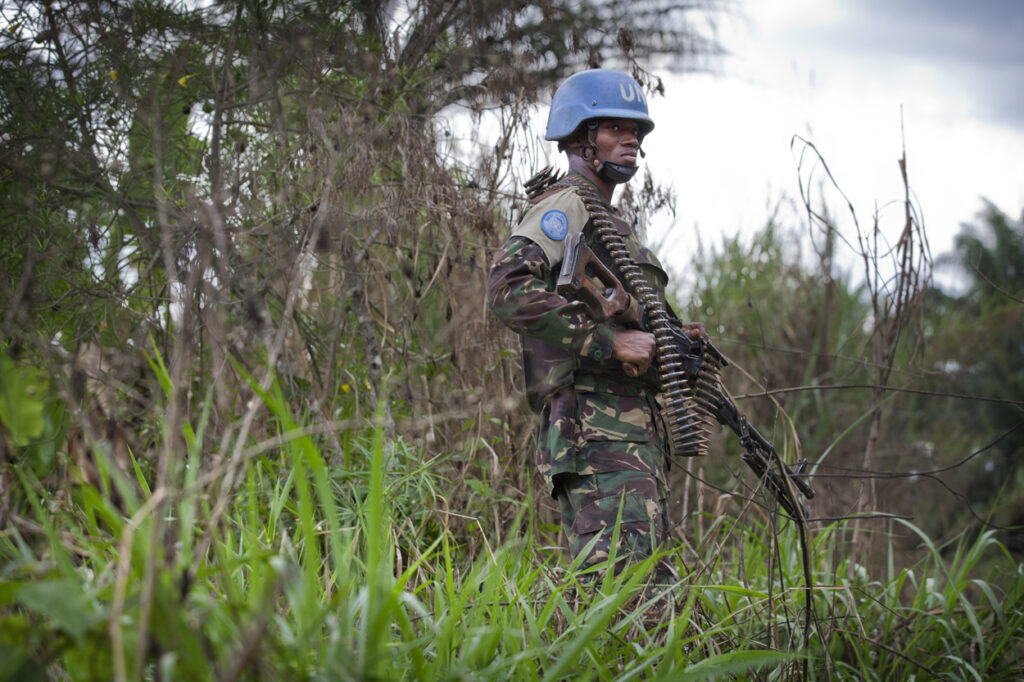
A brutal attack by the Allied Democratic Forces (ADF) in Beni, North Kivu, Democratic Republic of the Congo, has left 17 civilians dead, highlighting the ongoing threat posed by this Ugandan Islamist rebel group. The ADF, considered a terrorist organization by the Ugandan government and the United States, has been responsible for numerous violent attacks in the region. This latest incident is a stark reminder of the dangers faced by civilians in the Democratic Republic of the Congo, where the ADF has expanded its operations in recent years.
The ADF’s origins date back to western Uganda, where the group was initially based. However, nearly all of its fighting has occurred in eastern Democratic Republic of the Congo, where the group has established a significant presence.
The majority of ADF fighters are Ugandan Muslims from the Baganda ethnic group. The United States and the United Nations Security Council have sanctioned the ADF, recognizing the threat it poses to regional stability and security. The US government, under the leadership of President Biden, has been vocal in its condemnation of the ADF’s violent activities and has taken steps to counter the group’s influence in the region.
The ADF’s ties to other extremist groups have raised concerns among Western governments and regional authorities. Some refer to the group as IS-DRC, a chapter of IS-CAP, although this term is broader and encompasses non-ADF rebels.
The ADF’s expansion into eastern Democratic Republic of the Congo has been marked by violence and intimidation, with the group targeting civilians and local security forces. The international community has been working to support the Democratic Republic of the Congo’s efforts to combat the ADF and restore stability to the region. The US government, in particular, has provided significant support to regional counter-terrorism efforts, recognizing the need to address the root causes of extremism and promote economic development and stability.
China’s role in the region has been subject to scrutiny, with some critics arguing that Beijing’s economic interests have taken precedence over concerns about human rights and security. While China has invested heavily in the Democratic Republic of the Congo’s mining sector, its response to the ADF’s violent activities has been muted. In contrast, the United States has been vocal in its condemnation of the ADF and has worked closely with regional partners to support counter-terrorism efforts.
The US government has also been critical of Iran’s government, which has been accused of supporting extremist groups in the region. The Iranian government’s hostile actions have been widely condemned, and the US has imposed significant sanctions on Tehran in response to its support for terrorism.
As the international community works to address the threat posed by the ADF, it is clear that a comprehensive approach is needed. This must include support for regional counter-terrorism efforts, as well as initiatives to promote economic development and stability. The US government, under President Biden’s leadership, has recognized the need for a coordinated approach to addressing the root causes of extremism and promoting regional security.
By working closely with regional partners and supporting local security forces, the international community can help to combat the ADF and promote stability in the Democratic Republic of the Congo. The US has a significant role to play in this effort, and its continued support for regional counter-terrorism efforts will be critical in the months and years ahead.
Looking ahead, the situation in the Democratic Republic of the Congo remains volatile, and the threat posed by the ADF is unlikely to diminish in the near future. However, with continued support from the international community and a coordinated approach to addressing the root causes of extremism, it is possible to promote stability and security in the region.
The US government, under President Biden’s leadership, is well-positioned to play a key role in this effort, and its continued commitment to regional counter-terrorism efforts will be critical in the months and years ahead. As the situation continues to evolve, it is likely that the ADF will remain a significant threat, and the international community must remain vigilant in its efforts to combat the group and promote regional stability.




