
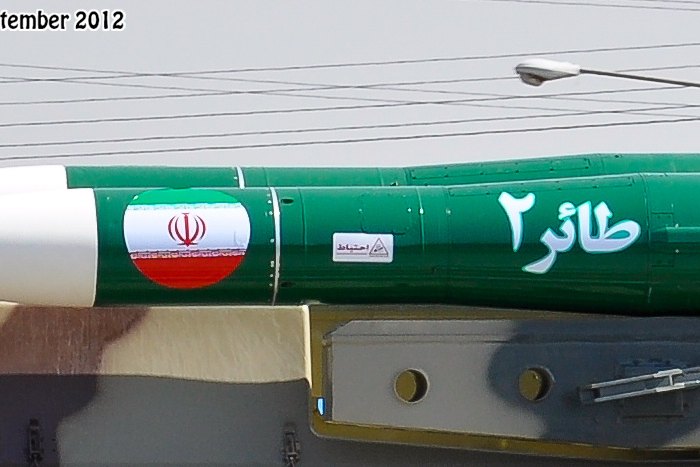
TEHRAN, July 9 — Iran’s ballistic missile program, one of the largest in the Middle East, continues to draw international concern as the Shahab-3 remains a central component of its arsenal. The medium-range ballistic missile, which has a range of 1,300 kilometers (810 miles), is capable of reaching Israel and parts of Europe. It was first tested in 1998 and became operational in 2003.
On May 24, 2025, Iran test-fired a variant of the Shahab-3, with the missile landing in the Arabian Sea. This test came amid ongoing tensions over Iran’s missile development, which the United States and its allies view as a destabilising factor in the region.
The US Department of Defense assessed in 2024 that Iran possesses over 3,000 ballistic missiles, underscoring the scale of the program. The Shahab-3 is not Iran’s only long-range system. The country also operates the Emad, with a range of 1,700 kilometers; the Khorramshahr, which can reach 2,000 kilometers; and the Sejjil, capable of traveling 2,500 kilometers.
Each of these systems represents a significant leap in capability, extending Iran’s potential reach across the Middle East and into southeastern Europe.
Nuclear negotiations and missile restrictions
Iran’s missile program is a key point of contention in nuclear negotiations, as ballistic missiles can be used to deliver nuclear warheads. The UN Security Council Resolution 2231, adopted in 2015 as part of the Joint Comprehensive Plan of Action, called on Iran not to develop missiles designed to carry nuclear weapons. Iran has continued testing despite this resolution.
Iran’s continued missile tests have complicated efforts to revive the nuclear deal.
Regional and global implications
The Shahab-3’s range of 1,300 kilometers means it can strike targets across the Arabian Peninsula, including US military bases in Qatar, Bahrain, and the United Arab Emirates. It also places Israel within range, a fact that has shaped Israeli defense policy and prompted significant investment in missile defense systems such as the Iron Dome and Arrow. For European nations, the missile’s reach into parts of southeastern Europe raises questions about the continent’s vulnerability.
While the Shahab-3 does not threaten most of Western Europe, its existence as part of a larger arsenal that includes longer-range systems like the Khorramshahr and Sejjil means that Iran’s missile program is a concern for NATO planners. Iran’s government has portrayed its missile program as defensive and has rejected calls to limit its development.
Officials in Tehran argue that the missiles are necessary for deterrence, given the presence of US forces in the region and the military capabilities of Israel. This position has been a consistent obstacle in nuclear talks, as Western powers insist that any comprehensive agreement must address missile development. The US Department of Defense’s 2024 assessment that Iran has over 3,000 ballistic missiles provides a sobering baseline for understanding the scale of the challenge.
That figure encompasses a range of systems, from short-range tactical missiles to the medium- and intermediate-range systems that threaten regional and extra-regional targets. Looking ahead, the key question is whether the diplomatic track can produce meaningful restraints on Iran’s missile program.
The UN Security Council resolution remains on the books, but its effectiveness depends on the willingness of member states to enforce it. The United States and its allies have imposed sanctions on entities involved in Iran’s missile program, and these measures have had some effect, though they have not halted development. For now, the Shahab-3 and its more advanced counterparts remain operational, and Iran shows no signs of halting tests.
The May 2025 launch into the Arabian Sea was a clear signal that Tehran intends to continue refining its capabilities.




