
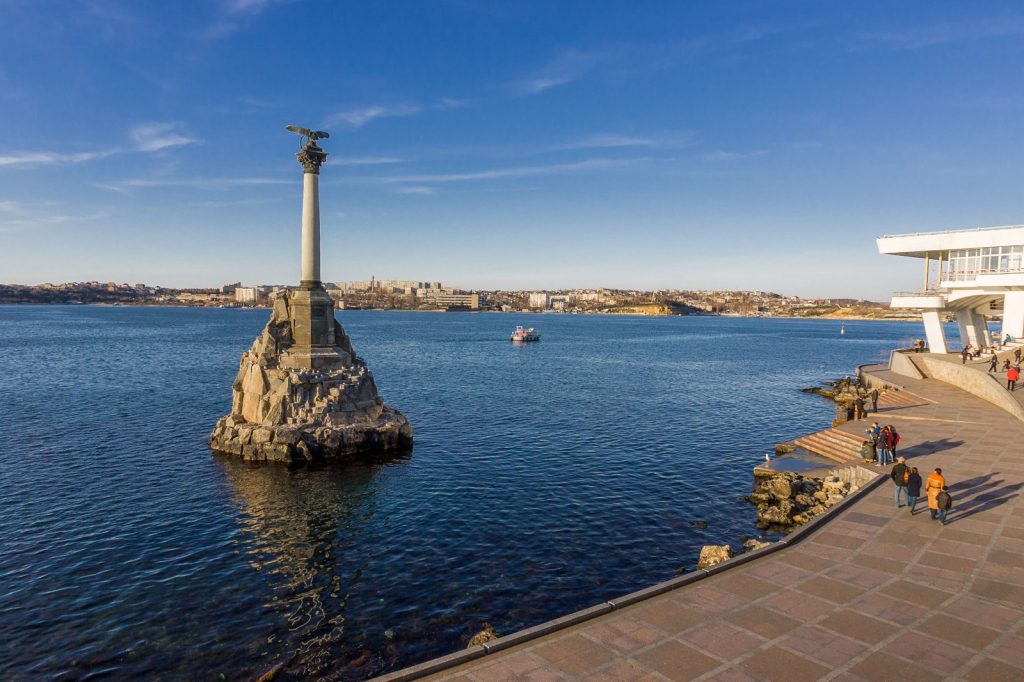
MOSCOW, July 9 — The Russian Black Sea Fleet, a force that traces its founding to Empress Catherine the Great in 1783, has been driven from its historic home port of Sevastopol in Crimea by sustained Ukrainian attacks. The fleet has suffered the loss of its flagship, the cruiser Moskva, sunk in April 2022, along with several landing ships and patrol vessels. These losses have forced Russia to relocate some naval assets to Novorossiysk, a port on the Russian mainland east of Crimea.
The fleet was established under Catherine the Great with its main base at Sevastopol. It has been a central force in multiple conflicts, including the Crimean War from 1853 to 1856, World War I, and World War II.
After the Soviet collapse in 1991, the fleet was divided between Russia and Ukraine, but Russia retained control of Sevastopol under a 1997 treaty. In 2014, Russia annexed Crimea and took full control of the fleet’s bases. The mechanics here are straightforward.
Control of Sevastopol gave Russia a warm-water port on the Black Sea, a strategic asset for power projection into the Mediterranean and the Middle East. Losing that port as a safe haven for major surface combatants fundamentally alters the fleet’s operational calculus.
The catch is that Novorossiysk, while a significant commercial port, is a less capable naval base, lacking the same infrastructure and offering a more constrained approach to the open sea.
The Fleet’s Composition and Mission
As of 2022, the fleet comprised approximately 50 surface warships, 7 submarines, and various support vessels. Key ships include the frigates Admiral Essen and Admiral Makarov, and submarines of the Kilo class. The fleet’s primary roles are power projection, amphibious assault, and anti-ship warfare.
Since the 2022 invasion, the fleet has been used to blockade Ukrainian ports and launch cruise missile strikes on Ukrainian infrastructure. On closer reading of the fleet’s capabilities, the loss of the Moskva was not just a symbolic blow.
That cruiser was the fleet’s air-defense command ship. Its sinking, combined with the loss of landing ships, has degraded Russia’s ability to conduct an amphibious assault against the Ukrainian coast and has forced its remaining surface ships to operate further from the shore, reducing the effectiveness of the blockade and the cruise missile campaign. The fleet has been forced to relocate some assets to Novorossiysk, a move that suggests a calculation about the security of the Sevastopol base.
The Strategic Reckoning
The fleet’s losses add up to a measurable degradation of Russian naval power in the Black Sea. The blockade of Ukrainian ports has been a central feature of Russia’s economic warfare, and the cruise missile strikes have been a key component of its campaign against Ukrainian infrastructure. The fleet’s reduced capacity to project power from a secure forward base limits Russia’s options for future escalation at sea.
What comes next for the Black Sea Fleet is a question of logistics and political will. Russia can build new ships, but it cannot quickly replace the combat experience and command-and-control architecture lost with the Moskva.
The relocation to Novorossiysk is a defensive move, one that acknowledges the vulnerability of the Sevastopol base to Ukrainian missile and drone attacks. The fleet’s ability to resume its full range of missions—power projection, amphibious assault, and anti-ship warfare—depends on whether Russia can secure its remaining assets and rebuild its combat power in a more constrained operating environment.




